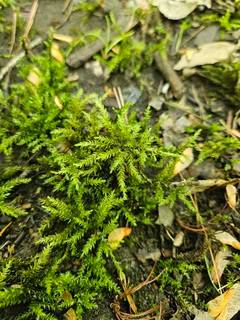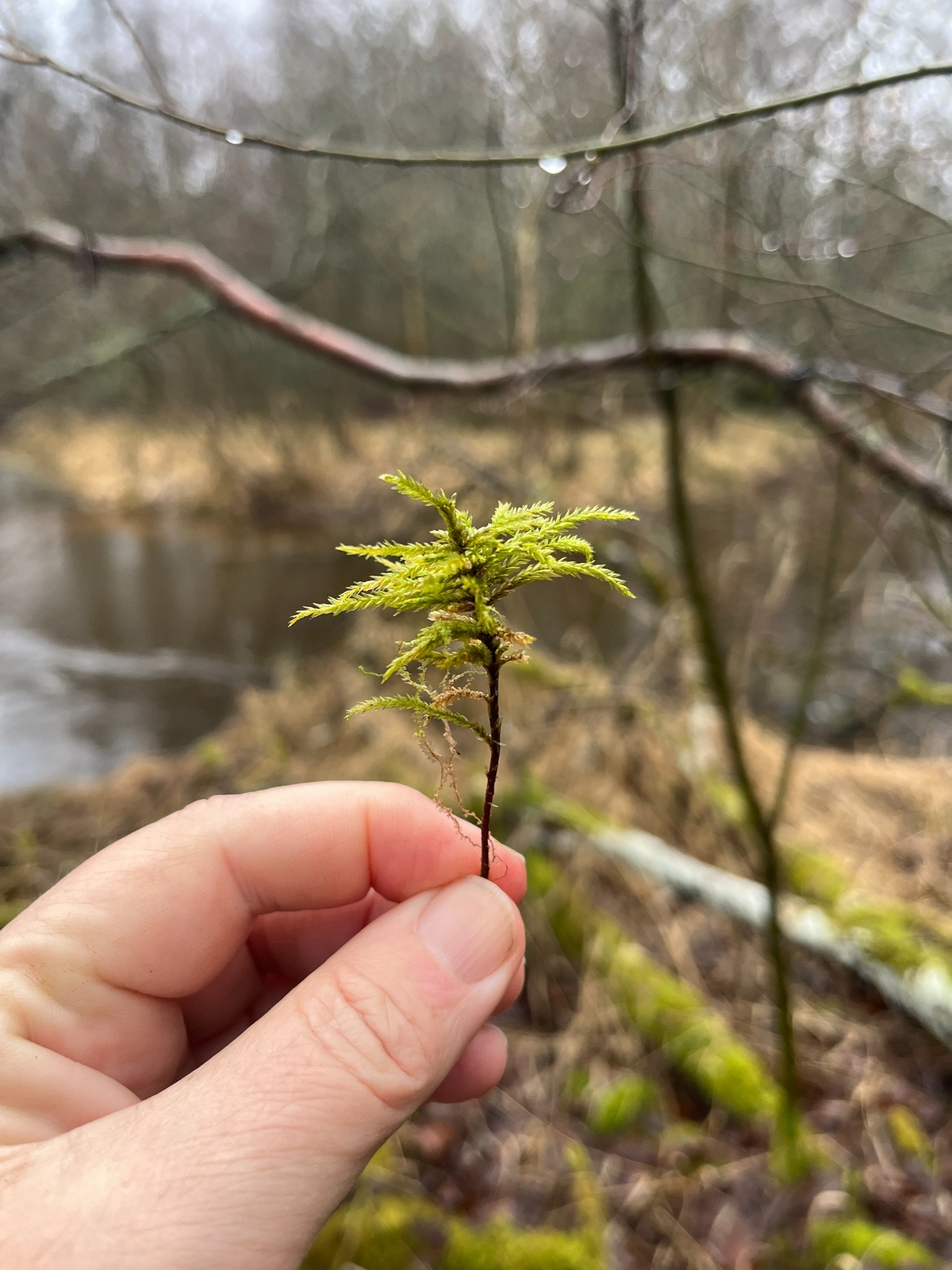
Climacium, Genus, spp., Multiple species,
- Genus
- Multiple species
climacium mosses
SunFull Sun – Part Shade
WaterHigh
Overview
Climacium is a small genus of mosses in the family Climaciaceae, known for an upright, tree-like growth form. Shoots arise from a creeping underground stem and stand 1-4 inches (2.5-10 cm) tall, with a bare lower stalk topped by a rounded cluster of spreading branches that resemble a tiny palm tree or umbrella. The whole plant is firm and wiry, deep green to yellow-green, growing in loose colonies rather than dense cushions. The leaves are broad, pleated, and toothed, becoming somewhat shrivelled when dry but holding the tree-like outline. Climacium grows in wet meadows, marshes, fens, swamp edges, lake shores, and damp woodland across the Northern Hemisphere, favouring seasonally flooded, base-rich to neutral ground. Cylindrical spore capsules are held upright on long reddish stalks but are produced only occasionally; most spread is by the creeping underground stems that send up new tree-like shoots. The upright, branched form gives the genus an outline unlike the mat-forming mosses around it. Plants tolerate periodic flooding and survive dry spells by becoming dormant.
Native Range
Climacium occurs across the Northern Hemisphere in North America, Europe, and Asia, growing in wet meadows, marshes, fens, swamp margins, lake shores, and damp woodland. It favours seasonally wet, base-rich to neutral ground.Suggested Uses
Climacium is grown in bog gardens, moss gardens, and damp naturalistic plantings for its upright, tree-like shoots. It indicates wet, base-rich habitats and is used in teaching moss diversity. The firm shoots are sometimes used in moss craft and terrarium landscaping.How to Identify
Appearance
Colors
Foliage Colors
Bloom Information
Mosses do not flower. Climacium reproduces by spores from cylindrical capsules held upright on long reddish stalks, but capsules are produced only occasionally. Most spread is vegetative, through creeping underground stems that send up new upright shoots.
Growing Conditions
Sun Requirements
• Full Sun: 6+ hours of direct sunlight
• Partial Shade: 3-6 hours of direct sunlight
• Full Shade: Less than 3 hours of direct sunlight
Water & Climate
Water Needs