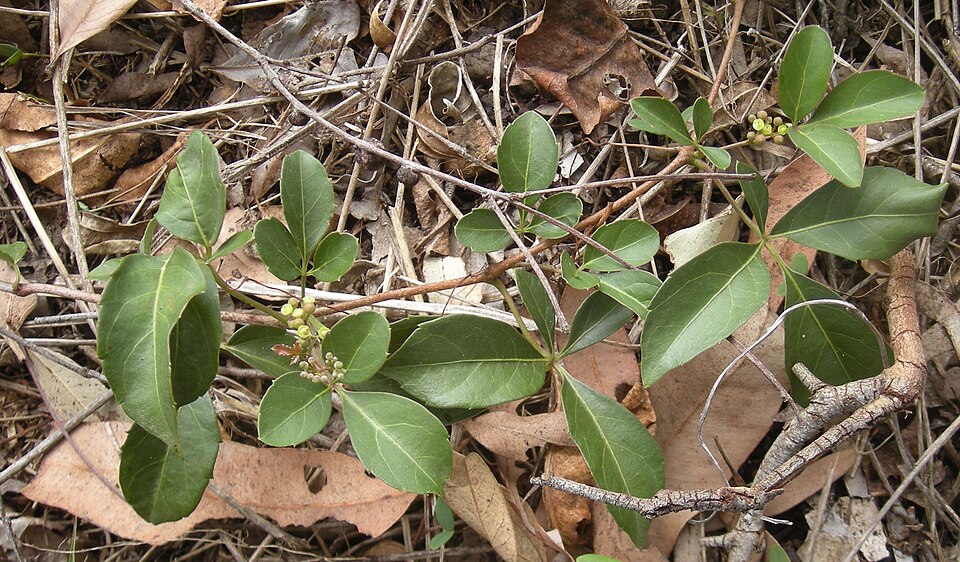
Clematicissus, Genus, opaca, Species,
- Genus & species
pepper vine
Overview
Clematicissus opaca is a deciduous climbing vine that ascends by forked tendrils to 10-20 feet (3-6 m), dying back to a tuberous rootstock during dry or cold periods. Leaves are divided into three to five leaflets arranged like the fingers of a hand, each leaflet 1.2-3 inches (3-8 cm) long, dull green and sometimes sparsely hairy. Small greenish flowers in branched clusters appear in spring and summer. Rounded berries 0.3-0.5 inch (8-12 mm) across ripen black and contain needle-like calcium oxalate crystals that make the raw fruit acrid. The vine regrows each season from its underground tuber. Growth is rapid in the warm season, scrambling over shrubs and fences. Without support it forms a sprawling groundcover. The fruit and sap can irritate skin and mouth tissues because of the oxalate content.
Native Range
Native to eastern and northern Australia, from Queensland through New South Wales into Victoria. Grows in dry rainforest, vine thickets, and woodland, climbing over shrubs and trees on a range of well-drained soils.Suggested Uses
Grown on trellises, fences, and pergolas in native and dry-climate gardens, allowed 6-10 feet (1.8-3 m) of spread. Suits informal screening where seasonal dieback is acceptable. The acrid, oxalate-containing fruit makes it unsuited to gardens used by young children.How to Identify
Appearance
Size & Dimensions
Height10' - 20'
Width/Spread3' - 10'
Bloom Information
Detailed Descriptions
Foliage Description
dull greenGrowing Conditions
Sun Requirements
Requires 4-8 hours of direct sunlight daily
• Full Sun: 6+ hours of direct sunlight
• Partial Shade: 3-6 hours of direct sunlight
• Full Shade: Less than 3 hours of direct sunlight
Care & Maintenance
Care Guide
Grows in full sun to part shade on free-draining soils, climbing on a trellis, fence, or host shrub. Water through the first season; established tubers tolerate seasonal drought by dying back. Top growth is killed by frost but regrows from the tuber in spring. The vine can smother small shrubs if left unmanaged. Few pests affect it, and sap and fruit contain calcium oxalate that irritates skin on contact in sensitive individuals.Pruning
Top growth is cut back in late autumn or winter once it dies down. Stems can be shortened at any time to limit spread. Regrowth from the tuber is rapid each spring.Pruning Schedule
Prune: May–July
fallwinter