Cichorium, Genus, spp., Multiple species,
- Genus
- Multiple species
chicories and endives
Europe, the Mediterranean, and western Asia
Overview
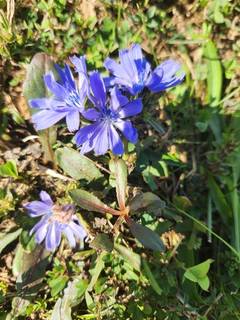
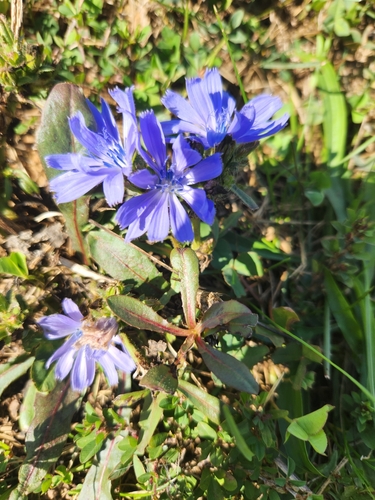
Cichorium is a genus of six to eight species of annual, biennial, and perennial herbs in the daisy family Asteraceae, native to Europe, the Mediterranean basin, and western Asia, and naturalised across much of the temperate world. The genus includes two long-cultivated crops: chicory (C. intybus) and endive (C. endivia), grown for salad leaves, forced chicons, and roasted roots. Plants form a basal rosette of toothed or lobed leaves 3-12 in (8-30 cm) long, from which a branched, somewhat wiry flowering stem rises 1-5 ft (30-150 cm) tall. The stems carry stalkless ligulate flower heads 1-1.5 in (2.5-4 cm) across, opening blue and less often pink or white, that close by midday. A milky latex bleeds from cut stems and leaves. The fleshy taproot of chicory is roasted and ground as a coffee additive, while leafy types such as radicchio and witloof are blanched or forced for winter salads. Wild chicory flowers from summer into autumn along roadsides and in grassland. The genus grows on a wide range of soils but runs to flower quickly in heat and dry spells, which turns the leaves bitter.
Native Range
The genus is native to Europe, the Mediterranean region, and western Asia. Chicory (C. intybus) has naturalised widely in North America, Australia, and other temperate regions, where it is a common roadside plant.Suggested Uses
Chicory and endive are grown in vegetable beds and potagers for salad leaves, forced chicons, and roasted roots, while wild chicory is used in meadow and pollinator plantings for its blue summer flowers. Leaf crops are spaced 8-12 in (20-30 cm) apart and root chicory slightly wider. The blue flowers draw bees and hoverflies.How to Identify
Appearance
Size & Dimensions
Height1' - 5'
Width/Spread1' - 2'
Bloom Information
Wild and naturalised Cichorium flowers from early summer through autumn, roughly June to October. Individual heads open near dawn and close by midday, with new heads produced in succession along the stem over many weeks. Cultivated leaf crops are usually harvested before flowering.
Detailed Descriptions
Flower Description
blue, occasionally pink or whiteFoliage Description
green to deep redGrowing Conditions
Sun Requirements
Requires 6-8 hours of direct sunlight daily
• Full Sun: 6+ hours of direct sunlight
• Partial Shade: 3-6 hours of direct sunlight
• Full Shade: Less than 3 hours of direct sunlight
Water & Climate
Water Needs
Care & Maintenance
Care Guide
Grow Cichorium in full sun in deep, fertile, well-worked soil with a near-neutral pH of 6.0-7.5. The taproot needs loose, stone-free ground to develop straight, so the bed is dug deeply before sowing. Keep the soil evenly moist, as drought and heat push plants to bolt and turn the leaves bitter. Sow leaf and root crops in spring or summer depending on type, thinning seedlings to their final spacing once established. Forcing types are lifted in autumn and regrown in darkness to produce pale, mild chicons. Slugs and aphids attack young rosettes, but the genus has few other serious pests.Pruning
Cichorium is not pruned in the ornamental sense. Leaf crops are cut at the base and often resprout for a second harvest. Flowering stems can be cut down to limit self-seeding, which is prolific in chicory.Container Growing
Suitable for container growing
Minimum container size: 3 gallons
Toxicity
Non-toxicPlanting Guide
Planting Methods & Timing
Planting Method
both
Direct Sow Timing
spring through midsummer
Days to Maturity
60–120 days
Plant Spacing
10 inches