Chylismia, Genus, claviformis, Species,
- Genus & species
Browneyes
Mojave, Sonoran, and Great Basin deserts
Overview
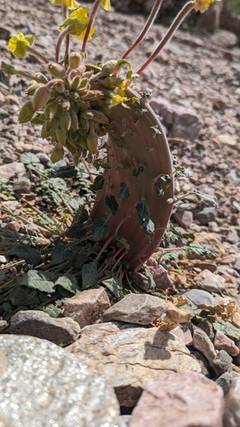
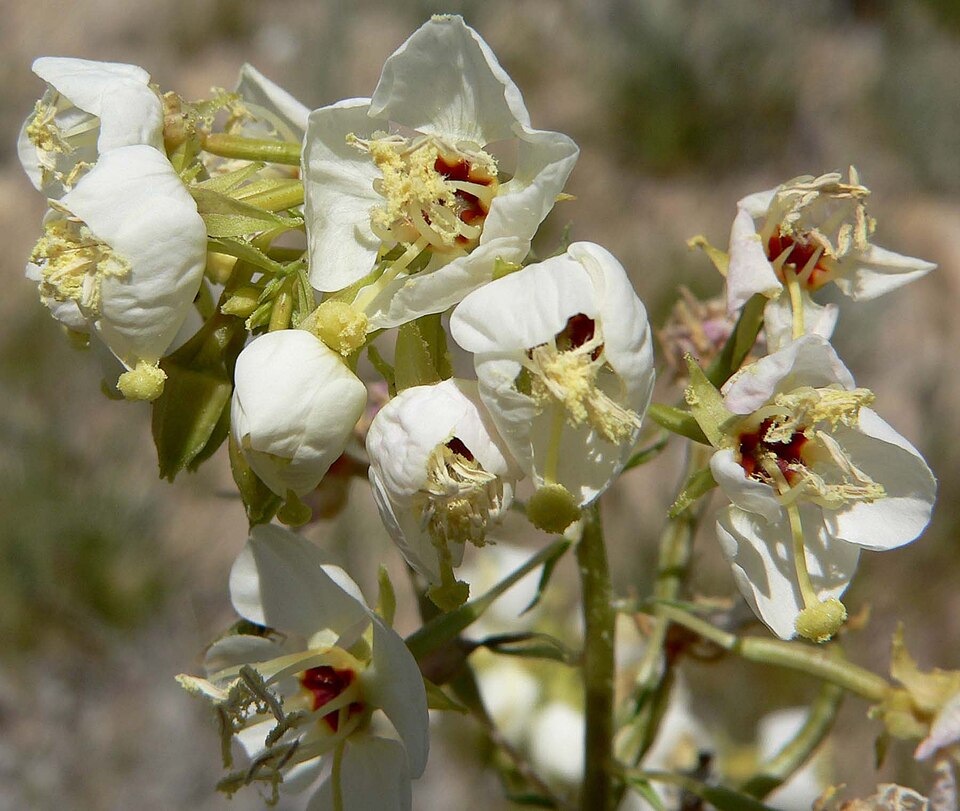
Chylismia claviformis, known as browneyes, is an annual wildflower in the evening primrose family, native to the deserts of western North America, growing 4-24 inches (10-60 cm) tall from a basal rosette with one to several branching stems. The mostly basal leaves are pinnately lobed, 1-4 inches (2.5-10 cm) long, with a larger end lobe. Slender nodding spikes carry cup-shaped four-petaled flowers about 0.5 inch (1.3 cm) across that open in the evening, white to pale yellow, often with a reddish-brown or maroon spot at the base of each petal that forms the eye. The flowers fade to pinkish as they age. Narrow club-shaped seed capsules give the species its name claviformis, meaning club-shaped. It grows in sandy washes, flats, dunes, and roadsides below 5,000 feet (1,500 m). Bloom depends on winter rainfall, and in dry years few plants germinate or set seed.
Native Range
Chylismia claviformis is native to the deserts of the southwestern United States and northwestern Mexico, including the Mojave, Sonoran, and Great Basin deserts of California, Nevada, Arizona, Utah, and Baja California. It grows on sandy and gravelly flats, washes, dunes, and roadsides.Suggested Uses
Used in desert wildflower seed mixes, native annual plantings, and revegetation of sandy disturbed ground. The evening flowers draw moths and other pollinators in arid regions.How to Identify
Appearance
Size & Dimensions
Height4" - 2'
Width/Spread4" - 1'
Bloom Information
Flowering runs mainly from February through May after wet winters, with later bloom at higher elevations. The four-petaled flowers open in the evening and draw moths and other night insects, staying open into the cool morning. Bloom is heavy in wet years and sparse in dry ones.
Detailed Descriptions
Flower Description
white to pale yellow with brown eyeFoliage Description
greenGrowing Conditions
Sun Requirements
Requires 8-12 hours of direct sunlight daily
• Full Sun: 6+ hours of direct sunlight
• Partial Shade: 3-6 hours of direct sunlight
• Full Shade: Less than 3 hours of direct sunlight
Water & Climate
Water Needs
Drought Tolerance
Drought tolerant when established
Care & Maintenance
Care Guide
Grows in full sun on loose, sandy, sharply drained desert soils and tolerates heat and drought as a winter annual. Seed sown in fall germinates with winter rains and needs no extra water in a normal wet season. A soil pH of 7.0-8.5 suits the species. It needs open ground and competes poorly with dense vegetation. The plant completes its cycle quickly and dies as soils dry in late spring. It reseeds where sandy ground stays bare.Pruning
No pruning is needed for this annual. Spent plants can be left to drop seed or cleared once they dry. Removing faded spikes has little effect on a plant that lives a single season.Container Growing
Suitable for container growing
Minimum container size: 1 gallons
Toxicity
Non-toxicPlanting Guide
Planting Methods & Timing
Planting Method
direct sow
Direct Sow Timing
Fall, before winter rains
Plant Spacing
6 inches