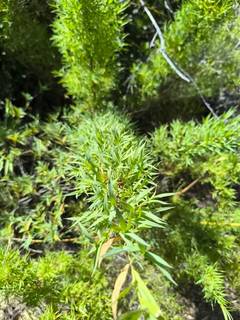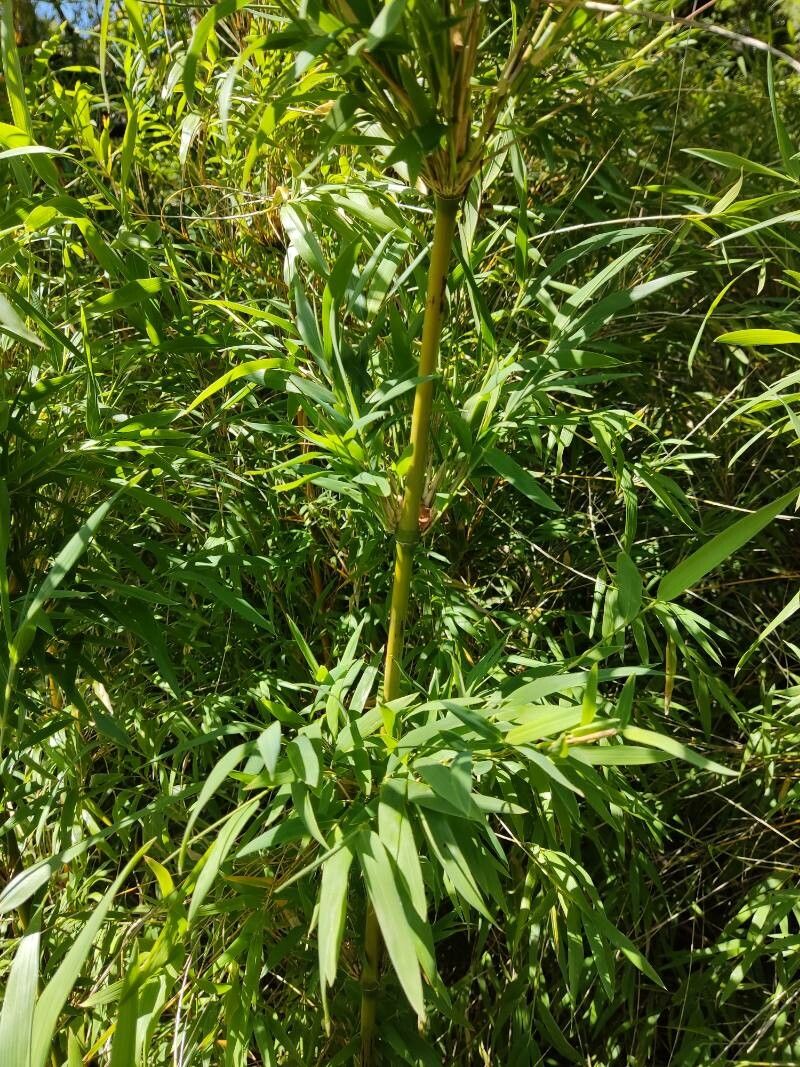
Chusquea, Genus, culeou, Species,
- Genus & species
Chilean bamboo
Chile and Argentina (Andean foothills and Patagonia)
Overview
Chusquea culeou is Chilean bamboo, a clumping evergreen bamboo reaching 15–20 feet (180–240 inches / 4.5–6 m) tall and 6–10 feet (72–120 inches / 1.8–3 m) wide at maturity. The culms are solid rather than hollow—0.5–1 inch (12–25 mm) in diameter—a structural trait that separates Chusquea from most other bamboo genera cultivated in temperate gardens, which carry hollow culms. Whorled branch clusters radiate from each node in a symmetrical arrangement. Bright green, narrow, lance-shaped leaves 2–4 inches (5–10 cm) long pack densely along the branches. The genus belongs to Poaceae. Growth habit is clumping with pachymorph (sympodial) rhizomes that expand the clump slowly outward, without running horizontally the way Phyllostachys rhizomes do; no rhizome barrier is needed. The species tolerates winter lows to −10°F (−23°C), placing it at the cold-hardy end of the clumping bamboos in cultivation. The species is monocarpic: the clone may flower once after 30–60 years, set seed, and die together with all genetically identical plants worldwide. A mass flowering event across Chile and cultivated populations around 2001 killed large stands. New culms emerge bright green and age to golden-yellow within 1–2 years. Young shoots are edible when cooked in the native range. Growth rate is moderate; mature culm height is reached within 3–5 years of planting.
Native Range
Chusquea culeou is native to the temperate forests of the Andean foothills and Patagonia (Chile and Argentina), occurring at elevations from 1,500 to 6,000 feet (450–1,800 m). The species forms dense understory stands in Nothofagus (southern beech) forests.Suggested Uses
Planted as a screen, specimen, and in containers of at least 15 gallons (57 L) in zones 6–9 at 6–10 foot (1.8–3 m) spacing. The clumping habit suits sites where running bamboos would be inappropriate—no barrier is needed. The solid culms and whorled branching carry year-round structural character that sets the species apart from hollow-culm bamboos. The cold hardiness to zone 6 extends the climate range for clumping bamboo further north than most Bambusa and Fargesia selections. Consistent moisture is required; dry, exposed sites are unsuitable. The bright green young culms and golden-yellow older culms produce a two-tone effect in mature plantings.How to Identify
Appearance
Size & Dimensions
Height15' - 20'
Width/Spread6' - 10'
Bloom Information
The species rarely flowers in cultivation and is monocarpic—individual clones may flower once after 30–60 years, set seed, and die. The 2001 mass flowering event killed large stands across Chile and connected cultivated populations worldwide. Most plants in cultivation never reach flowering age during the gardener's lifetime. The evergreen culm and foliage structure is the year-round feature.
Detailed Descriptions
Flower Description
Rarely flowers (monocarpic — may flower once after 30-60+ years, then the clone dies)Foliage Description
Bright green, narrow lance-shaped, 2-4 inches (5-10 cm), densely arranged in whorled branch clusters at each nodeGrowing Conditions
Sun Requirements
Requires 4-8 hours of direct sunlight daily
• Full Sun: 6+ hours of direct sunlight
• Partial Shade: 3-6 hours of direct sunlight
• Full Shade: Less than 3 hours of direct sunlight
Care & Maintenance
Care Guide
Plant in partial sun to full sun in moist, well-drained soil. Consistent moisture through the growing season is required; drought stress causes culm dieback and leaf drop. Clumping habit means no rhizome barrier is needed at planting, unlike running bamboos (Phyllostachys, Pleioblastus) that require deep 24–30 inch (60–75 cm) barriers. The species tolerates winter lows to −10°F (−23°C), placing it at the cold-hardy end of clumping bamboos in cultivation. The monocarpic flowering cycle means the clone may eventually flower and die together with all genetically identical plants (30–60 year cycle); propagation is by division of young rhizome offsets, and division every 5–10 years maintains vigor. The culms are solid, adding visual density compared with hollow-culm bamboos. Young shoots are edible when cooked, though the foliage is not palatable to deer.Pruning
Dead, damaged, or aged culms are removed at the base in late winter (February–March). Congested clumps are thinned by removing older culms (identified by faded color and reduced foliage) to allow light and air to reach younger growth. Culms are cut flush with the ground rather than partway up, since cut culms do not resprout and leave dead stubs in the clump.Pruning Schedule
Prune: February–March
early spring
Container Growing
Suitable for container growing
Minimum container size: 15 gallons