Chrysothamnus, Genus, viscidiflorus, Species,
- Genus & species
yellow rabbitbrush
Overview
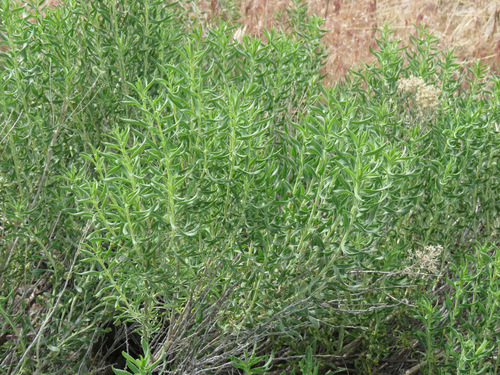
Chrysothamnus viscidiflorus, yellow rabbitbrush, is a low, rounded deciduous to semi-evergreen shrub in the Asteraceae, growing 1-4 ft (30-120 cm) tall and about as wide on brittle, erect, branching stems. The narrow, linear leaves are 0.5-2 in (1-5 cm) long, often twisted, and sticky or resinous to the touch, giving the species its name. From late summer into fall the branch tips carry dense, flat-topped clusters of small golden-yellow flower heads, each with only disk florets. The bloom comes when little else flowers in the high desert and supports large numbers of late-season bees and butterflies. Chrysothamnus viscidiflorus is native to dry plains, sagebrush steppe, and rocky slopes across the western United States, often on disturbed or overgrazed ground where it spreads readily. It grows from a deep root system, tolerates drought, cold, alkaline soils, and poor ground, and resprouts after fire. The shrub is short-lived and can look ragged with age, and it self-seeds freely enough to become weedy in disturbed sites. It needs full sun and sharp drainage and declines in shade or wet soil.
Native Range
Native to the western United States, across the Great Basin and intermountain west from eastern Washington and Montana south to California, Arizona, and New Mexico. It grows in sagebrush steppe, dry plains, and rocky slopes, often on disturbed ground.Suggested Uses
Used in dryland restoration, xeriscape and habitat gardens, and erosion control on disturbed slopes. Suited to sunny, low-water sites and late-season pollinator plantings. Combines with sagebrush, native grasses, and other Great Basin shrubs.How to Identify
Appearance
Size & Dimensions
Height1' - 4'
Width/Spread1' - 4'
Bloom Information
Blooms in late summer and fall, from August through October, after most desert plants have finished. The yellow clusters open over several weeks and fade to fluffy seed heads. Bloom timing shifts later at higher elevations.
Detailed Descriptions
Foliage Description
green to gray-greenGrowing Conditions
Sun Requirements
Requires 6-12 hours of direct sunlight daily
• Full Sun: 6+ hours of direct sunlight
• Partial Shade: 3-6 hours of direct sunlight
• Full Shade: Less than 3 hours of direct sunlight
Care & Maintenance
Care Guide
Grows in full sun and sharply drained sandy, rocky, or clay soil, including alkaline ground with pH 6.0 to 8.5. It needs very little water once established and tolerates cold, heat, and poor soil. Overwatering and shade cause weak, sparse growth. The shrub is short-lived and can be cut back hard in early spring to keep it dense. It self-seeds and may spread on bare ground.Pruning
Cut back by up to half in early spring before new growth to maintain a compact shape. Remove dead or broken stems at any time. Shearing after bloom tidies the spent seed heads.Pruning Schedule
Prune: March
early spring