Chrysothamnus, Genus, spp., Multiple species,
- Genus
- Multiple species
rabbitbrush
Overview
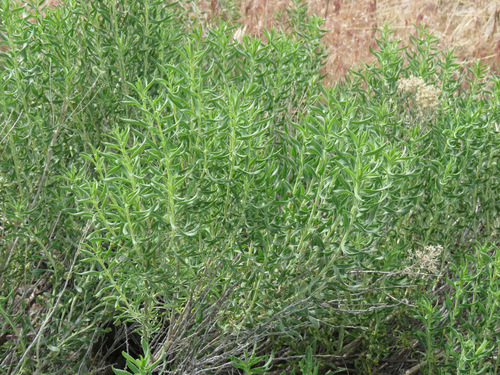
Chrysothamnus is a genus of deciduous shrubs in the family Asteraceae, native to the arid plains, foothills, and high desert of western North America. The genus includes roughly 9 species of rounded, multi-stemmed shrubs growing 1-7 feet (0.3-2.1 m) tall and 1-5 feet (0.3-1.5 m) wide, with flexible stems clothed in narrow, gray-green linear leaves 0.5-2.5 inches (1-6 cm) long. From late summer into fall, branch tips carry dense, rounded clusters of small golden-yellow flower heads, each head built only of tubular disc florets without ray petals. The bloom coincides with cooler nights and is followed by tufted, wind-dispersed seed. Plants develop deep taproots that reach moisture well below the surface, allowing survival on dry, alkaline, and rocky ground where many shrubs fail. Rabbitbrush spreads readily from seed and can colonise disturbed roadsides and overgrazed range, which limits its use in tidy plantings. The pungent foliage is generally left untouched by browsing deer and livestock. Across the genus, cold hardiness reaches into USDA zone 4, though species from lower deserts tolerate less winter cold.
Native Range
Chrysothamnus is native to western North America, ranging from the Great Plains and Rocky Mountains across the Great Basin to the eastern slopes of the Cascade and Sierra Nevada ranges, and from southern Canada into northern Mexico. It is most common on dry, open sagebrush steppe and high desert between 2,000 and 8,000 feet (600-2,400 m).Suggested Uses
Chrysothamnus is used in dryland and native plant gardens, on erosion-prone slopes, and in habitat and rangeland restoration across the western states. The late flowers draw bees and butterflies when little else blooms, and the seed feeds small birds. Its spreading, weedy tendency makes it better suited to naturalistic plantings than formal borders.How to Identify
Appearance
Size & Dimensions
Height1' - 7'
Width/Spread1' - 5'
Colors
Flower Colors
Foliage Colors
Bloom Information
Flowering runs from late summer into autumn, roughly August through October across much of the range, with timing shifting later at lower elevations. The golden flower clusters last 3-5 weeks and give way to small dry seeds tipped with white hairs. Bloom is heaviest after summers that bring some late-season moisture.
Detailed Descriptions
Foliage Description
gray-greenGrowing Conditions
Sun Requirements
Requires 6-12 hours of direct sunlight daily
• Full Sun: 6+ hours of direct sunlight
• Partial Shade: 3-6 hours of direct sunlight
• Full Shade: Less than 3 hours of direct sunlight
Care & Maintenance
Care Guide
Chrysothamnus grows in full sun and sharply drained soil, tolerating sand, gravel, clay, and alkaline ground with equal ease. Once established, plants need no supplemental water in regions receiving 8-16 inches (200-400 mm) of annual precipitation, and overwatering or rich soil shortens their life. They withstand wind, heat, and winter cold into USDA zone 4, though wet, poorly drained sites cause root rot. Most species reach flowering size within 2-3 years from seed. Space plants 3-5 feet (0.9-1.5 m) apart to allow the rounded form to develop. Lean soil and periodic hard frost hold growth compact.Pruning
Cut stems back by one-third to one-half in early spring before new growth begins to maintain a compact, rounded shape, since old plants grow open and woody at the base. Flowering occurs on the current season growth, so spring pruning does not reduce the autumn display. Broken or dead branches can be removed at any time.Pruning Schedule
Prune: March–April
early spring