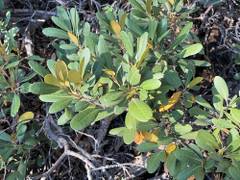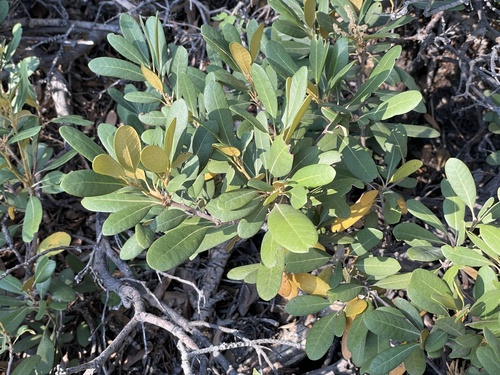
Chrysolepis, Genus, spp., Multiple species,
- Genus
- Multiple species
golden chinquapin
Overview
Chrysolepis is a genus of two evergreen trees and shrubs in the beech family, Fagaceae, native to the mountains of the western United States, where they are called golden chinquapins. C. chrysophylla, the giant chinquapin, grows as a tree 30-100 feet (9-30 m) tall in the moist forests of Oregon and Washington but stays shrubby on poor southern sites, while C. sempervirens, the bush chinquapin, is a spreading shrub 2-8 feet (0.6-2.4 m) tall in California's mountains. The leathery, lance-shaped evergreen leaves are dark green above and coated beneath with golden to rusty scales that give the genus its name. Plants are monoecious, bearing upright catkins of creamy male flowers with a heavy scent in summer, followed by spiny burs that enclose one to three edible, chestnut-like nuts ripening in the second year. Plants grow on dry, rocky, often acidic slopes and chaparral and resprout after fire from a woody base. One limitation in cultivation is slow growth and a strong need for sharp drainage and acidic soil, which makes the genus hard to establish in gardens. Hardiness is roughly zones 7-9.
Native Range
Chrysolepis is native to the western United States, in the mountains and foothills of California, Oregon, and Washington. C. chrysophylla grows in coastal and montane forests, while C. sempervirens occupies dry, rocky slopes and chaparral at middle to high elevations.Suggested Uses
Used in native-plant and dry-climate gardens, on banks and rocky slopes, and for habitat and erosion control on acidic soils. The shrubby species suits wildlife and chaparral plantings, while the tree form is grown as a specimen in large gardens. The nuts are eaten by wildlife and people.How to Identify
Appearance
Size & Dimensions
Height2' - 100'
Width/Spread3' - 40'
Bloom Information
Flowering occurs in summer, roughly June to August, when the upright creamy male catkins release a strong scent. The spiny burs that follow take a second season to ripen, so green and mature burs can appear on the plant at the same time. The nuts shed in autumn of their second year.
Detailed Descriptions
Foliage Description
dark green above, golden beneathGrowing Conditions
Sun Requirements
Requires 6-12 hours of direct sunlight daily
• Full Sun: 6+ hours of direct sunlight
• Partial Shade: 3-6 hours of direct sunlight
• Full Shade: Less than 3 hours of direct sunlight