Image 1 of 10
1 / 10
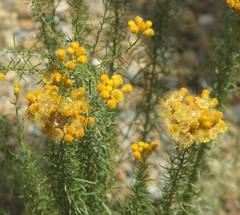
© Photo by and (c)2006 Derek Ramsey ( Ram-Man ). Location credit to the Chanticleer Garden., some rights reserved (CC-BY-SA) · Wikimedia Commons
Chrysocephalum, Genus, apiculatum, Species,
- Genus & species
Common everlasting
Widespread across mainland Australia and Tasmania
Overview
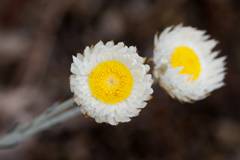
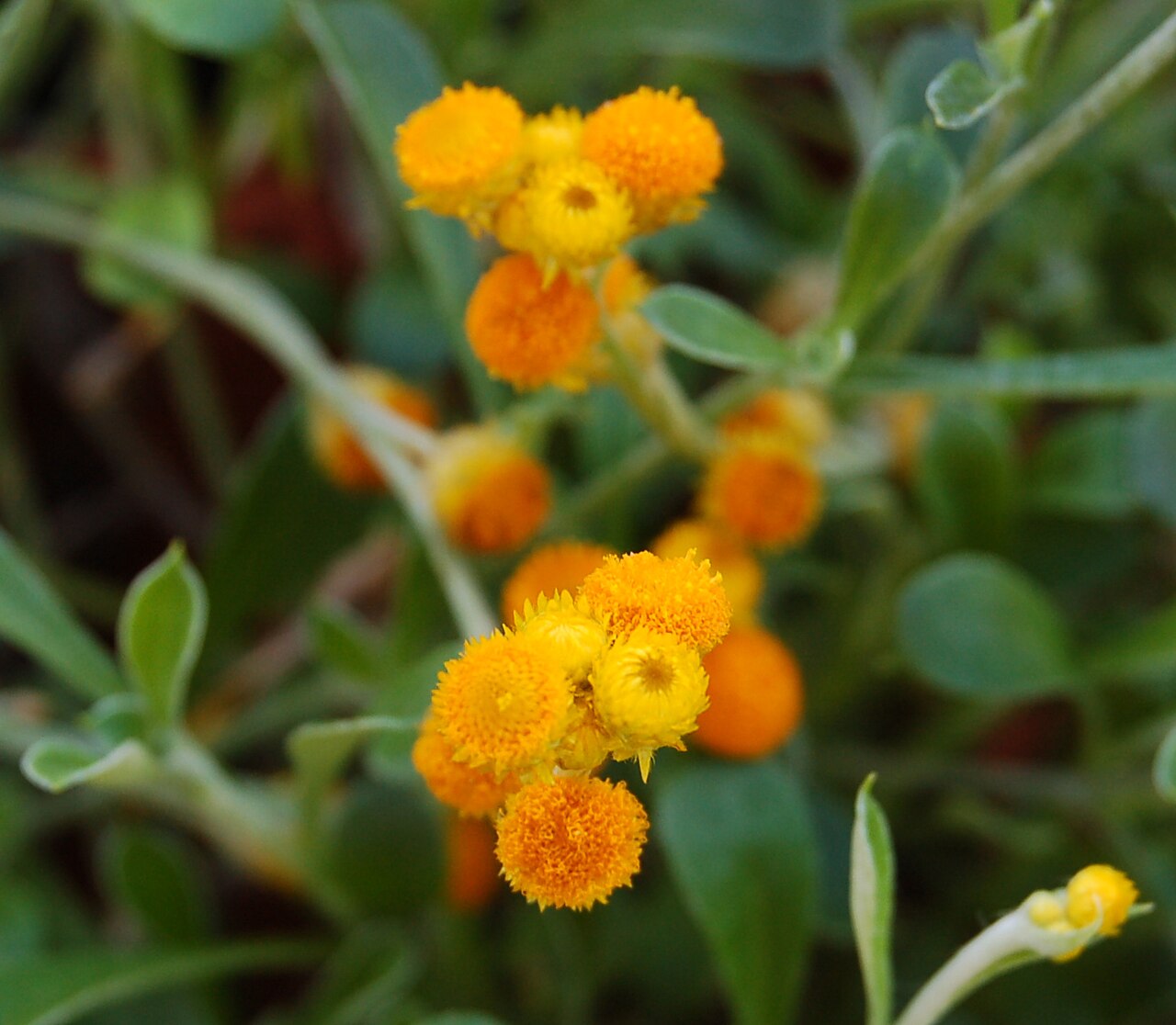
Chrysocephalum apiculatum is an evergreen perennial in the Asteraceae forming a low spreading mat 4-24 inches (10-60 cm) tall and 12-40 inches (30-100 cm) across, spreading by underground rhizomes and rooting stems. Leaves are alternate, linear to spoon-shaped, 0.4-2 inches (1-5 cm) long, grey-green to silver-white under a dense woolly covering, and end in a small abrupt point that gives the species its epithet. Flowerheads are golden-yellow buttons 0.2-0.4 inches (5-10 mm) across, each built from tubular florets ringed by short papery bracts, carried in dense flat-topped clusters of 3-15 on stems held above the foliage. Flowering runs September to May across most of the range, with scattered heads through winter in frost-free districts. Dried heads hold their colour for 12 months or more, and stems are cut for the dried flower trade. Plants tolerate 19F (-7C), dry periods of 8-12 weeks and shallow rocky soils, but crowns rot through humid summers on heavy clay, mats thin at the centre after 3-4 years, and seedlings appear in gravel and paving joints.
Native Range
Chrysocephalum apiculatum is native to Australia and occurs in every state and territory, from coastal heath and grassland to inland ranges and semi-arid woodland. It grows on free-draining sandy, gravelly and rocky soils in open sunny positions from sea level to 5,900 feet (1,800 m). The species varies across this range, with prostrate mat forms on exposed sites and upright forms 20-24 inches (50-60 cm) tall in sheltered grassland.Suggested Uses
Grown as a groundcover in native and dry gardens, spaced 12-20 inches (30-50 cm) apart for closed cover within two seasons. Used on embankments, in rockeries, between paving stones and in median strip plantings where irrigation is limited. Also grown in containers and hanging baskets of 3 gallons (11 litres) or larger, and cut for fresh and dried arrangements during the September to May flowering period.How to Identify
Appearance
Size & Dimensions
Height4" - 2'
Width/Spread1' - 3'4"
Bloom Information
Flowering runs from September to May across most of Australia, with scattered heads through winter in frost-free districts, so plants carry colour for 25-35 weeks a year. Each cluster stays in flower 3-5 weeks and successive stems open in sequence through the season. Heads dry on the stem and hold colour for 12 months or more. Flowering is heaviest in the second and third years and falls away as the centre of the mat opens up.
Detailed Descriptions
Foliage Description
Grey-green to silver-whiteGrowing Conditions
Sun Requirements
Requires 6-12 hours of direct sunlight daily
• Full Sun: 6+ hours of direct sunlight
• Partial Shade: 3-6 hours of direct sunlight
• Full Shade: Less than 3 hours of direct sunlight
Care & Maintenance
Care Guide
Chrysocephalum apiculatum grows in full sun with 6-12 hours of direct exposure; in part shade stems stretch and flowerhead counts drop by half or more. It roots on free-draining sand, gravel, loam and light clay at pH 5.5-7.5, and crowns rot where soil stays wet, particularly through warm humid weather. Watering of 0.5-1 gallon (2-4 litres) weekly through the first summer establishes plants; after that they carry through 8-12 weeks without rain and take no irrigation in districts receiving 16 inches (400 mm) of annual rainfall. Established plants tolerate 19F (-7C). Low-phosphorus native fertiliser at 0.9 oz per square yard (25 g per square metre) in early spring covers annual demand, while richer feeding produces soft growth and fewer flowerheads. Mats thin at the centre after 3-4 years and are divided or replaced at that point.Pruning
Cutting the whole plant back by half in late autumn removes spent flower stems and produces dense basal regrowth over 6-8 weeks. A second light trim after the main spring flush carries flowering into autumn. Cuts into leafless woody bases reshoot poorly, so trimming stays within the leafy zone. Stems harvested for drying during flowering do the same work as a trim.Pruning Schedule
Prune: May–June
fall
Container Growing
Suitable for container growing
Minimum container size: 3 gallons