Chrysocephalum, Genus, semipapposum, Species,
- Genus & species
clustered everlasting
Overview
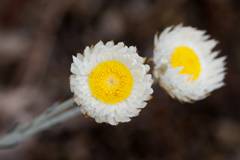
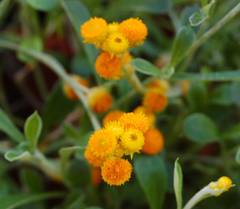
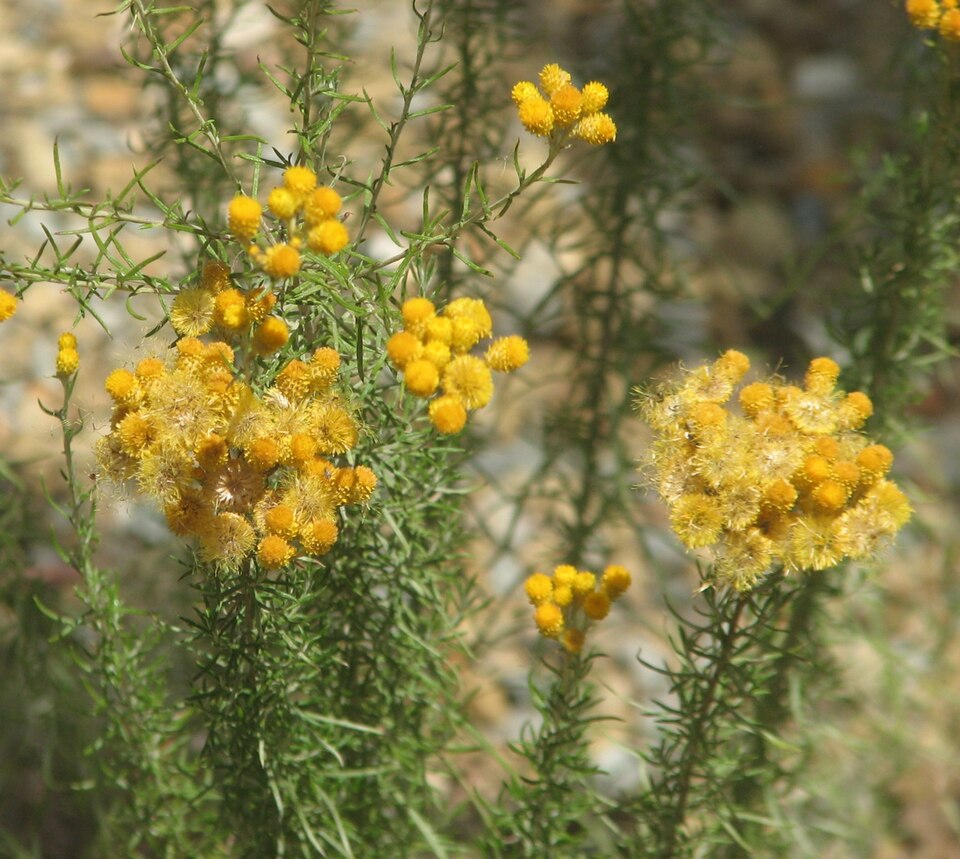
Chrysocephalum semipapposum is an evergreen perennial herb or subshrub growing 12-36 inches (30-90 cm) tall and spreading by rhizomes to form loose colonies 12-24 inches (30-60 cm) wide. The upright stems carry narrow, grey-green, slightly woolly leaves 0.4-1.6 inches (10-40 mm) long with a faint aroma when crushed. Dense flat-topped clusters of small golden-yellow, papery, button-like flower heads, each about 0.2 inch (5 mm) wide, are held at the stem tips. The dried flower heads hold their colour and form for several weeks. Flowering occurs from spring into autumn, with the heaviest display in late spring and summer. Growth is rapid in warm weather, and plants spread by underground stems that can extend beyond the original clump. The papery flower heads are used in dried arrangements. Plants become open and sprawling with age, and the spreading rhizomes can extend into adjacent plantings.
Native Range
Native across much of southern and eastern Australia, including all mainland states and Tasmania. Grows in grassland, open woodland, and rocky slopes on well-drained sandy, loam, and gravelly soils in sunny positions.Suggested Uses
Grown in native, meadow, and low-water gardens for groundcover and seasonal yellow colour, spaced 12-18 inches (30-45 cm) apart. Cut and dried flower heads are used in everlasting arrangements. The rhizomatous spread suits informal plantings but can crowd smaller neighbours in mixed beds.How to Identify
Appearance
Size & Dimensions
Height1' - 3'
Width/Spread1' - 2'
Bloom Information
Detailed Descriptions
Foliage Description
grey-greenGrowing Conditions
Sun Requirements
Requires 6-10 hours of direct sunlight daily
• Full Sun: 6+ hours of direct sunlight
• Partial Shade: 3-6 hours of direct sunlight
• Full Shade: Less than 3 hours of direct sunlight
Care & Maintenance
Care Guide
Grows in full sun in well-drained sandy, loam, or gravelly soils and tolerates extended dry periods once established. It spreads by rhizomes, which can extend into surrounding beds. Root rot develops in wet or heavy soils. Cutting plants back hard after flowering restores a denser habit and removes the open, woody growth that develops with age. Few pests trouble it. Plants are short-lived but renew themselves through spreading stems and self-seeding.Pruning
Cutting back by up to two thirds after the main flowering flush keeps the habit dense and removes spent heads. Plants left unpruned become open and woody at the base. The rhizomes can be trimmed at the clump edge to limit spread.Pruning Schedule
Prune: March–April
fall
Container Growing
Suitable for container growing
Minimum container size: 3 gallons