Adonidia, Genus, merrillii, Species,
- Genus & species
christmas palm
Philippines (Palawan, Danjugan Island)
Overview
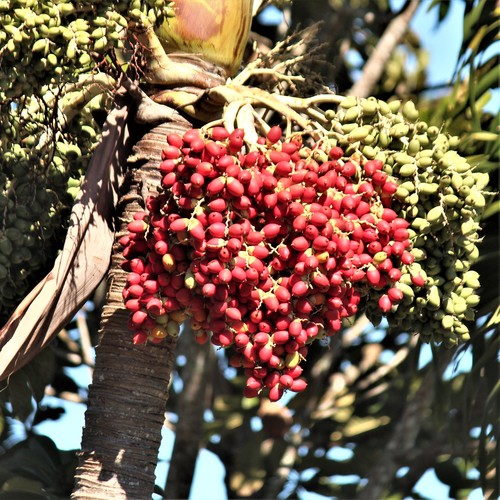
Adonidia merrillii (formerly Veitchia merrillii) is the Christmas palm (Manila palm), growing 120–300 inches (300–750 cm) tall with a single smooth gray trunk 6–8 inches (15–20 cm) in diameter. The common name refers to the bright red fruit clusters that ripen in December in the Northern Hemisphere. Pinnate fronds 48–72 inches (120–180 cm) in a compact arching crown above a smooth green crownshaft. Self-cleaning: old fronds drop cleanly from the crownshaft without requiring manual removal — a maintenance trait that distinguishes it from many palms that retain dead fronds. The compact crown at 60–96 inches (150–240 cm) wide suits narrow spaces and is smaller than most landscape palms. Cream-white flowers in branched inflorescences below the crownshaft. Small red fruit 0.5 inch (12 mm) in dense hanging clusters — the fruit stains surfaces below when it drops. Native to the Philippines (Palawan and Danjugan Island). Susceptible to lethal yellowing disease (a phytoplasma spread by planthoppers) in Florida and the Caribbean — infected trees die within 3–5 months; no cure exists. Frost-tender: foliage damage at 32°F (0°C). Full sun to partial shade. Drought-tolerant once established. Non-toxic. Growth rate is moderate — 12–18 inches (30–45 cm) per year. Zones 10–11. Containers of 10+ gallons (40+ liters).
Native Range
Native to the Philippines (Palawan and Danjugan Island). Widely planted as an ornamental palm in tropical regions worldwide.Suggested Uses
Grown as a landscape palm in zones 10–11 or in containers of 10+ gallons (40+ liters). The compact crown suits narrow spaces. Self-cleaning. Red fruit stains — position away from light-colored surfaces. Check lethal yellowing risk in your area. Non-toxic.How to Identify
Appearance
Size & Dimensions
Height10' - 25'
Width/Spread5' - 8'
Bloom Information
Detailed Descriptions
Flower Description
Cream-white, in branched inflorescence below crownshaftFoliage Description
Dark green, pinnate fronds, archingGrowing Conditions
Sun Requirements
Requires 6-10 hours of direct sunlight daily
• Full Sun: 6+ hours of direct sunlight
• Partial Shade: 3-6 hours of direct sunlight
• Full Shade: Less than 3 hours of direct sunlight
Care & Maintenance
Care Guide
Full sun to partial shade. Drought-tolerant once established. Self-cleaning (old fronds drop cleanly). Susceptible to lethal yellowing disease in Florida and Caribbean — no cure. Frost-tender at 32°F (0°C). Red fruit stains surfaces. Non-toxic. Zones 10–11.Pruning
Self-cleaning — old fronds drop from the crownshaft without removal. Remove spent inflorescence stalks and fruit clusters to prevent staining below. No routine pruning needed.Container Growing
Suitable for container growing
Minimum container size: 10 gallons