Chimonanthus, Genus, spp., Multiple species,
- Genus
- Multiple species
Wintersweet
Overview
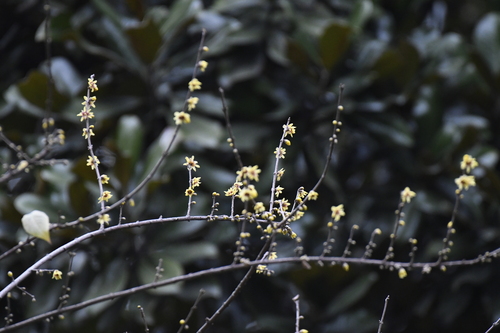
Chimonanthus is a genus of about six deciduous and semi-evergreen shrubs in the family Calycanthaceae, native to China. The most familiar species, C. praecox, is grown as wintersweet for its fragrant winter flowers. Plants form upright, multi-stemmed shrubs 6-13 feet (1.8-4 m) tall and 6-10 feet (1.8-3 m) wide, with opposite, lance-shaped leaves 2-8 inches (5-20 cm) long that feel rough above. The leaves turn yellow in autumn before falling on deciduous species. In winter, before the leaves emerge, the bare stems carry waxy, nodding, cup-shaped flowers about 0.8-1 inch (2-2.5 cm) across, with outer tepals of pale to deep yellow and inner tepals often stained maroon; the scent is strong and carries on cold air. C. nitens and C. salicifolius are more nearly evergreen and bloom in autumn. Flowering on bare wood is followed by urn-shaped, woody seed receptacles that hold the developing seeds. Species grow in mountain woodland and on slopes in central and eastern China. One limitation is slow establishment: young plants can take three to five years to begin flowering, and the open winter blooms can be browned by hard freezes. Most are hardy in zones 7-9.
Native Range
Chimonanthus is native to China, where species grow in mountain woodland, ravines, and on forested slopes in central and eastern provinces. C. praecox has been cultivated in Chinese gardens for centuries and is now planted in temperate regions worldwide.Suggested Uses
Used as a winter-flowering shrub near paths, doorways, and seating where the fragrance can be noticed in cold months. Often trained against a sunny wall or grown in a shrub border with later-flowering plants. Cut winter stems are brought indoors for scent.How to Identify
Appearance
Size & Dimensions
Height6' - 13'
Width/Spread6' - 10'
Bloom Information
On deciduous species such as C. praecox, flowering occurs in mid-winter to early spring, roughly December to March, on leafless stems. Evergreen species such as C. nitens bloom in autumn instead. Individual flowers persist for weeks in cold weather, and the scent is strongest on still, frosty days.
Detailed Descriptions
Flower Description
yellow with maroon inner markingsFoliage Description
greenGrowing Conditions
Sun Requirements
Requires 4-8 hours of direct sunlight daily
• Full Sun: 6+ hours of direct sunlight
• Partial Shade: 3-6 hours of direct sunlight
• Full Shade: Less than 3 hours of direct sunlight
Care & Maintenance
Care Guide
Grow Chimonanthus in full sun to part shade in fertile, freely draining soil; a position against a warm wall helps the winter flowers in colder areas. Plants tolerate a range of soils, including chalk, but need moisture during the first few seasons while establishing. Once settled, they withstand short dry spells. Flowering improves with summer warmth that ripens the wood. Little routine feeding is needed beyond an annual mulch. Plants are slow to start but long-lived once established.Pruning
Prune immediately after flowering, since flower buds form on the previous summer's growth and later pruning removes the coming display. Thin out old or crowded stems at the base to keep the shrub open, and shorten flowered shoots to a few buds. Wall-trained plants can have outward-growing shoots cut back after bloom.Pruning Schedule
Prune: March–April
early spring