Chiloglottis, Genus, spp., Multiple species,
- Genus
- Multiple species
bird orchid
Overview
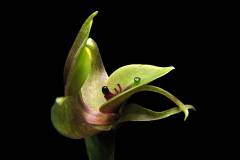
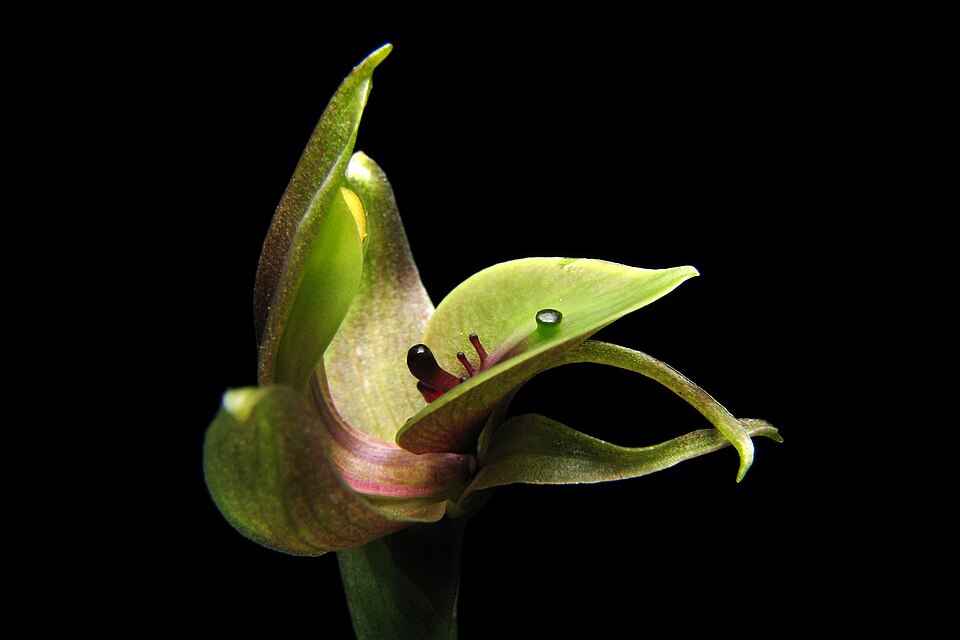
Chiloglottis is a genus of about twenty-five terrestrial orchids native to Australia and New Zealand, known as bird orchids or wasp orchids. Each plant is a small tuberous geophyte producing two flat, ground-hugging leaves 0.8-2.4 inches (2-6 cm) long, between which a single flower is held on a short stalk 1-4 inches (2.5-10 cm) tall. The flowers are green, reddish, or purplish-brown and measure 0.4-1 inch (1-2.5 cm) across; the labellum carries a cluster of dark, glossy, gland-like calli. These calli mimic the form and scent of female thynnine wasps, and pollination occurs when male wasps attempt to mate with the labellum and transfer pollinia, a mechanism called pseudocopulation. Plants are dormant in summer and emerge with autumn and winter rains, flowering from late winter into spring depending on species and region. Colonies spread underground by daughter tubers and can form dense ground-level patches in Eucalyptus forest, woodland, and sheltered moist gullies. The genus is challenging in cultivation because each species depends on specific mycorrhizal fungi and, for seed set, on its particular wasp pollinator. One limitation for growers is this fungal dependence, which makes the orchids slow and unreliable outside their natural range. Most species occur in temperate southeastern Australia.
Native Range
Chiloglottis is native to southeastern and eastern Australia, including Tasmania, with several species in New Zealand. Plants grow in eucalypt forest, heathy woodland, and sheltered moist gullies, often in leaf litter on slopes.Suggested Uses
Grown almost exclusively by terrestrial-orchid specialists and in botanical collections of Australian flora. Suited to plunge-pot culture and conservation displays rather than open garden beds. Plants also occur in managed bushland and reserve settings.How to Identify
Appearance
Size & Dimensions
Height1" - 5"
Width/Spread2" - 4"
Bloom Information
Flowering runs from late winter into spring, roughly August to November in the Southern Hemisphere, varying by species and rainfall. Each plant produces a single flower that lasts one to three weeks. Some species flower in autumn where rains arrive earlier.
Detailed Descriptions
Flower Description
green to reddish or purplish-brownFoliage Description
greenGrowing Conditions
Sun Requirements
Requires 1-4 hours of direct sunlight daily
• Full Sun: 6+ hours of direct sunlight
• Partial Shade: 3-6 hours of direct sunlight
• Full Shade: Less than 3 hours of direct sunlight
Care & Maintenance
Care Guide
Chiloglottis is seldom grown deliberately and is hard to maintain because each species relies on specific soil fungi. Where cultivated by specialists, plants are kept in deep pots of free-draining sandy loam mixed with leaf litter from their native habitat. They need a cool, moist autumn-to-spring growing season followed by a dry summer dormancy. Dappled light matches their woodland origins. Watering during summer dormancy rots the tubers. Most growers maintain colonies by keeping the symbiotic fungus alive rather than by conventional feeding.Pruning
No pruning is required. Dead leaves and spent flower stalks wither as the plant enters summer dormancy and can be cleared once they detach. Disturbing the soil around the tubers risks breaking the fungal association.Container Growing
Suitable for container growing
Minimum container size: 1 gallons