Chelidonium, Genus, spp., Multiple species,
- Genus
- Multiple species
greater celandine
Europe and western Asia; naturalised in North America
Overview
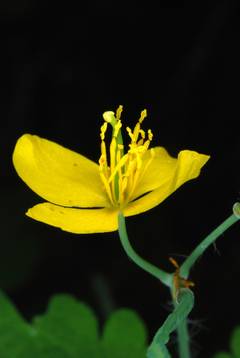
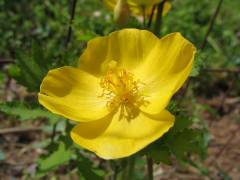
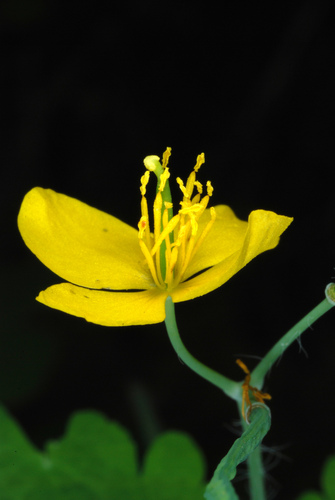
Chelidonium is a genus of the poppy family, Papaveraceae, usually treated as the single species C. majus, greater celandine, a short-lived perennial native to Europe and western Asia and widely naturalised in North America. It forms a loose, branching clump 1 to 3 feet (30 to 90 cm) tall with brittle stems that exude a bright orange-yellow latex when broken. The soft, blue-green leaves are pinnately divided into rounded, lobed leaflets. From late spring through summer it bears loose clusters of four-petalled yellow flowers about 0.75 inch (2 cm) across, each lasting a short time and followed by slender upright capsules. The seeds carry a fleshy white appendage (elaiosome) that attracts ants, which disperse them, so plants self-sow readily and can spread into shaded, disturbed ground. The orange sap and all plant parts are poisonous and contain isoquinoline alkaloids that irritate skin and are toxic if eaten. C. majus grows in hedgerows, woodland edges, walls, and waste ground, and is regarded as a weed in parts of its naturalised range.
Native Range
Chelidonium majus is native to Europe and western Asia, from Britain and the Mediterranean east to Siberia and Japan. It has become widely naturalised across temperate North America, where it grows in disturbed and shaded ground.Suggested Uses
Grown in cottage, woodland, and wildflower gardens and in some herb collections for its long season of yellow flowers, though its toxicity and self-seeding limit wider use. It naturalises in shade and rough ground. Historically the orange sap was used in folk medicine, a use limited by the plant toxicity.How to Identify
Appearance
Size & Dimensions
Height1' - 3'
Width/Spread1' - 2'
Colors
Bloom Information
Flowering runs from late spring through summer, roughly May to September, with a long succession of short-lived yellow flowers. Slender capsules ripen quickly and fling or drop their seeds, which ants then carry off. Bloom continues until frost in mild seasons.
Detailed Descriptions
Foliage Description
blue-greenGrowing Conditions
Sun Requirements
Requires 2-6 hours of direct sunlight daily
• Full Sun: 6+ hours of direct sunlight
• Partial Shade: 3-6 hours of direct sunlight
• Full Shade: Less than 3 hours of direct sunlight
Care & Maintenance
Care Guide
Greater celandine grows in part shade to full shade in moist, well-drained soil of moderate fertility, though it tolerates poor and dry ground and a wide pH range. It self-seeds heavily and can spread through beds and into nearby wild areas, so removing seed capsules before they ripen limits its spread. Plants are short-lived but persist in place through constant self-sowing. The bright orange sap stains and irritates skin, and all parts are poisonous if eaten, containing isoquinoline alkaloids. It needs little care and has no significant pests.Pruning
No formal pruning is needed. Cutting plants back and removing seed capsules before they ripen curbs the heavy self-sowing. Whole plants are pulled or cut at the base where they are not wanted, before seed is shed.Pruning Schedule
Prune: June–July
summer