Cheilanthes, Genus, austrotenuifolia, Species,
- Genus & species
rock fern
Overview
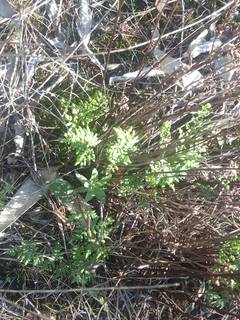
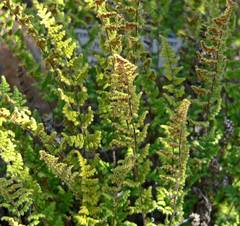
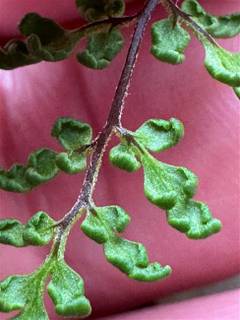
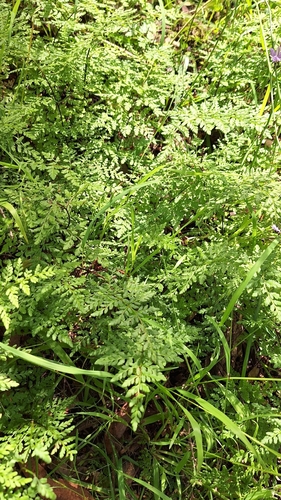
Cheilanthes austrotenuifolia is a small terrestrial fern forming tufted clumps of fronds 10-40 cm (4-16 in) tall from a short, scaly rhizome. The fronds are bipinnate to tripinnate and narrowly triangular to oblong, with numerous small ultimate segments 1-3 mm (0.04-0.12 in) wide; the upper surface is mid- to dark green while the rachis and stipe are dark brown to blackish and clothed in pale scales. Spore-bearing sori sit along the recurved segment margins, protected by the rolled leaf edge rather than a separate indusium. As a drought-adapted rock fern, the fronds curl and desiccate during dry periods and re-expand after rain, so a clump can look brown and shrivelled for weeks in summer. It grows in shallow soil pockets among rocks, on cliff ledges, and in dry sclerophyll forest and woodland, often in full to partial sun where few other ferns persist. Plants spread slowly into patches 15-30 cm (6-12 in) across. In cultivation it tolerates extended dry spells once established but resents waterlogged soil and deep shade, where the fronds become sparse and drawn.
Native Range
Native to southern and eastern Australia, where it occurs across New South Wales, Victoria, Tasmania, South Australia, and southern Queensland.Suggested Uses
Used in rockeries, crevice and dry-stone wall plantings, and native gardens where its drought tolerance suits exposed, shallow-soil positions. It also grows in containers and trough gardens with a free-draining mix. Grown alongside other small Australian natives in low-water schemes.How to Identify
Growing Conditions
Sun Requirements
Requires 3-8 hours of direct sunlight daily
• Full Sun: 6+ hours of direct sunlight
• Partial Shade: 3-6 hours of direct sunlight
• Full Shade: Less than 3 hours of direct sunlight
Care & Maintenance
Care Guide
Grows in free-draining, gritty or rocky soil with a slightly acidic to neutral pH of about 5.5-7.0. It tolerates full sun to partial shade, though light shade keeps fronds greener through summer in hot inland gardens. Occasional watering supports establishment; thereafter supplemental water is needed only during prolonged drought, as the rhizome survives dry spells by shedding frond tissue. Heavy, poorly drained soils cause rhizome rot. The plant is frost-hardy within its native range and withstands light to moderate frosts once established. Fronds that brown off in summer can be left in place and are replaced after autumn rains.Pruning
Pruning is generally limited to removing old, browned, or damaged fronds at the rhizome in late winter before new growth emerges. No formative pruning is required. Spent fronds left in place help shade the rhizome through dry periods.Pruning Schedule
Prune: August
winter
Container Growing
Suitable for container growing
Minimum container size: 2 gallons