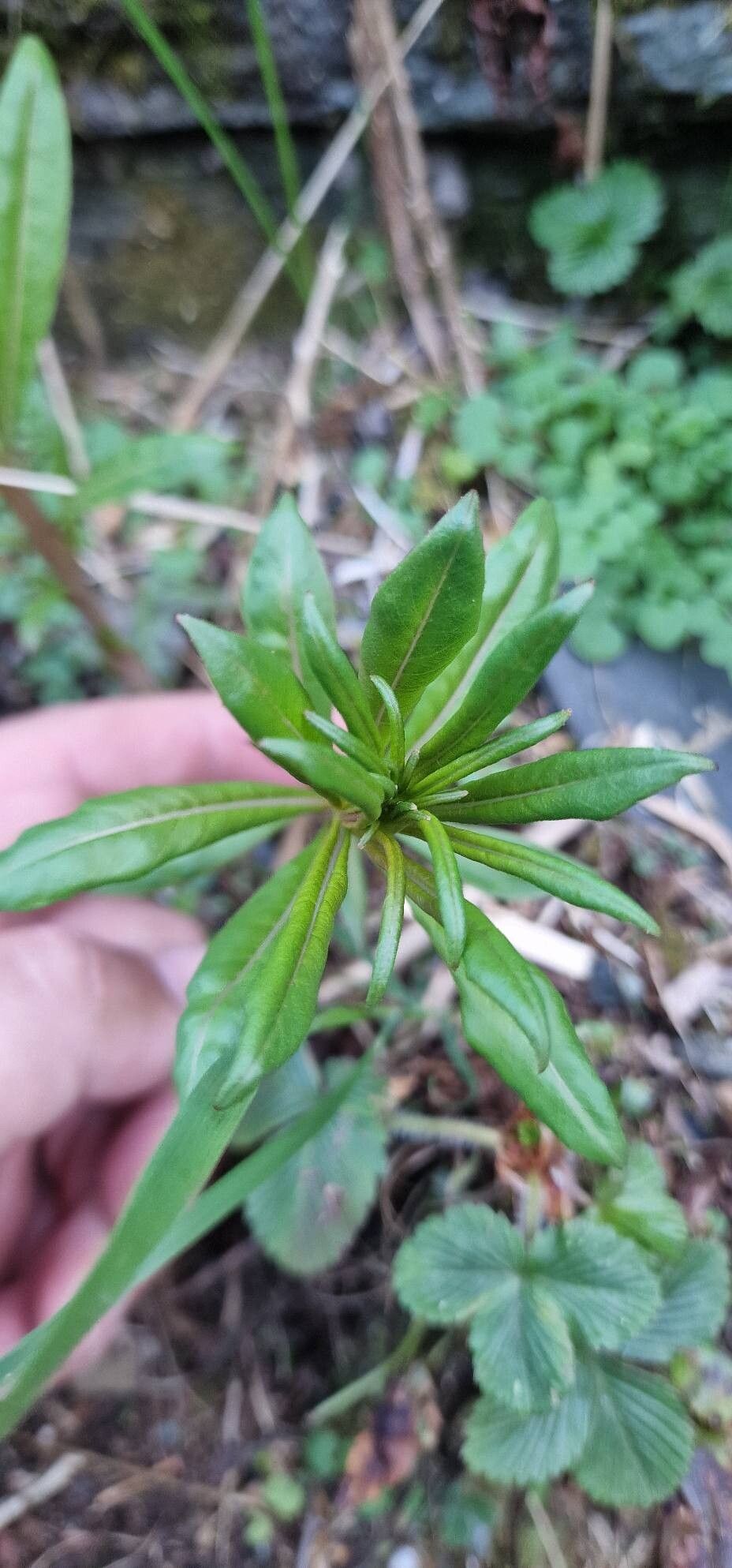
Chamerion angustifolium
fireweed
Circumboreal — North America (Alaska to Newfoundland south through mountain ranges), Europe, and northern Asia; disturbed ground including burn sites, clearcuts, avalanche tracks, roadsides, and forest margins
Attracts PollinatorsAttracts ButterfliesAttracts HummingbirdsDrought Tolerant
Native to North America
Overview
Chamerion angustifolium is an upright herbaceous perennial growing 3-6 feet (90-180 cm) tall from deep spreading rhizomes, with individual stems 18-24 inches (45-60 cm) in basal spread and colonies reaching many feet across over several seasons. The species was formerly classified as Epilobium angustifolium and is circumboreal, native to North America, Europe, and Asia. Leaves are alternate, lance-shaped, willow-like, 2-6 inches (5-15 cm) long, medium green with a prominent pale midrib, and spirally arranged on unbranched stems — the spiral arrangement separates Chamerion spp. from the opposite-leaved Epilobium spp.. Magenta-pink to rose-purple four-petaled flowers 0.75-1 inch (2-2.5 cm) across open progressively from the base of a terminal raceme 8-24 inches (20-60 cm) long upward over July through September. Each flower produces a slender capsule splitting to release hundreds of seeds tipped with silky white hairs that disperse widely on wind. The deep rhizome system spreads aggressively into disturbed and open ground and is difficult to remove once established. Hardy zones 2-9. In Onagraceae spp..
Native Range
Circumboreal — native across North America from Alaska to Newfoundland south through mountain ranges to the central United States, and across temperate Europe and northern Asia. Grows on disturbed ground including burn sites, clearcuts, avalanche tracks, roadsides, and forest margins.Suggested Uses
Grown in large naturalistic plantings, meadow restorations, burn-site revegetation, pollinator plantings, and wild edges of rural properties, spaced 24-36 inches (60-90 cm). The aggressive spread and tall unbranched habit suit the species to large open plantings where a mixed colony of stems fills in over time. Hardy zones 2-9.How to Identify
Appearance
Size & Dimensions
Height3' - 6'
Width/Spread1'6" - 2'
Bloom Information
Summer to early fall (July-September). Magenta-pink to rose-purple four-petaled flowers 0.75-1 inch (2-2.5 cm) across in terminal racemes 8-24 inches (20-60 cm) long, opening progressively from the base of the raceme upward. 10 weeks. A major nectar source for bumblebees, honeybees, and hummingbirds. Fireweed honey is commercially produced in Alaska and western Canada. Capsules split August through October to release wind-dispersed seeds with silky white plumes.
Detailed Descriptions
Flower Description
Magenta-pink to rose-purple four-petaled flowers 0.75-1 inch (2-2.5 cm) across in terminal racemes 8-24 inches (20-60 cm) long, opening progressively from the raceme base upward from July through SeptemberFoliage Description
Medium green with a prominent pale midrib; alternate lance-shaped willow-like leaves 2-6 inches (5-15 cm) long, spirally arranged on unbranched stems; fall color orange-red to yellow before stems die back in OctoberGrowing Conditions
Sun Requirements
Requires 4-10 hours of direct sunlight daily
• Full Sun: 6+ hours of direct sunlight
• Partial Shade: 3-6 hours of direct sunlight
• Full Shade: Less than 3 hours of direct sunlight
Care & Maintenance
Care Guide
Plant in well-drained loam, sand, clay, or rocky soil pH 5.0-7.0 in 4-10 hours of sun. Water weekly during the first growing season; established colonies tolerate drought. The species spreads aggressively by rhizomes and by wind-borne seed and forms dense colonies that crowd smaller plants. Colonies expand several feet per year in favorable sites and are difficult to remove once established. Hardy zones 2-9.Pruning
Cut spent flower stems to the ground in September after seed plumes disperse to limit self-seeding. Cut remaining growth to the ground in February before new shoots emerge. Rhizome fragments left in the soil sprout new shoots, so digging out a colony requires removing all rhizome pieces.Pruning Schedule
J
F
M
A
M
J
J
A
S
O
N
D
fallearly spring