Chamaecrista, Genus, spp., Multiple species,
- Genus
- Multiple species
sensitive and partridge peas
Tropical and subtropical America, with many species in North America
SunFull Sun – Part Shade
Overview
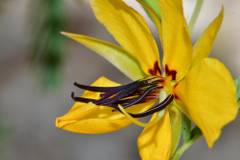
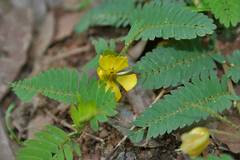
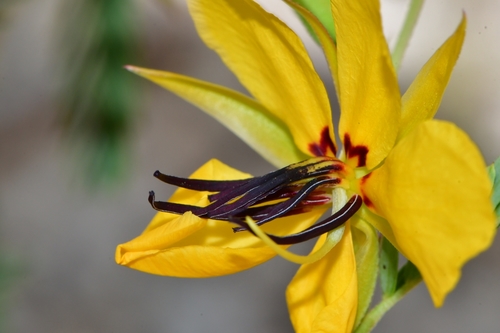
Chamaecrista is a genus of about 300 species of annual and perennial herbs and subshrubs in the legume family Fabaceae, most diverse in tropical and subtropical America and well represented in North America. Plants range from low annuals 1 to 3 ft (30 to 90 cm) tall to woody subshrubs, with pinnately compound leaves of many small, paired leaflets. In the sensitive species, such as C. nictitans, the leaflets fold together when touched or at nightfall. The flowers are bright yellow, 0.5 to 1.5 in (1 to 4 cm) across, with five slightly uneven petals and dark anthers, borne in the leaf axils. As legumes, these plants fix nitrogen in root nodules and grow on poor, sandy soils. C. fasciculata, the partridge pea, is a widespread North American annual sown in prairie restorations and erosion control, and its seeds feed quail and other ground birds. Extrafloral nectar glands on the leaf stalks draw ants and other insects. Limitations include the short life of the annual species, heavy reseeding, and reports of toxicity to cattle that graze large amounts of foliage.
Native Range
Chamaecrista ranges from the central and eastern United States through Mexico, Central America, the Caribbean, and South America, with additional species in Africa and Asia. The partridge pea (C. fasciculata) grows across the eastern and central United States in prairies, old fields, roadsides, and open sandy ground. Most species grow in open, sunny, disturbed sites on light soils.Suggested Uses
Chamaecrista is sown in prairie and meadow restorations, pollinator plantings, and erosion-control mixes on poor and sandy soils. The partridge pea is grown as a nitrogen-fixing cover and as a larval host for sulphur butterflies. Its seeds and cover support quail, songbirds, and other wildlife.How to Identify
Appearance
Size & Dimensions
Height1' - 3'
Width/Spread1' - 2'
Bloom Information
Chamaecrista blooms through summer and into early autumn, with the partridge pea flowering from July to September. Plants open new yellow flowers daily over many weeks as they keep growing. Bees collect pollen from the flowers, while butterflies and ants visit the nectar glands on the leaves.
Detailed Descriptions
Foliage Description
greenGrowing Conditions
Sun Requirements
Requires 6-10 hours of direct sunlight daily
• Full Sun: 6+ hours of direct sunlight
• Partial Shade: 3-6 hours of direct sunlight
• Full Shade: Less than 3 hours of direct sunlight
Water & Climate
Water Needs
Drought Tolerance
Drought tolerant when established