Chamaebatia, Genus, foliolosa, Species,
- Genus & species
mountain misery
Overview
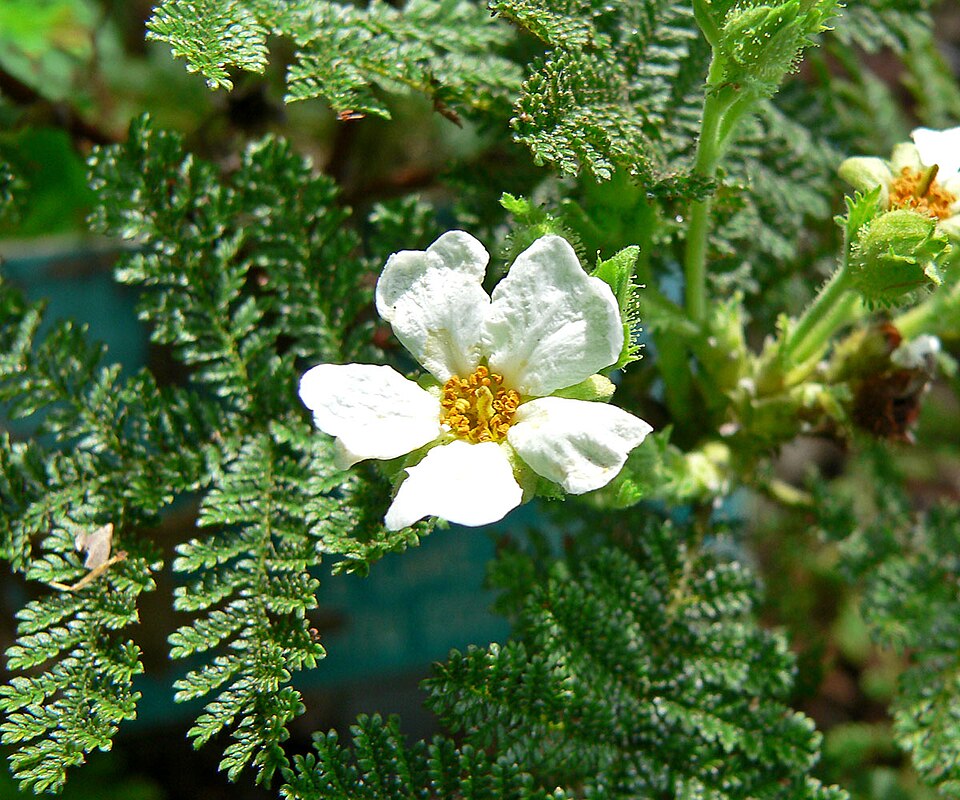
Chamaebatia foliolosa is a low, spreading evergreen shrub reaching 8-24 inches (20-60 cm) tall and spreading by rhizomes into dense colonies several feet wide. The leaves are finely divided and fern-like, 1.5-4 inches (4-10 cm) long, dark green, and densely glandular, coating the foliage in a sticky resin that releases a strong scent in heat. White, five-petaled flowers about 0.5-0.75 inch (13-19 mm) across, resembling small strawberry blossoms, open at the branch tips from May through July. The flowers give way to small dry seed capsules. Growth is low and mounding, with stems rooting where they spread to form a continuous groundcover under conifers. The resinous foliage is flammable and sticky to the touch. Native to the Sierra Nevada understory, it tolerates deep shade and dry summer soils but spreads by rhizomes and can be difficult to contain once established.
Native Range
Native to the Sierra Nevada and Cascade foothills of California, generally between 2,000 and 7,000 feet (600-2,100 m). Grows on dry, forested slopes under ponderosa pine and mixed conifers, often forming a dominant ground layer.Suggested Uses
Used as an evergreen groundcover under conifers, on dry shaded slopes, and in erosion control on forest soils. Spreads to fill large areas, so it suits naturalized settings rather than confined beds. Spaced 2-3 feet (60-90 cm) apart for groundcover, filling in by rhizomes.How to Identify
Appearance
Size & Dimensions
Height8" - 2'
Width/Spread3' - 6'
Bloom Information
Detailed Descriptions
Foliage Description
Dark greenGrowing Conditions
Sun Requirements
Requires 2-8 hours of direct sunlight daily
• Full Sun: 6+ hours of direct sunlight
• Partial Shade: 3-6 hours of direct sunlight
• Full Shade: Less than 3 hours of direct sunlight
Care & Maintenance
Care Guide
Grown in full sun to deep shade on dry, well-drained soil; established plants tolerate drought and poor, rocky ground. It spreads by rhizomes and can move well beyond its original planting in cultivated settings. Watering is needed only during establishment. The resinous foliage is flammable, which affects placement near structures in fire-prone areas. Plants need little feeding and grow in nutrient-poor forest soils. Few pests affect it.Pruning
Mow or cut colonies to the ground in late winter to renew dense, low growth. Rhizomes resprout readily after cutting or fire. Edges can be trimmed to limit spread.Pruning Schedule
Prune: February
winter