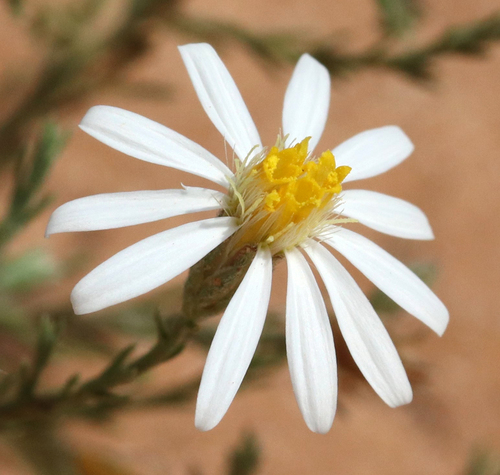
Chaetopappa, Genus, spp., Multiple species,
- Genus
- Multiple species
least daisy
South-central and southwestern United States and northern Mexico
Overview
Chaetopappa is a genus of about 10 species of small annual and perennial herbs in the daisy family, Asteraceae, native to the southern and southwestern United States and Mexico. Known as least daisies or lazy daisies, plants are slender and low, mostly 2 to 12 inches (5 to 30 cm) tall, with narrow, sometimes hairy leaves crowded near the base and along wiry stems. Each stem ends in a small daisy-like head 0.3 to 0.8 inch (8 to 20 mm) across, with white to pale lavender or pink ray florets around a yellow centre. C. ericoides, the rose-heath, is a tufted perennial of dry plains and rocky slopes that forms low cushions sheathed in tiny heath-like leaves. Most species grow in dry grassland, scrub, and rocky ground, flowering after seasonal rains. The genus tolerates poor, stony soils and drought, completing growth quickly where moisture is brief. Annual species set seed and die within a season, while perennials regrow from a woody base. The small heads close in dull weather and open in sun.
Native Range
Chaetopappa is native to North America, chiefly the south-central and southwestern United States, from Texas and Oklahoma west to Arizona, and south into northern Mexico, growing in dry grassland, scrub, and rocky ground.Suggested Uses
Grown in rock gardens, gravel gardens, native and wildflower plantings, and dry meadow mixes in warm, arid regions. The low cushions of C. ericoides suit troughs and crevice gardens. The small flowers draw bees and other pollinators.How to Identify
Appearance
Size & Dimensions
Height2" - 1'
Width/Spread3" - 1'
Bloom Information
Flowering depends on rainfall and runs mainly from spring into early summer, with a second flush after late-summer rains in some areas. Each small head lasts a few days, and plants bloom over several weeks where moisture holds. Bees and small insects visit the heads.
Detailed Descriptions
Flower Description
white, lavender, or pink rays with yellow centreFoliage Description
green to grey-greenGrowing Conditions
Sun Requirements
Requires 6-12 hours of direct sunlight daily
• Full Sun: 6+ hours of direct sunlight
• Partial Shade: 3-6 hours of direct sunlight
• Full Shade: Less than 3 hours of direct sunlight
Care & Maintenance
Care Guide
Plants grow in full sun in lean, sharply drained sandy, gravelly, or rocky soil, tolerating drought, heat, and low fertility. Rich or wet soil shortens their life and causes rot, so dry, open ground suits them. A near-neutral to slightly alkaline pH of about 6.5 to 8.0 fits most species. Annual types are grown from seed sown in autumn or early spring, while perennial species can be divided. Little water is needed once seedlings are up, and overwatering does more harm than drought. They have no significant pest problems.Pruning
No routine pruning is needed. Spent stems of perennial species can be sheared after flowering to tidy the plant and prompt a second flush. Annual species are pulled once they have set seed.Container Growing
Suitable for container growing
Minimum container size: 1 gallons
