Ceropegia, Genus, spp., Multiple species,
- Genus
- Multiple species
string of hearts
Africa, Arabia, southern Asia, and Australia
Overview
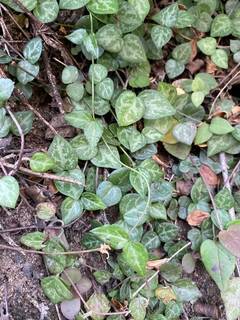
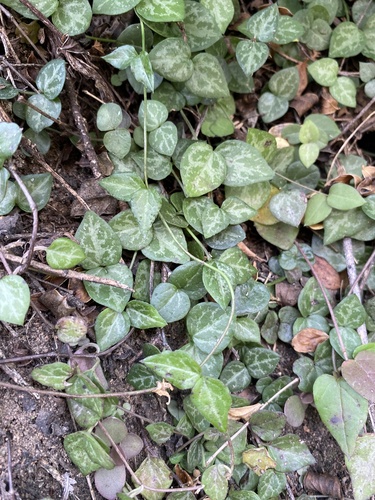
Ceropegia is a genus of more than 400 species of trailing, twining, and tuberous succulents in the family Apocynaceae, native to Africa, the Arabian Peninsula, southern Asia, and Australia. Growth forms range from thin-stemmed trailing vines to thick, upright stem succulents. C. woodii, called string of hearts, trails slender purple stems set with pairs of small heart-shaped, silver-marbled leaves and forms small tubers along the stem. The flowers are tubular and fused into a curved, lantern- or pitcher-shaped structure 0.5 to 3 inches (1.5 to 8 cm) long, often topped by a cage of hairy lobes, in greens, purples, and browns. These flowers work as temporary insect traps: small flies enter, are held by downward hairs while they transfer pollen, and are released as the hairs wither. Many species root where stems touch soil and grow from tubers, which makes them easy to propagate. Some, such as C. sandersonii, the parachute plant, have broad umbrella-like flower tops. As succulents, plants store water in stems, leaves, or tubers and tolerate dry spells, but they rot in cold, wet conditions.
Native Range
Ceropegia is native to the Old World tropics and subtropics, from sub-Saharan Africa and Madagascar through the Arabian Peninsula, India, and Southeast Asia to northern Australia. C. woodii comes from southern Africa.Suggested Uses
Grown as a houseplant, in hanging baskets, and in succulent collections, with the trailing species draped from shelves and elevated pots. In frost-free climates they grow outdoors in containers and rockeries. The flowers draw small pollinating flies.How to Identify
Appearance
Size & Dimensions
Height2" - 1'
Width/Spread3' - 12'
Bloom Information
Flowering of Ceropegia occurs mainly in late summer and autumn, though potted plants can bloom on and off through the warmer months. The lantern-shaped flowers last several days each and open in succession. Pollination is by small flies briefly trapped inside the flower.
Detailed Descriptions
Flower Description
green, purple, brown, creamFoliage Description
green, often silver-marbled, sometimes purple beneathGrowing Conditions
Sun Requirements
Needs bright indirect light. Keep it out of direct sun, which can scorch the leaves.
• Bright indirect light: a bright spot near a window, with no direct sun on the leaves
Care & Maintenance
Care Guide
Plants grow in bright, indirect light to a few hours of direct sun, in free-draining gritty soil such as a cactus or succulent mix. Watering is done when the soil has dried, more often in summer growth and sparingly in winter rest, since soggy soil and cold cause stem and tuber rot. Indoor minimum temperatures around 50 to 59F (10 to 15C) suit most species, and they are grown as houseplants or in hanging pots outside the tropics. The trailing species drape from shelves and baskets, while tuberous types form mounds. Feeding is light during growth. Mealybugs and aphids are the main pests under cover.Pruning
Trailing stems can be trimmed at any time to control length, and the cuttings root readily in soil or water. Removing leggy or bare stems encourages fuller growth from the base. No seasonal pruning is required.Container Growing
Suitable for container growing
Minimum container size: 1 gallons