Image 1 of 10
Plant Reference
1 / 10
Ceropegia, Genus, woodii, Species,
- Genus & species
string of hearts
South Africa, Eswatini, Zimbabwe — named after John Medley Wood, the South African botanist
Overview
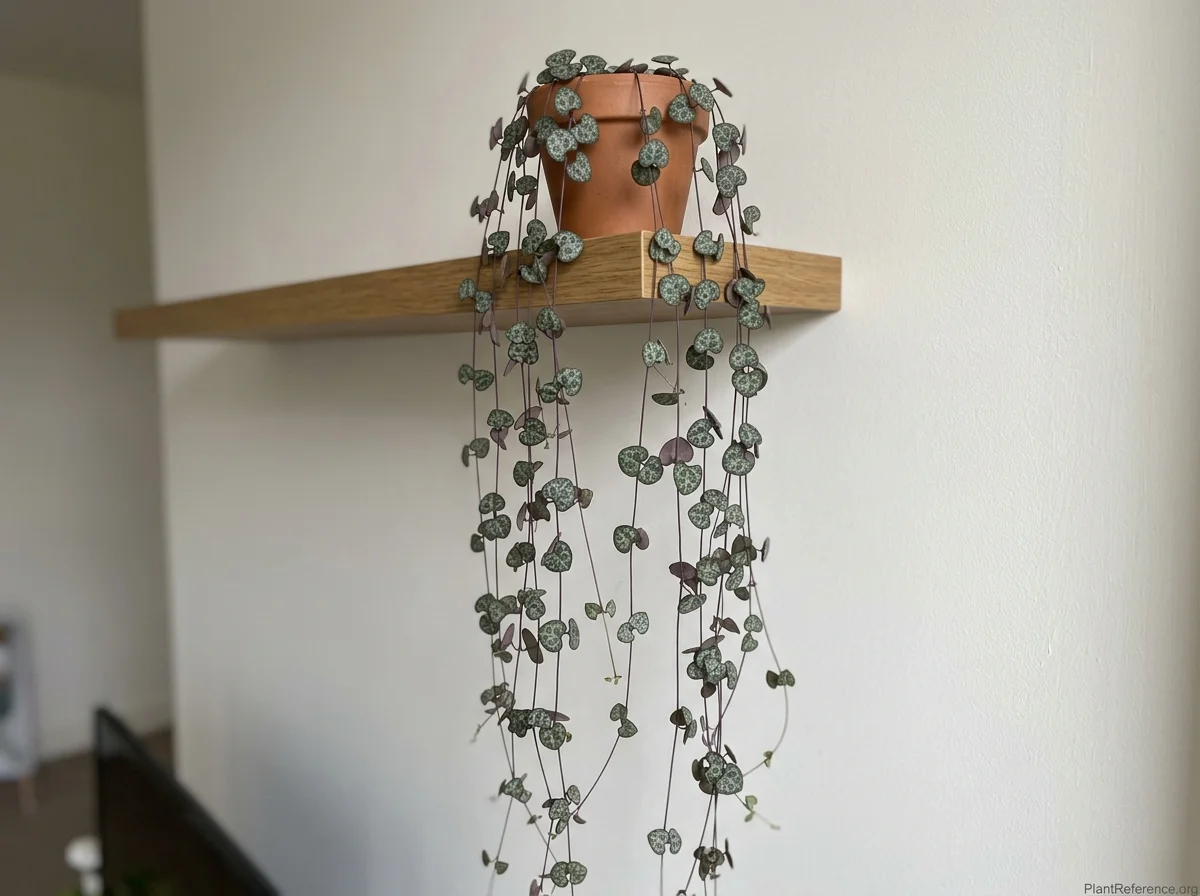
Ceropegia woodii is string of hearts, a trailing succulent vine reaching 36-96 inches (90-240 cm). Small heart-shaped leaves 0.5-0.75 inch (12-18 mm) across on thin wiry purple stems — upper leaf surfaces are dark green with silvery marbling; undersides are purple. Named after John Medley Wood, the South African botanist who collected it. A succulent vine with a tuberous underground caudex (water-storage organ) and aerial tuber bulbils (small tubers 0.25-0.5 inch / 6-12 mm) that form along the stems — both store water, contributing to drought tolerance. The aerial bulbils can be pressed into moist soil to root new plants. Uncommon pink-purple tubular trap flowers 1-1.5 inches (2.5-4 cm) long appear in summer — the Ceropegia genus has specialized trap flowers where flies enter the tube but cannot exit until pollination occurs and the trap hairs wilt. Non-toxic to cats and dogs. Native to South Africa, Eswatini, and Zimbabwe. The variegated form with cream and pink tones grows slower than the standard green. Bright indirect light intensifies the silver marbling; low light produces more green. Allow soil to dry between waterings.
Native Range
Ceropegia woodii is native to South Africa, Eswatini, and Zimbabwe.Suggested Uses
Grown in hanging baskets or on high shelves where the thin vines trail, in containers of 0.5-1 gallon (2-4 liters) with well-draining succulent mix. The thin trailing stems suit positions where they cascade freely. Non-toxic — safe for households with pets.How to Identify
Appearance
Size & Dimensions
Height6" - 1'
Width/Spread6" - 1'
Bloom Information
Detailed Descriptions
Flower Description
Pink-purple, small, tubular, trap-shaped (insect trap flowers — the Ceropegia signature)Foliage Description
Dark green with silvery marbling on the upper surface, purple undersides — small heart-shaped leaves on thin wiry purple stemsGrowing Conditions
Sun Requirements
Requires 4-8 hours of direct sunlight daily
• Full Sun: 6+ hours of direct sunlight
• Partial Shade: 3-6 hours of direct sunlight
• Full Shade: Less than 3 hours of direct sunlight
Care & Maintenance
Care Guide
Bright indirect light — intensifies silver marbling. Allow soil to dry between waterings; the caudex and aerial bulbils store water. Well-draining succulent mix. Non-toxic to pets. The thin stems are fragile — handle gently during repotting.Pruning
Trim trailing stems to desired length by cutting at a node. Stem cuttings and aerial bulbils root in moist soil. The underground caudex should remain at or slightly above soil level.Container Growing
Suitable for container growing
Minimum container size: 1 gallons