Cercocarpus, Genus, montanus, Species,
- Genus & species
alderleaf mountain mahogany
Overview
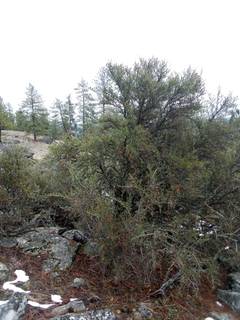
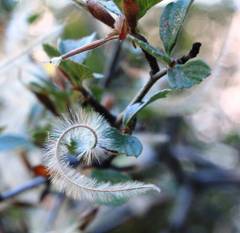
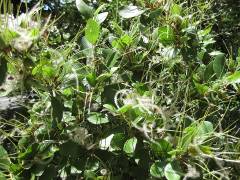
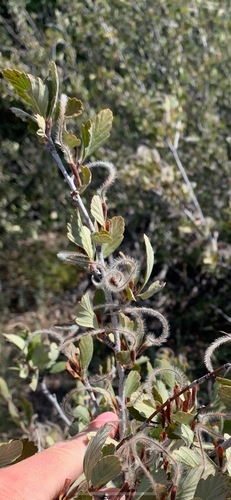
Cercocarpus montanus is a deciduous shrub reaching 6-15 feet (1.8-4.5 m) tall and 6-12 feet (1.8-3.6 m) wide at maturity, typically with multiple stems rising from the base. Bark is gray to reddish-brown and develops shallow fissures on older trunks. Leaves are alternate, oval to obovate, 0.5-1.5 inches (1.3-3.8 cm) long, with toothed margins on the upper third and a wedge-shaped base. Foliage is dark green above, paler and pubescent below, turning yellow-brown before drop in October and November. Apetalous flowers (calyx and stamens only) appear in clusters of 1-3 from leaf axils in May and June. Achene fruit develops a long, twisted, plumose tail (style) 1.5-3 inches (3.8-7.5 cm) long that turns silvery-white from late August through October; backlit fruiting plants take on a silvery cast across the canopy. Growth is slow at 6-10 inches (15-25 cm) per year on young plants, slower at maturity. Plants live 75-150 years on dry sites and resprout from the root crown after browse or wildfire — a behavior that separates it from C. ledifolius. Roots fix nitrogen in association with Frankia bacteria, allowing establishment on poor soils.
Native Range
Native to the western and central United States from Oregon east to South Dakota and south to New Mexico and northern Mexico. Found on dry, rocky slopes, foothills, and canyon walls in pinyon-juniper, oak, and ponderosa pine woodlands at 2,500-9,000 feet (750-2,750 m) elevation. Most common on calcareous or basaltic soils with shallow profiles.Suggested Uses
Used in xeriscape, dryland restoration, and erosion-control plantings in zones 4-8, spaced 6-10 feet (1.8-3 m) apart for thicket effect or 12-15 feet (3.6-4.5 m) for individual specimens. Range-revegetation projects in the Intermountain West employ the species for nitrogen fixation, browse, and slope stabilization on calcareous substrates. Silvery fruit is visible from late August through October at established sites.How to Identify
Appearance
Size & Dimensions
Height6' - 15'
Width/Spread6' - 12'
Bloom Information
Apetalous flowers (lacking petals; calyx and stamens only) appear in May and June; flowers are wind-pollinated and 0.1-0.2 inches (3-5 mm) across. Fruit ripens from August through October, with silvery plumose tails reaching mature length and color from late August onward. Display persists 6-10 weeks before tails detach and disperse on air currents.
Detailed Descriptions
Foliage Description
dark green above, paler pubescent belowGrowing Conditions
Sun Requirements
Requires 6-12 hours of direct sunlight daily
• Full Sun: 6+ hours of direct sunlight
• Partial Shade: 3-6 hours of direct sunlight
• Full Shade: Less than 3 hours of direct sunlight
Care & Maintenance
Care Guide
Grows in full sun on well-drained alkaline to neutral soils; tolerates rocky and shallow soils that exclude most other shrubs. Established plants are highly drought-tolerant and need no supplemental water in zones 4-8 once past the first growing season. Sites with summer irrigation cause root rot. Plants are slow to establish from seed; seedlings can take 2-4 years to reach 12 inches (30 cm) tall. Browse from deer and elk shapes wild plants but is tolerable for established cultivated specimens since plants resprout from the root crown after browse or fire damage. Foliage is sometimes infected by leaf-spot fungi in wet springs; severity is cosmetic.Pruning
Prune in late winter to remove deadwood or crossing branches; the slow growth rate means recovery takes 2-4 years. Light shaping is tolerated and the plant resprouts from cut stems, unlike C. ledifolius. Coppicing at the base every 10-15 years rejuvenates older plants where size needs to be reset.Pruning Schedule
Prune: February–March
winter