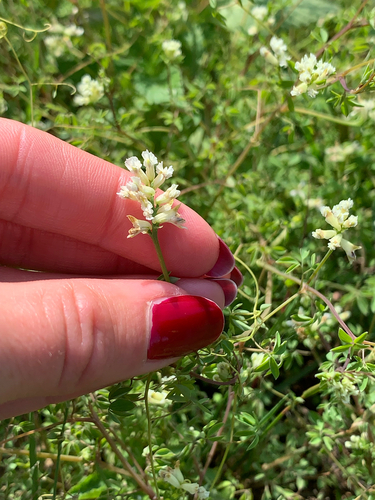
Ceratocapnos, Genus, claviculata, Species,
- Genus & species
climbing corydalis
SunPart Shade – Full Shade
WaterLow
Overview
Ceratocapnos claviculata is a slender annual climber growing 12-32 inches (30-80 cm) long, scrambling over other plants by means of branched tendrils. The pale green leaves are thin and much divided into small oval leaflets, several of which are modified into clinging tendrils. Small cream to pale yellow tubular flowers 0.2-0.3 inch (5-6 mm) long appear in short clusters of two to eight from the leaf axils through summer. The flowers are followed by small two-seeded pods. The fragile, weak stems cannot stand without support and depend on surrounding vegetation to climb toward light. It grows as scattered plants threading through heather, gorse, bracken, and shrubs, dying back completely after seed set. Germination occurs in spring, and the plant completes its life cycle within a single year. It self-seeds where the ground is left undisturbed.
Native Range
Native to western and central Europe, from the Iberian Peninsula and the British Isles east to Poland. Grows in acid woodland, heathland, and shaded banks, often scrambling over heather, gorse, and bracken on light, lime-free soils.Suggested Uses
Grown occasionally in woodland and heathland gardens on acid soils, where it threads through low shrubs and scrambles over banks. Suited to informal, naturalistic plantings rather than formal borders. Its slender, short-lived growth gives only light, temporary cover.How to Identify
Appearance
Size & Dimensions
Height1' - 2'8"
Width/Spread6" - 1'
Bloom Information
Flowers from June to September, with peak bloom in July and August. Individual plants flower over several weeks as new stems extend. In cooler or shaded sites flowering may be sparse. Seed ripens from late summer into autumn.
Detailed Descriptions
Flower Description
cream to pale yellowFoliage Description
pale greenGrowing Conditions
Sun Requirements
Tolerates up to 4 hours of direct sunlight daily
• Full Sun: 6+ hours of direct sunlight
• Partial Shade: 3-6 hours of direct sunlight
• Full Shade: Less than 3 hours of direct sunlight
Water & Climate
Water Needs
Care & Maintenance
Care Guide
Grows in partial shade on light, acid, free-draining soils and tolerates the dry shade of woodland and heath. It needs other plants or structures to climb on, as the weak stems cannot stand alone. It is grown from seed sown in spring, germinating in cool, moist conditions. Once established it needs no watering in temperate climates and completes growth within one season. It self-seeds where the soil is acid and undisturbed but does not persist on limy or heavily cultivated ground. Few pests or diseases affect it.Pruning
No pruning is required. As an annual, the plant dies after seed set, and dead stems can be cleared from supporting vegetation in autumn. Leaving the seed pods in place allows self-seeding for the following year.Toxicity: Not assessed
UnknownPlanting Guide
Planting Methods & Timing
Planting Method
direct sow
Direct Sow Timing
Spring
Plant Spacing
8 inches