Ceratocapnos, Genus, spp., Multiple species,
- Genus
- Multiple species
climbing corydalis
Western Europe and the Mediterranean
SunPart Shade – Full Shade
WaterMedium
Overview
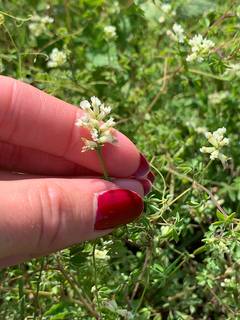
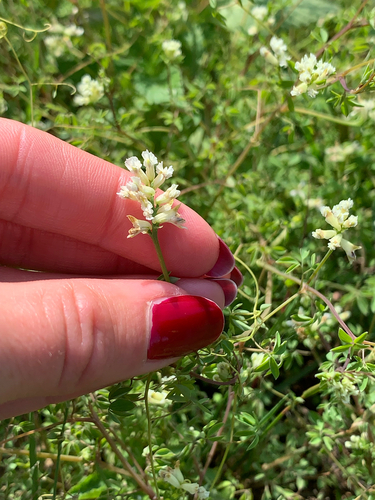
Ceratocapnos is a small genus of three annual species in the poppy family, Papaveraceae, placed in the fumitory subfamily. The most widespread, C. claviculata, called climbing corydalis, is a slender, scrambling annual of western Europe that climbs by branched tendrils formed at the tips of its divided leaves. Stems are thin, brittle, and much-branched, reaching 1 to 6 feet (30 to 180 cm) as they clamber over other vegetation. The grey-green leaves are finely divided into small leaflets. Clusters of small tubular flowers, about 0.2 to 0.3 inch (5 to 8 mm) long, are creamy white to pale yellow and appear in short racemes opposite the leaves. Each flower has the two-lipped, spurred shape typical of the fumitories. Flowers give way to small pods that split to release shiny black seeds, often dispersed by ants. C. heterocarpa and C. turbinata are Mediterranean species producing two seed forms. Being annuals, plants complete their life cycle in a single season and reappear from self-sown seed, favouring shaded, sandy, or rocky ground and the edges of woodland.
Native Range
Ceratocapnos is native to western and southwestern Europe and the Mediterranean region. C. claviculata ranges from the British Isles and Iberia across to central Europe, while C. heterocarpa and C. turbinata occur around the Mediterranean basin.Suggested Uses
Grown in woodland gardens, shaded native plantings, and informal areas where it can scramble through shrubs and over banks. It self-sows to form drifts at woodland edges. The small flowers draw bees and other small insects.How to Identify
Appearance
Size & Dimensions
Height1' - 6'
Width/Spread1' - 2'
Colors
Bloom Information
Flowering runs from early summer to early autumn, roughly June to September, with successive small racemes opening as the stems lengthen. The spurred flowers are followed by short pods. In mild areas a long season of bloom continues where moisture persists.
Detailed Descriptions
Flower Description
creamy white to pale yellowFoliage Description
grey-greenGrowing Conditions
Sun Requirements
Requires 2-5 hours of direct sunlight daily
• Full Sun: 6+ hours of direct sunlight
• Partial Shade: 3-6 hours of direct sunlight
• Full Shade: Less than 3 hours of direct sunlight
Water & Climate
Water Needs
Care & Maintenance
Care Guide
As a woodland-edge annual, Ceratocapnos grows in part shade to dappled light in moist, free-draining sandy or rocky soil that is mildly acidic to neutral, around pH 5.0 to 6.5. It needs support from surrounding plants or twiggy growth to climb, since the brittle stems cannot stand alone. Seed is sown in autumn or early spring where plants are to grow, as the brittle taproot makes transplanting difficult. Even moisture sustains growth, while hot, dry, exposed sites cut the season short. Once established in a suitable spot, it self-seeds and returns year to year. It has no significant pest problems.Pruning
No pruning is needed for this annual. Spent stems can be cleared at the end of the season once seed has set and dropped. Removing plants before seed ripens limits self-sowing where spread is not wanted.Toxicity: Not assessed
UnknownPlanting Guide
Planting Methods & Timing
Planting Method
direct sow
Direct Sow Timing
autumn or early spring
Days to Maturity
60–90 days
Plant Spacing
12 inches