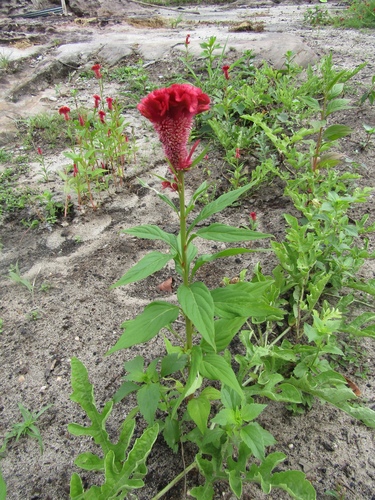
Celosia, Genus, spp., Multiple species,
- Genus
- Multiple species
cockscombs
Tropical and subtropical Africa, Asia, and the Americas
Overview
Celosia is a genus of about 50 species of annual and short-lived perennial herbs in the amaranth family (Amaranthaceae), grown as warm-season bedding plants under the names cockscomb and woolflower. Plants form upright, branching stems 6-36 inches (15-90 cm) tall with alternate, lance-shaped to oval leaves that are green or flushed with red and bronze. The genus is grown for its dense, long-lasting flower heads, which take three forms across the cultivated types: feathery plumes (the plumosa group), tightly folded crests resembling a rooster's comb (the cristata group), and narrow upright spikes (the spicata group). Flower color spans red, orange, yellow, pink, magenta, and cream, and the tiny individual flowers are papery and persist for weeks. C. argentea is widely grown in Africa and Asia as a leafy vegetable known as Lagos spinach. The genus is frost-tender and treated as an annual in temperate gardens, needing heat, sun, and free drainage. Flowering continues from summer until the first frost. The dried flower heads hold their color and are used in everlasting arrangements.
Native Range
Celosia is native to the warm regions of Africa, Asia, and the Americas, growing in open, sunny ground and disturbed sites. The cultivated species C. argentea is native to tropical Africa and Asia.Suggested Uses
Grown as summer bedding and container plants, in massed borders for hot color, and as a long-lasting cut and dried flower. Dwarf types suit edging, window boxes, and pots, while tall types are grown in the cutting garden. C. argentea is also raised as a leafy vegetable in tropical regions.How to Identify
Appearance
Size & Dimensions
Height6" - 3'
Width/Spread6" - 1'6"
Colors
Bloom Information
Celosia blooms from early summer until the first frost, a span of many weeks in warm conditions. The flower heads develop early and hold for a long period, since the individual flowers are dry and papery rather than short-lived petals. Bees and butterflies visit the small flowers, and the heads set quantities of tiny black seed.
Detailed Descriptions
Flower Description
red, orange, yellow, pink, magenta, or creamFoliage Description
green to bronze-redGrowing Conditions
Sun Requirements
Requires 6-10 hours of direct sunlight daily
• Full Sun: 6+ hours of direct sunlight
• Partial Shade: 3-6 hours of direct sunlight
• Full Shade: Less than 3 hours of direct sunlight
Water & Climate
Water Needs
Care & Maintenance
Care Guide
Grow Celosia in full sun in fertile, well-drained soil with a pH of 6.0-7.0, kept evenly moist but never waterlogged. Start seed indoors 4-6 weeks before the last frost or sow directly once the soil has warmed, since cold checks the plants badly. Space plants 8-12 inches (20-30 cm) apart and feed lightly through the season for steady growth. Water at the base to keep the foliage dry, since the dense heads and leaves are prone to fungal leaf spot and root rot in wet conditions. Spider mites and aphids appear in hot, dry spells. Plants transplant poorly once their roots are disturbed, so young seedlings are moved while small.Pruning
Pinching the growing tips of young plants of the plumed and spiked types produces more branches and flower heads, though crested cockscombs are usually left unpinched to form one large comb. Removing faded heads can prolong flowering and limit self-seeding. The dried heads are cut for indoor arrangements once fully colored.Container Growing
Suitable for container growing
Minimum container size: 2 gallons
