Caulophyllum, Genus, giganteum, Species,
- Genus & species
early blue cohosh
Overview
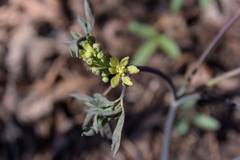
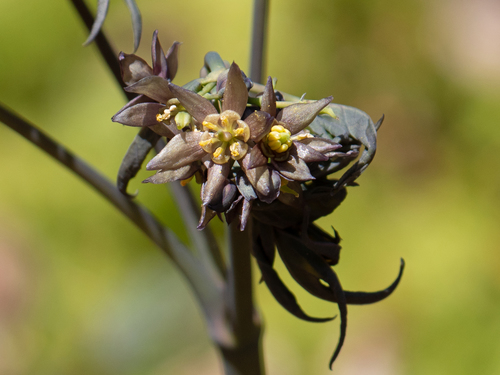
Caulophyllum giganteum is a clump-forming perennial of rich deciduous woodlands in eastern North America, sending up single stems 1-3 feet (30-90 cm) tall that unfold large, twice- to thrice-divided blue-green leaves with a powdery bloom. It emerges very early in spring, often while the canopy is still bare, with new growth flushed deep purple before greening. The flowers open as the leaves expand, in loose clusters of six-parted blooms 0.4-0.6 inch (10-15 mm) across that are deep purple-brown to maroon, larger and darker than those of the related C. thalictroides and opening one to two weeks earlier. Each fertilized flower drops its ovary wall and exposes one or two seeds that swell through summer into round, blue, berry-like structures 0.3 inch (8 mm) across on fleshy stalks. C. giganteum grows in moist, humus-rich soil of shaded slopes, coves, and floodplains, often over limestone. The seeds and foliage contain alkaloids and saponins that are toxic if eaten. It goes dormant by late summer, leaving only the blue seeds, so its presence in the garden is concentrated in spring.
Native Range
Caulophyllum giganteum is native to eastern North America, from eastern Canada and New England south through the Appalachians and Midwest. It grows in moist, humus-rich deciduous woodlands, shaded slopes, coves, and floodplains, often over limestone.Suggested Uses
C. giganteum is used in woodland and native shade gardens and naturalized plantings under deciduous trees, where its early foliage, dark flowers, and blue seeds mark the spring season. It pairs with other spring woodland perennials in rich shaded soil. Its summer dormancy and toxic seeds make it suited to naturalistic shade plantings rather than high-traffic family beds.How to Identify
Appearance
Size & Dimensions
Height1' - 3'
Width/Spread1' - 2'
Bloom Information
C. giganteum flowers very early in spring, roughly April to May, often while the woodland canopy is still leafless, opening one to two weeks ahead of C. thalictroides. The dark purple-brown flowers are visited by early bees and flies. The seeds enlarge through summer and turn blue by late summer as the plant heads toward dormancy.
Detailed Descriptions
Flower Description
Purple-brown to maroonFoliage Description
Blue-greenGrowing Conditions
Sun Requirements
Requires 2-6 hours of direct sunlight daily
• Full Sun: 6+ hours of direct sunlight
• Partial Shade: 3-6 hours of direct sunlight
• Full Shade: Less than 3 hours of direct sunlight