Caulophyllum, Genus, thalictroides, Species,
- Genus & species
blue cohosh
Eastern North America, from New Brunswick south to Georgia and west to Manitoba and Missouri
Overview
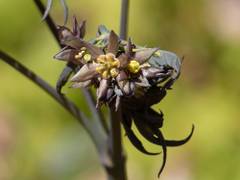
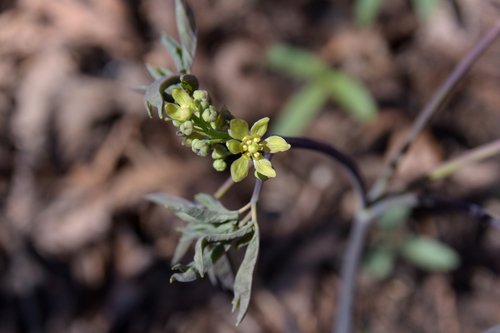
Caulophyllum thalictroides is a native woodland perennial in the barberry family (Berberidaceae) that grows 18-30 inches (45-75 cm) tall and 12-18 inches (30-45 cm) wide. The species name 'thalictroides' means 'resembling Thalictrum' (meadow rue), referring to the deeply lobed, blue-green compound foliage that closely mimics meadow rue leaves. New spring shoots emerge with a characteristic purple-blue tint before the leaves unfurl. Small greenish-yellow to brownish-purple flowers appear in clusters at the stem tips in April and May, before the foliage is fully expanded. The flowers are individually inconspicuous but are among the earlier woodland wildflowers to bloom. After pollination, the fruit develops differently from typical fleshy fruits: the thin fruit wall ruptures early, exposing the developing seeds, which swell and turn bright blue, resembling berries. These bright blue 'berries' (technically naked seeds) 0.25 inch (6 mm) in diameter are a primary ornamental feature, persisting from late summer into fall. The plant grows from a thick, knotty, yellow rhizome that expands slowly and may take 3-5 years to establish a mature clump. All parts of the plant, especially the roots and seeds, contain alkaloids that are toxic to humans and pets if ingested. Despite the berry-like appearance, the blue seeds are not safe to consume. The species has a long history of use in indigenous and early American herbal medicine, though modern use is not recommended owing to toxicity concerns. Deer generally avoid the plant.
Native Range
Caulophyllum thalictroides is native to eastern North America, from New Brunswick and Manitoba south to Georgia and Missouri. It grows in rich, moist deciduous forests, shaded ravines, and along woodland stream banks, often on calcareous soils.Suggested Uses
Used in woodland wildflower gardens and native plant restorations under deciduous canopy. The blue-green foliage adds texture among broader-leaved woodland companions, and the bright blue seeds give late-season interest. Pairs well with Trillium, Podophyllum, and ferns. Not suited to containers or formal borders due to the slow establishment and specific habitat needs.How to Identify
Appearance
Size & Dimensions
Height1'6" - 2'6"
Width/Spread1' - 1'6"
Colors
Bloom Information
Flowering occurs in April and May, before the foliage is fully expanded. Small clusters of greenish-yellow to brownish-purple flowers appear at stem tips over approximately 2 weeks. The flowers are individually small but ecologically important as an early nectar source. Bright blue naked seeds develop in late summer.
Detailed Descriptions
Flower Description
Greenish-yellow to brownish-purple, smallFoliage Description
Blue-green to gray-green, deeply lobed, compoundGrowing Conditions
Sun Requirements
Requires 2-5 hours of direct sunlight daily
• Full Sun: 6+ hours of direct sunlight
• Partial Shade: 3-6 hours of direct sunlight
• Full Shade: Less than 3 hours of direct sunlight