Casuarina, Genus, glauca, Species,
- Genus & species
swamp sheoak
Overview
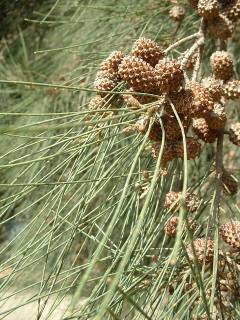
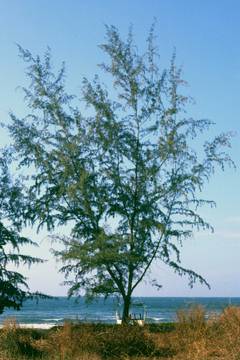
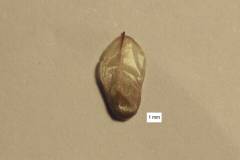
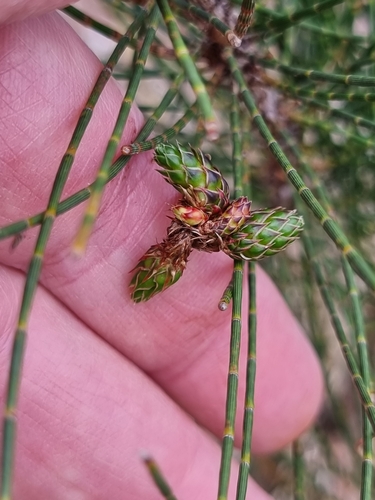
An evergreen tree reaching 25-65 feet (8-20 m) tall and 15-30 feet (4.5-9 m) wide, with a dense, often weeping crown and fissured gray-brown bark. True leaves are reduced to tiny scales in whorls along slender green branchlets 4-10 inches (10-25 cm) long, which carry out photosynthesis and give a needle-like appearance. The species is dioecious; male trees bear brown pollen spikes at the branchlet tips, while female trees produce small red flower clusters. Flowering occurs mainly autumn through winter. Woody cone-like fruit 0.4-0.7 inch (10-18 mm) long hold winged seeds. Spreads by root suckers, forming thickets. Tolerates salt, waterlogging, and brief flooding. The shallow suckering roots can lift paving and invade drains.
Native Range
Native to eastern Australia along estuaries and coastal floodplains from Queensland to Victoria. Grows in saline and brackish wetlands, swamp margins, and tidal flats on heavy, periodically waterlogged soils near sea level.Suggested Uses
Planted for windbreaks, erosion control, and screening in coastal and saline sites at 15-25 foot (4.5-7.5 m) spacing. Suits wet, salty ground where other trees fail. The suckering habit and root vigor limit its use near pipes, paving, and small gardens.How to Identify
Appearance
Size & Dimensions
Height25' - 65'
Width/Spread15' - 30'
Bloom Information
Flowers mainly autumn through winter in its native range. Male trees release brown pollen from the branchlet tips; female trees bear small red flower heads along the stems. Wind carries the pollen between trees. Woody cones develop over the following months and persist on the branches.
Detailed Descriptions
Flower Description
Brown male and red femaleFoliage Description
Gray-greenGrowing Conditions
Sun Requirements
Requires 6-12 hours of direct sunlight daily
• Full Sun: 6+ hours of direct sunlight
• Partial Shade: 3-6 hours of direct sunlight
• Full Shade: Less than 3 hours of direct sunlight
Care & Maintenance
Care Guide
Water through the first two growing seasons; established trees tolerate drought, salt, and seasonal waterlogging. Grows in full sun on heavy, saline, or poorly drained soils where few other trees survive. Fixes nitrogen through root nodules and grows in low-fertility ground. Root suckers form thickets and can invade drains, paving, and neighboring beds. Falling branchlets build a thick litter layer beneath the canopy.Pruning
Prune in late winter to lift the crown or remove dead wood. Remove root suckers as they appear to limit spread. The species resprouts readily after cutting. The shallow surface roots are easily damaged by cultivation near the trunk.Pruning Schedule
Prune: July–August
winter