Carissa, Genus, spp., Multiple species,
- Genus
- Multiple species
Num-nums
Africa, southern and southeastern Asia, and Australia
Overview
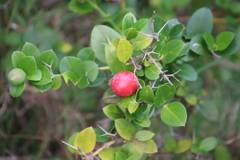
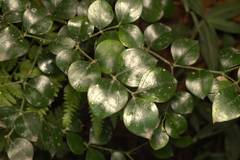
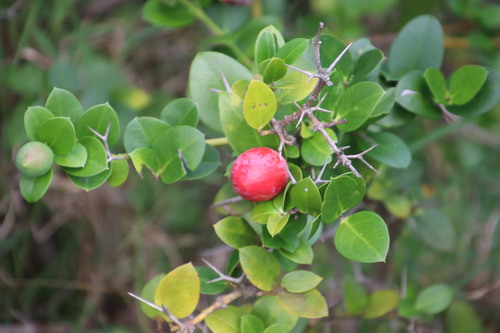
Carissa is a genus of about 20 to 35 species of spiny, evergreen shrubs and small trees in the dogbane family Apocynaceae, native to Africa, Asia, and Australia. Plants are armed with forked (Y-shaped) spines along the stems and exude a milky white latex when cut. The leaves are opposite, oval, leathery, and glossy dark green, 0.5-3 in (1.3-7.5 cm) long. Five-petaled white star-shaped flowers, often jasmine-scented, open mainly in spring and summer and, in warm climates, sporadically year-round. These are followed by rounded to oval berries that ripen red to purple-black; the ripe fruit of C. macrocarpa, the Natal plum, is eaten fresh and in preserves, though the unripe fruit and other plant parts contain toxic latex. Plants range from low spreading shrubs to small trees 2-18 ft (0.6-5.5 m) tall. The genus grows in coastal scrub, woodland, and thicket, and many species tolerate salt spray, wind, and drought once established. C. macrocarpa is widely grown as a hedge and barrier plant in frost-free regions, suited to USDA zones 9 to 11.
Native Range
Carissa is native to Africa, southern and southeastern Asia, and Australia, with several species in southern Africa. C. macrocarpa comes from coastal South Africa and Mozambique. Plants occur in coastal scrub, dune thicket, woodland, and dry bushland.Suggested Uses
Carissa species are grown as hedges, screens, and spiny barrier plantings, and as groundcover or foundation shrubs in frost-free and coastal gardens. C. macrocarpa is grown for its fragrant flowers and edible red fruit. Compact forms are used in containers and low borders.How to Identify
Appearance
Size & Dimensions
Height2' - 18'
Width/Spread3' - 15'
Bloom Information
Flowering occurs mainly in spring and summer, and in warm, frost-free climates flowers and fruit can appear through much of the year. The white star-shaped flowers are fragrant, especially in the evening. Fruit ripens over the weeks following each flush of bloom.
Detailed Descriptions
Foliage Description
dark greenGrowing Conditions
Sun Requirements
Requires 5-9 hours of direct sunlight daily
• Full Sun: 6+ hours of direct sunlight
• Partial Shade: 3-6 hours of direct sunlight
• Full Shade: Less than 3 hours of direct sunlight
Care & Maintenance
Care Guide
Carissa species grow in full sun to part shade in well-drained soil with a pH near 6.0 to 7.5 and tolerate sandy, coastal, and somewhat alkaline ground. Established plants withstand salt spray, wind, and drought, which suits them to seaside planting. The genus is frost-sensitive, growing outdoors in USDA zones 9 to 11 and as a container plant elsewhere. Steady moisture and warmth bring heavier flowering and fruiting. The forked spines make dense, stock-proof barriers but call for care during trimming. All parts except the ripe fruit contain a toxic milky latex.Pruning
Plants tolerate regular shearing and are clipped into hedges or formal shapes through the warm season. Cutting back also controls size and shape on specimen shrubs, since the genus regrows readily from old wood. The spines make protective gear useful when pruning.Container Growing
Suitable for container growing
Minimum container size: 7 gallons