Carica, Genus, spp., Multiple species,
- Genus
- Multiple species
papaya
Overview
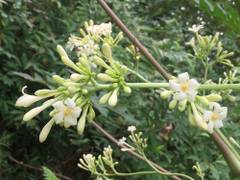
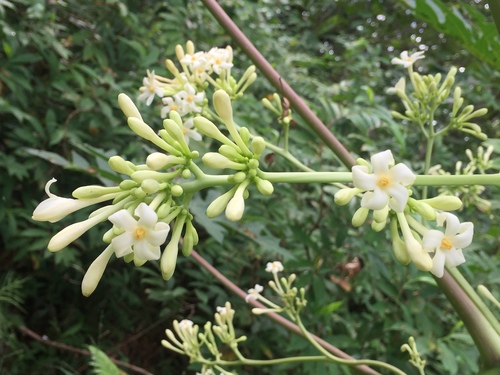
Carica is a small genus in the family Caricaceae, now generally treated as containing the single species C. papaya, the papaya or pawpaw, after most former members were moved to the related genus Vasconcellea. The plant is a fast-growing, soft-wooded, tree-like herb 6-30 feet (2-10 m) tall, usually with a single unbranched, hollow trunk topped by a crown of large, long-stalked leaves deeply cut into palmate lobes and up to 2 feet (60 cm) across. All parts exude a milky white latex rich in the enzyme papain. Plants are typically dioecious, with separate male and female individuals, though hermaphrodite forms exist; cream to pale-yellow, lightly fragrant flowers are borne in the leaf axils. Female and hermaphrodite plants produce the familiar melon-like fruit, green ripening to yellow or orange, with sweet flesh and a central cavity of dark seeds. The genus is native to tropical America and is now grown throughout the tropics as a fruit crop. Plants are frost-tender, short-lived, and decline after three or four years, and the brittle trunk is easily toppled by strong wind. The latex can irritate skin and the unripe fruit is not eaten raw.
Native Range
Native to the lowland tropics of southern Mexico and Central America, now naturalized and cultivated throughout tropical and warm subtropical regions worldwide.Suggested Uses
Grown as a fast fruiting plant in tropical and frost-free subtropical gardens, and in large containers or greenhouses in cooler regions. The ripe fruit is eaten fresh, and unripe fruit is cooked as a vegetable in many cuisines. Papain from the latex is used to tenderize meat and in digestive preparations.How to Identify
Appearance
Size & Dimensions
Height6' - 30'
Width/Spread3' - 10'
Bloom Information
Flowers nearly year-round in warm, frost-free climates once plants reach a few months old. Male plants bear branched sprays of flowers, while female plants carry larger flowers close to the trunk. Fruit follows within several months and ripens in succession.
Detailed Descriptions
Flower Description
cream to pale yellowFoliage Description
greenGrowing Conditions
Sun Requirements
Requires 6-12 hours of direct sunlight daily
• Full Sun: 6+ hours of direct sunlight
• Partial Shade: 3-6 hours of direct sunlight
• Full Shade: Less than 3 hours of direct sunlight
Care & Maintenance
Care Guide
Grows in full sun on deep, fertile, well-drained soil with a pH near 5.5-7.0 and is very sensitive to waterlogging, which quickly rots the roots. Plants need warmth and steady moisture for fast growth and continuous fruiting, along with regular feeding. Frost-free conditions are needed, as the plant is damaged near freezing and killed by hard frost. A sheltered position reduces the risk of the brittle trunk snapping in wind. Plants are usually grown from seed and begin fruiting within the first year. Old, tall plants crop less and are commonly replaced after a few years.Pruning
Little pruning is done, as the single trunk is not branched in most plants. Old lower leaves are removed as they yellow and droop. Topping is sometimes used to force lower branching on tall plants, though it interrupts fruiting.Pruning Schedule
Prune: March–April
early spring
Container Growing
Suitable for container growing
Minimum container size: 15 gallons