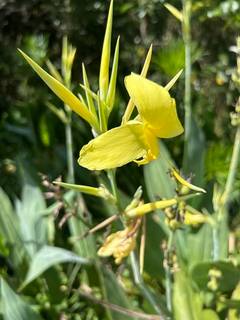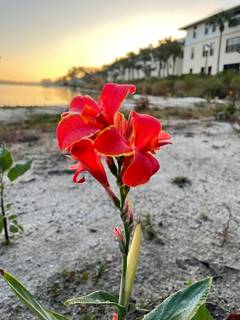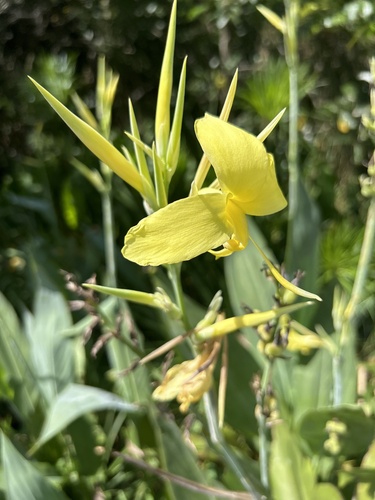
Canna, Genus, spp., Multiple species,
- Genus
- Multiple species
canna lilies
Overview
Canna is a genus of about 10 species of tender rhizomatous perennials in the family Cannaceae, native to the tropical and subtropical Americas. Plants grow from thick underground rhizomes, sending up unbranched stems 1.5 to 10 feet (45 to 300 cm) tall clothed in large, paddle-shaped leaves 12 to 24 inches (30 to 60 cm) long. Leaf color spans green, bronze, deep purple, and striped variegation depending on species and cultivar. The asymmetric flowers, formed largely from modified stamens, open in terminal clusters in red, orange, yellow, pink, and cream, often spotted or streaked. Bloom continues from early summer until frost in warm conditions. The genus is frost-tender, and the rhizomes are killed by hard freezing, so in cold climates they are lifted and stored over winter. Canna leaf-roller caterpillars and a viral disease that streaks and distorts the foliage are the main problems in cultivation.
Native Range
Canna is native to the warm regions of the Americas, from the southern United States through Central America and the Caribbean into tropical South America. Native species such as C. flaccida and C. glauca grow in marshes and wet ground in the southeastern United States.Suggested Uses
Cannas are grown as summer bedding, in large containers, and at pond margins for their broad foliage and flowers, spaced 18 to 24 inches (45 to 60 cm) apart. The taller species and cultivars are used as a seasonal screen or backdrop. The flowers draw hummingbirds and butterflies through summer.How to Identify
Appearance
Size & Dimensions
Height1'6" - 10'
Width/Spread1'6" - 3'
Colors
Bloom Information
Flowering begins in early to midsummer, about six to ten weeks after the rhizomes start into growth, and continues until the first frost. Each flower cluster opens in succession over several weeks, and removing finished stalks keeps new spikes forming. In frost-free climates bloom can persist nearly year-round.
Detailed Descriptions
Flower Description
red, orange, yellow, pink, or creamFoliage Description
green, bronze, purple, or variegatedGrowing Conditions
Sun Requirements
Requires 6-8 hours of direct sunlight daily
• Full Sun: 6+ hours of direct sunlight
• Partial Shade: 3-6 hours of direct sunlight
• Full Shade: Less than 3 hours of direct sunlight
Care & Maintenance
Care Guide
Cannas grow in full sun on rich, moist soil at pH 6.0 to 7.0 and respond to heat, feeding, and ample water with rapid growth. They are root-hardy only in USDA zones 7 or 8 and warmer; in colder zones the rhizomes are dug after frost blackens the foliage and stored dry and frost-free over winter. Water freely in summer, as the large leaves transpire heavily and wilt in dry soil. Space plants 18 to 24 inches (45 to 60 cm) apart and feed through the growing season for continuous bloom. Canna leaf-roller caterpillars bind the new leaves and can be picked off by hand. Canna yellow mottle virus, spread in infected rhizomes, streaks the foliage and has no cure.Pruning
Cut spent flower spikes back to the next bud or to the base to keep new flowers forming. After frost blackens the foliage, cut the stems to a few inches above the rhizome before lifting or mulching. Dig and discard virus-streaked plants rather than replanting their rhizomes.Pruning Schedule
Prune: October–November
fall
Container Growing
Suitable for container growing
Minimum container size: 5 gallons