Canna, Genus, glauca, Species,
- Genus & species
water canna
Tropical and subtropical South America (southern Brazil, Argentina, Paraguay, Uruguay) and the Caribbean; naturalized in parts of southeastern United States; marshes, wet ditches, stream margins, shallow standing water
Overview
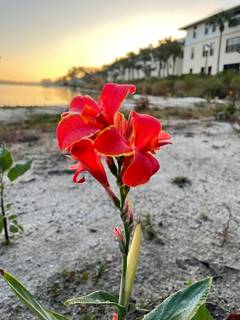
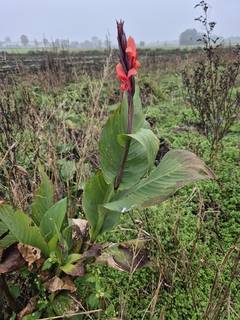
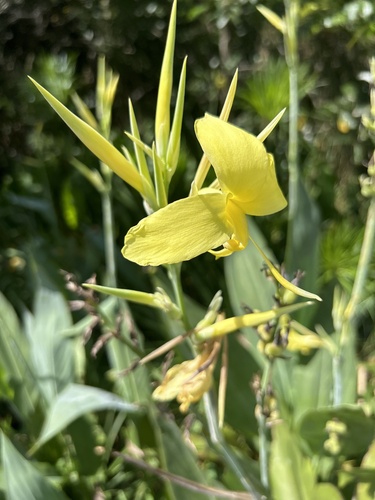
Canna glauca is a tall upright rhizomatous perennial in the canna family (Cannaceae) reaching 48–72 inches (120–180 cm) tall with a spread of 24–36 inches (60–90 cm). The species is separated from most garden cannas by its narrow lanceolate blue-green to gray-green (glaucous) leaves 12–24 inches (30–60 cm) long and 2–4 inches (5–10 cm) wide — much narrower and more grass-like than the broad tropical leaves of Canna × generalis hybrids. A glaucous coating on the leaf surface gives the foliage a silvery-blue cast. Pale yellow narrow-petaled flowers 2–3 inches (5–8 cm) across open in loose terminal racemes from July through October; individual petals are narrower and more iris-like than the broad flaring petals of hybrid cannas. The species grows naturally in wet habitats and tolerates standing water up to 6 inches (15 cm) deep, which separates C. glauca from most other cultivated cannas and suits bog gardens, pond margins, and rain gardens. Growth from the rhizome is fast once soil temperatures rise above 60°F (16°C). In zones 7–8, rhizomes survive winter in the ground under 4–6 inches (10–15 cm) of mulch; in zones 5–6, rhizomes are lifted and stored frost-free. Canna leaf-roller caterpillars and canna rust (Puccinia thaliae) are common pest and disease issues.
Native Range
Canna glauca is native to the wetlands of tropical and subtropical South America, from southern Brazil and Argentina north through Paraguay and Uruguay, with populations also in the Caribbean. The species has naturalized in parts of the southeastern United States (Louisiana, Texas, Florida). Natural habitats include marshes, wet ditches, stream margins, and shallow standing water.Suggested Uses
Grown in rain gardens, bog gardens, and at pond margins where the roots can access standing or consistently moist water. The narrow blue-green foliage gives a vertical grass-like texture distinct from the tropical appearance of hybrid cannas, and the species character suits naturalistic and wildlife garden settings rather than formal bedding schemes. Shallow aquatic plantings up to 6 inches (15 cm) water depth, bioswales, and naturalized wet meadows are functional uses. Container culture works in 5 gallon (19 L) or larger pots placed in water features.How to Identify
Appearance
Size & Dimensions
Height4' - 6'
Width/Spread2' - 3'
Bloom Information
Pale yellow narrow-petaled flowers 2–3 inches (5–8 cm) across open in loose terminal racemes from July through October. Individual flowers last 2–3 days; racemes open sequentially from the bottom upward over several weeks. Bloom duration is 10–14 weeks when spent flower stalks are removed. Hummingbirds and bumblebees visit the flowers.
Detailed Descriptions
Flower Description
Pale yellow, narrow-petaled 2-3 inches across in loose terminal racemesFoliage Description
Blue-green to gray-green (glaucous), narrow lanceolate 12-24 inches long and 2-4 inches wideGrowing Conditions
Sun Requirements
Requires 6-12 hours of direct sunlight daily
• Full Sun: 6+ hours of direct sunlight
• Partial Shade: 3-6 hours of direct sunlight
• Full Shade: Less than 3 hours of direct sunlight
Care & Maintenance
Care Guide
Grows in full sun in consistently moist to wet soil at pH 5.5–7.0, tolerating loam, clay, and peat. Rhizomes are planted 4 inches (10 cm) deep. Standing water up to 6 inches (15 cm) deep is tolerated, which makes the species suitable for rain gardens, bog gardens, and pond margins. In drier garden soil, consistent irrigation is required. Hardy to zone 7 with winter protection. In zones 7–8, 4–6 inches (10–15 cm) of mulch over the rhizomes carries plants through winter. In zones 5–6, rhizomes are lifted after the first frost kills the foliage, dried briefly, and stored in barely moist peat at 40–50°F (4–10°C) for replanting after the last frost date. Canna leaf-roller caterpillars create rolled-leaf shelters that are removed along with the affected leaves. Canna rust produces orange pustules on the leaf undersides in humid summer conditions.Pruning
Remove spent flower stalks to encourage continued bloom through the season. After the first frost kills the foliage, cut all stems to 4–6 inches (10–15 cm) above the soil before lifting rhizomes (zones 5–6) or before applying winter mulch (zones 7–8). No other pruning is required during the growing season.Pruning Schedule
Prune: October–November
fall
Container Growing
Suitable for container growing
Minimum container size: 5 gallons