Campylopus, Genus, introflexus, Species,
- Genus & species
heath star-moss
Southern Hemisphere of South America, southern Africa, Australia, and New Zealand
SunFull Sun – Part Shade
Overview
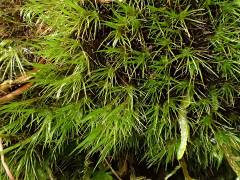
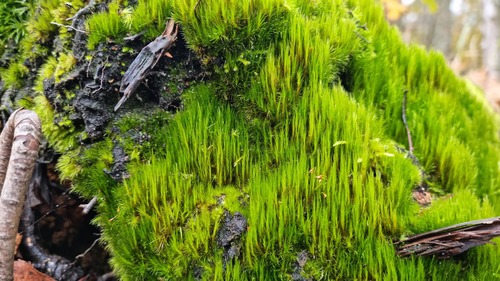
Campylopus introflexus is a cushion-forming acrocarpous moss in the family Leucobryaceae, native to the Southern Hemisphere and now widely naturalised and invasive across Europe. It forms dense, dark green to yellow-green turfs and cushions, the individual shoots 0.4-2 inches (1-5 cm) tall packed tightly together. Each narrow leaf tapers to a long, colourless, glassy hair-point; in dry weather these hair-points bend sharply backward at about a right angle, giving the moss a frosted, bristly look, while in damp conditions they straighten. It grows on acidic, nutrient-poor ground such as heathland, peat, coastal dunes, bare sandy soil, decaying logs, and old thatch, often after burning or disturbance. Reproduction is by wind-blown spores from reddish-stalked capsules and, very readily, by detached shoot fragments that root and form new colonies. On heaths and dunes it can build continuous carpets that smother bare ground and crowd out low native plants and lichens, and it is treated as an invasive non-native in Britain and much of Europe. It tolerates drought, exposure, and acidic conditions that few other mosses endure, and persists on hostile, open substrates.
Native Range
Native to the Southern Hemisphere, including southern South America, southern Africa, Australia, and New Zealand. It was first recorded in Europe in the mid-20th century and has since spread across Britain, Ireland, and much of the continent.Suggested Uses
This moss is not planted or cultivated and is regarded as an invasive coloniser of acidic heath, dune, and bare ground. It is studied in surveys of heathland and dune condition and in invasive-species monitoring. Its dense carpets are managed to protect open habitats and native ground flora.How to Identify
Appearance
Size & Dimensions
Height1" - 2"
Bloom Information
This moss reproduces by spores rather than flowers. Brown spore capsules are held on curved reddish stalks, ripening mainly in late winter and spring. It also spreads readily from broken shoot fragments, which often outpaces spores in forming new patches.
Detailed Descriptions
Foliage Description
greenGrowing Conditions
Sun Requirements
Requires 4-10 hours of direct sunlight daily
• Full Sun: 6+ hours of direct sunlight
• Partial Shade: 3-6 hours of direct sunlight
• Full Shade: Less than 3 hours of direct sunlight
Water & Climate
Water Needs
Drought Tolerance
Drought tolerant when established