Campylopus, Genus, spp., Multiple species,
- Genus
- Multiple species
swan-necked mosses
Worldwide (acidic ground; many tropical and Southern Hemisphere)
SunFull Sun – Part Shade
WaterMedium
Overview
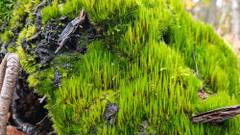
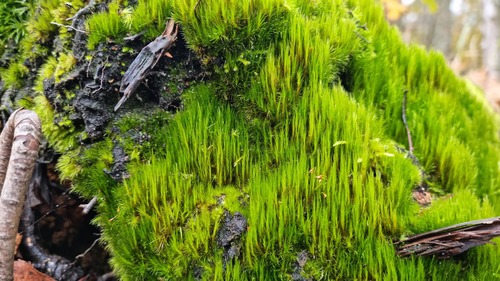
Campylopus is a genus of tufted mosses in the family Leucobryaceae, growing on acidic soil, peat, rock, rotting wood, and heathland across much of the world, with many species in the tropics and Southern Hemisphere. The plants form dense cushions or turfs 0.4-4 inches (1-10 cm) deep, green to yellow-green above and often brown and felted with rhizoids below. The narrow leaves taper to a long point, frequently ending in a pale, toothed, hair-like tip, and a broad pale midrib fills much of the leaf. When dry, the shoots take on a stiff, sometimes silvery look. The genus name, meaning bent foot, refers to the curved spore stalk that gives several species the name swan-necked moss. Some species, such as C. introflexus, are aggressive colonisers that have spread far beyond their native range and can carpet heathland, dunes, and disturbed ground, crowding out other low plants. Campylopus spreads readily by detached shoot tips and brittle leaves as well as by spores. The genus favours open, acidic, often disturbed or burnt ground and tolerates drought by drying to a pale tone and reviving when wetted.
Native Range
Campylopus is widespread worldwide, with many species in the tropics, Southern Hemisphere, and temperate regions, growing on acidic soil, peat, rock, rotting wood, and heathland. Several species favour open, disturbed, or burnt acidic ground, and some have spread as introductions.Suggested Uses
Campylopus species are grown in moss gardens, terraria, and bonsai for dense acidic-ground cushions, and pioneer species colonise bare peat and burnt heath. The genus is studied as an example of invasive bryophyte spread, especially C. introflexus. Cushions are used in moss craft and naturalistic plantings on acidic substrates.How to Identify
Appearance
Colors
Foliage Colors
Bloom Information
Mosses do not flower. Campylopus reproduces by spores from capsules raised on curved stalks, but spreads largely by vegetative means, with brittle leaves and detached shoot tips rooting to form new plants. Spore production varies by species and season.
Growing Conditions
Sun Requirements
• Full Sun: 6+ hours of direct sunlight
• Partial Shade: 3-6 hours of direct sunlight
• Full Shade: Less than 3 hours of direct sunlight
Water & Climate
Water Needs