Campsis, Genus, ×, Hybrid, tagliabueana, Species,
- Genus & species
- Hybrid
hybrid trumpet vine
Garden origin (parents from North America and Asia)
Overview
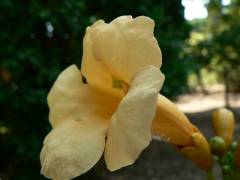
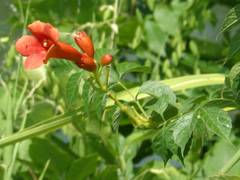
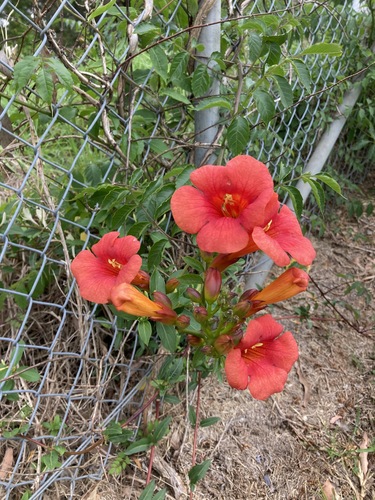
Campsis × tagliabueana is a hybrid trumpet vine between C. radicans and C. grandiflora, grown as a vigorous woody climber. It climbs by aerial rootlets and twining stems to 15–30 feet (4.5–9 m), clinging to walls, fences, and trees. The leaves are pinnately compound, 8–12 inches (20–30 cm) long, with 7 to 11 toothed leaflets, and drop in autumn. Trumpet-shaped flowers, 2.5–3.5 inches (6–9 cm) long, open in loose terminal clusters in shades of orange, salmon, and red, flaring into five lobes. Bloom runs through summer, from June to September, drawing hummingbirds and bees. Slender seed pods follow, 3–5 inches (8–13 cm) long. The vine grows quickly and clings strongly, and its weight and self-rooting stems can damage gutters, shingles, and weaker structures. It also suckers from the roots and can spread into surrounding ground. It tolerates a wide range of soils and exposed sites once established.
Native Range
Campsis × tagliabueana is a hybrid of garden origin. Its parent species are native to eastern North America (C. radicans) and eastern Asia (C. grandiflora).Suggested Uses
Used on sturdy pergolas, arbors, fences, and walls, and to screen large structures. The summer flowers draw hummingbirds and bees. Plants are spaced 8–12 feet (2.4–3.7 m) apart along a strong support.How to Identify
Appearance
Size & Dimensions
Height15' - 30'
Width/Spread6' - 10'
Bloom Information
Flowering runs through summer, from June to September, in loose terminal clusters. The trumpet-shaped flowers draw hummingbirds and bees over many weeks. Seed pods develop afterward and ripen in autumn.
Detailed Descriptions
Flower Description
orange, salmon, redFoliage Description
greenGrowing Conditions
Sun Requirements
Requires 6-12 hours of direct sunlight daily
• Full Sun: 6+ hours of direct sunlight
• Partial Shade: 3-6 hours of direct sunlight
• Full Shade: Less than 3 hours of direct sunlight
Care & Maintenance
Care Guide
Grows in full sun in average, well-drained soil, tolerating a soil pH from 6.0 to 7.5 and poor, dry ground once established. Water needs are low to medium, with the vine withstanding drought after the first year. Hardy in USDA zones 5–9, it dies back in hard winters and regrows from the base. A strong support is needed, as mature stems are heavy and cling tightly. Rich soil and shade promote leafy growth with few flowers. The roots sucker and the stems self-layer, so the vine can spread well beyond its planting site.Pruning
Hard pruning in late winter keeps the vine within bounds and concentrates flowering on new growth. Stems are cut back to a permanent framework each year. Root suckers are removed as they appear to limit spread.Pruning Schedule
Prune: February–March
winterearly spring