Camissoniopsis, Genus, cheiranthifolia, Species,
- Genus & species
beach suncup
Overview
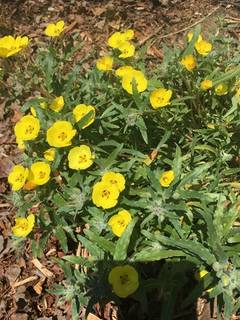
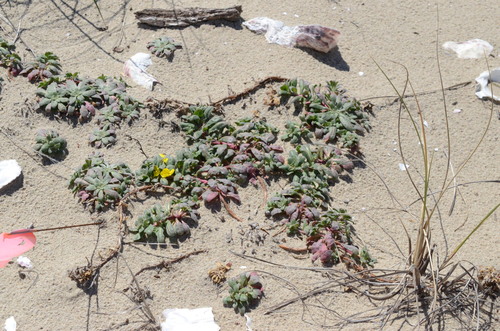
Camissoniopsis cheiranthifolia is a low, mat-forming perennial native to the Pacific coast of North America, spreading along the ground on trailing stems to form patches 1-3 ft (30-90 cm) wide but only 4-8 in (10-20 cm) high. The small, spoon-shaped leaves are gray-green and densely covered in silvery hairs that reflect sun and reduce water loss on open dunes. From spring into summer it produces yellow, four-petaled flowers about 0.5-1 in (1.5-2.5 cm) across, opening near the stem tips; the petals often age to orange or red as they fade. It grows on coastal sand dunes, beaches, and bluffs in full sun, rooting as the stems spread. The silvery mat helps stabilize loose sand. It is short-lived and depends on reseeding, and it does not tolerate rich soil, shade, or standing water. The flowers draw native bees and other insects.
Native Range
Native to the Pacific coast of North America, from Oregon south through California to Baja California. It grows on coastal sand dunes, sandy beaches, and bluffs within reach of salt spray.Suggested Uses
Grown in coastal, dune, and waterwise gardens for groundcover on sandy, sunny sites. It is planted on banks and dune faces spaced 12-18 in (30-45 cm) apart to bind loose sand. The yellow flowers support native bees and small pollinators.How to Identify
Appearance
Size & Dimensions
Height4" - 8"
Width/Spread1' - 3'
Bloom Information
Detailed Descriptions
Foliage Description
gray-greenGrowing Conditions
Sun Requirements
Requires 6-12 hours of direct sunlight daily
• Full Sun: 6+ hours of direct sunlight
• Partial Shade: 3-6 hours of direct sunlight
• Full Shade: Less than 3 hours of direct sunlight
Care & Maintenance
Care Guide
Camissoniopsis cheiranthifolia grows in full sun on loose, sandy, sharply drained soils at a pH of 6.0-7.5 and tolerates salt spray, wind, and drought. It needs little or no summer water once rooted and no fertilizer on sandy ground. Overwatering and rich soil shorten its life and promote rot. It withstands coastal exposure that few plants endure. It is short-lived, persisting a few years and renewing from self-sown seed. Root and crown rot appear mainly in heavy or wet soils.Pruning
Little pruning is needed beyond removing dead stems and spent flower shoots. Trimming straggly stems in late summer keeps the mat tidy. Leaving some seed heads allows the plant to self-sow for the next year.Pruning Schedule
Prune: August–September
summer
Container Growing
Suitable for container growing
Minimum container size: 2 gallons