Calyptridium, Genus, monospermum, Species,
- Genus & species
one-seeded pussypaws
Western United States (Sierra Nevada and Cascades)
Overview
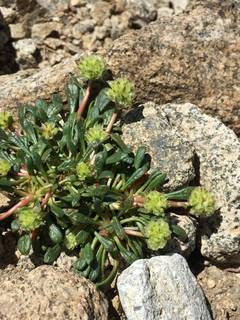
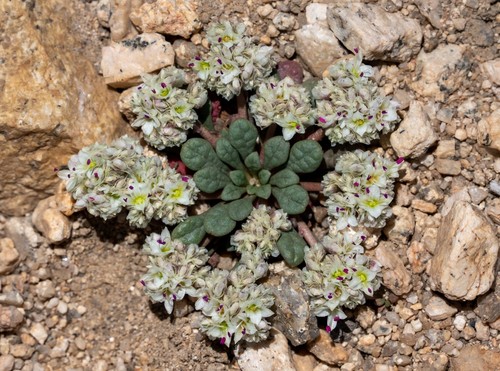
Calyptridium monospermum is a low perennial in the family Montiaceae that forms a flat rosette of fleshy, spoon-shaped basal leaves pressed against the ground, the rosette 2-6 inches (5-15 cm) across. From the center rise several short, often reddish flowering stalks 2-8 inches (5-20 cm) long, each ending in dense, rounded clusters of small papery flowers. The blooms have membranous, pink to white sepals that give the clusters a soft, paw-like look, the source of the common name pussypaws. As the seeds ripen, the papery flower parts persist and the clusters may press back toward the ground. Each flower typically matures a single shiny black seed, reflected in the species name. The fleshy leaves store water, helping the plant endure dry, exposed mountain sites. It regrows from a stout, woody root each year. One limitation in the garden is its need for sharp drainage and a dry summer rest, which makes it short-lived in rich or moist soil.
Native Range
Calyptridium monospermum is native to the mountains of the western United States, chiefly the Sierra Nevada, southern Cascades, and Klamath ranges of California and Oregon. It grows on open, gravelly or sandy granitic soils in montane and subalpine coniferous forest, often in sunny clearings and along trail edges.Suggested Uses
This species is grown by rock garden and alpine enthusiasts in troughs, gravel beds, and crevice gardens with sharp drainage. Its papery summer flower clusters draw small native bees and other insects. As a montane cushion plant it is studied as an example of the pussypaws group.How to Identify
Appearance
Size & Dimensions
Height2" - 8"
Width/Spread4" - 10"
Bloom Information
Flowering occurs in summer, mainly June through August depending on elevation and snowmelt. The papery clusters open over several weeks and hold their color as the seeds ripen. Bloom comes later at higher, cooler sites.
Detailed Descriptions
Flower Description
pink to whiteFoliage Description
green to reddishGrowing Conditions
Sun Requirements
Requires 6-12 hours of direct sunlight daily
• Full Sun: 6+ hours of direct sunlight
• Partial Shade: 3-6 hours of direct sunlight
• Full Shade: Less than 3 hours of direct sunlight
Care & Maintenance
Care Guide
Calyptridium monospermum grows in full sun in very well-drained, gritty or sandy mineral soil low in nutrients. It depends on dry summer conditions after spring moisture and rots quickly in rich, wet, or poorly drained ground. The fleshy leaves and deep root let it tolerate drought and exposed, sunny sites. In cultivation it suits trough gardens, rock gardens, and gravel beds that mimic its mountain habitat. It needs no fertilizer and little summer water once established. Sharp drainage and a dry dormant period are the main requirements for keeping it alive outside its native range.Pruning
Pruning is limited to removing spent flower stalks and any dead leaves from the rosette. Tidying the rosette keeps it open and reduces trapped moisture. No other trimming is needed.Container Growing
Suitable for container growing
Minimum container size: 1 gallons