Calycanthus, Genus, ×, Hybrid, raulstonii, Species,
- Genus & species
- Hybrid
Raulston's allspice
Garden hybrid (US and Chinese parents)
Overview
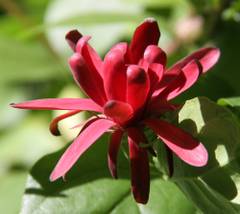
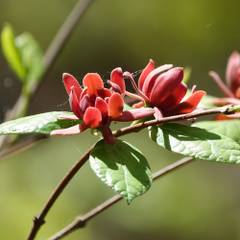
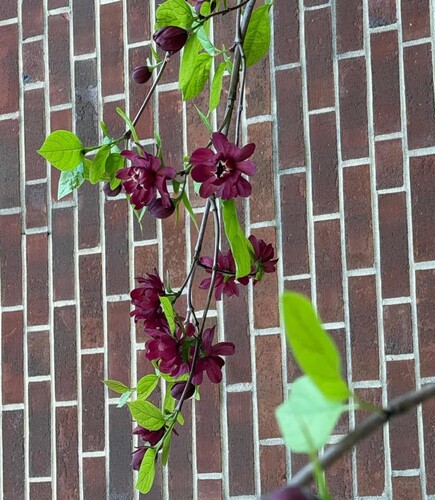
Calycanthus × raulstonii is a deciduous shrub of hybrid origin between the eastern North American sweetshrub C. floridus and the Chinese C. chinensis, first raised at the JC Raulston Arboretum. It forms an upright, rounded shrub 6–12 feet (1.8–3.7 m) tall and 6–10 feet (1.8–3 m) wide with glossy, dark green leaves 4–8 inches (10–20 cm) long that turn yellow in autumn. From late spring into summer it bears cup-shaped flowers 2–3 inches (5–8 cm) across with many strap-shaped maroon to wine-red petals around a paler center, lightly scented in some clones. Unlike its sweetshrub parent, the flowers carry little of the fruity fragrance, trading scent for larger, more colorful blooms. It grows in full sun to part shade in moist, fertile, well-drained soil and tolerates clay. The shrub is hardy to about USDA zone 5 and has few pest problems, though it can sucker at the base and spread wider than expected. Flowering is heaviest in full sun, and dry sites reduce both growth and bloom.
Native Range
Calycanthus × raulstonii is a garden hybrid and does not occur in the wild. Its parents are native to opposite sides of the world: C. floridus to the southeastern United States and C. chinensis to eastern China.Suggested Uses
Used as a specimen, in shrub borders, and in woodland-edge plantings, spaced 6–10 feet (1.8–3 m) apart. Suited to mixed borders where the dark red flowers sit against green foliage. The suckering habit and eventual size make it less suited to small, confined beds.How to Identify
Appearance
Size & Dimensions
Height6' - 12'
Width/Spread6' - 10'
Bloom Information
Detailed Descriptions
Flower Description
maroon to wine-redFoliage Description
glossy dark green, yellow in fallGrowing Conditions
Sun Requirements
Requires 4-8 hours of direct sunlight daily
• Full Sun: 6+ hours of direct sunlight
• Partial Shade: 3-6 hours of direct sunlight
• Full Shade: Less than 3 hours of direct sunlight
Care & Maintenance
Care Guide
Growth is strongest in full sun to part shade on moist, fertile, well-drained soil, though the shrub tolerates clay and brief wet spells. Regular watering through the first two seasons and during summer dry spells supports steady growth and flowering. A spring mulch conserves moisture and feeds the soil, and little extra fertilizer is needed. The plant is hardy to about USDA zone 5 and has few serious pests or diseases. Suckers at the base can be removed to limit spread. Flowering and leaf size both decline in dry, exposed sites.Pruning
Pruning to shape or thin is done right after flowering, since some bloom occurs on new wood and some on older wood. Removing the oldest stems and basal suckers controls size and keeps the shrub open. Hard renewal cuts near the base regenerate overgrown plants over a season or two.Pruning Schedule
Prune: June–July
summer