Calycanthus, Genus, occidentalis, Species,
- Genus & species
western spice bush
Overview
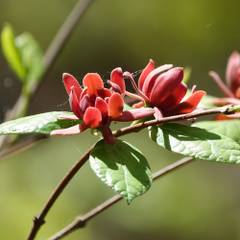
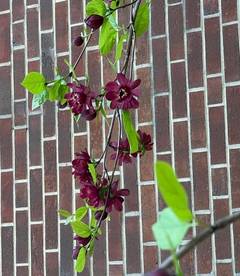
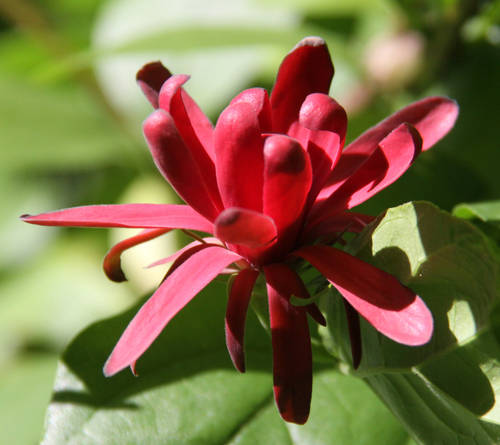
Calycanthus occidentalis is a deciduous shrub reaching 6-12 feet (1.8-3.6 m) tall and 6-10 feet (1.8-3 m) wide at maturity, with a rounded to vase-shaped form and arching branches. Bark is gray-brown with shallow furrows on older stems. Leaves are opposite, simple, ovate to lance-shaped, 3-6 inches (7.5-15 cm) long with smooth margins and a strong aromatic scent when crushed. Foliage is dark green above, paler and slightly pubescent below, turning yellow in October before drop. Solitary flowers 1.5-3 inches (3.8-7.5 cm) across appear at branch tips from May through August; flowers consist of 15-25 reddish-brown strap-shaped tepals arranged in a spiral around a central cluster of stamens. Flowers carry a winey scent reminiscent of fermenting fruit, attracting beetle pollinators (cantharophily). Fruit is a leathery, urn-shaped capsule 1-1.5 inches (2.5-3.8 cm) long that ripens brown by October and persists into winter. Plants live 30-50 years on suitable sites and may sucker to form small colonies in moist soils.
Native Range
Native to California from Shasta County south through the Sierra Nevada foothills and Coast Ranges to San Diego County, with scattered populations in southern Oregon. Found along streambanks, in moist canyons, and at the edges of riparian woodlands at 200-5,500 feet (60-1,675 m) elevation. Most common on alluvial soils with reliable summer subsurface moisture.Suggested Uses
Used in shaded native shrub borders, woodland gardens, and stream bank plantings in zones 6-9 at 8-10 foot (2.4-3 m) spacing for individual specimens or 4-6 feet (1.2-1.8 m) for thicket effect. Reddish-brown flowers appear at branch tips May through August; crushed leaves and twigs release a camphor-like scent. Tolerates riparian flooding for 1-2 weeks, an adaptation to its native streamside habitat.How to Identify
Appearance
Size & Dimensions
Height6' - 12'
Width/Spread6' - 10'
Bloom Information
Solitary reddish-brown flowers appear at branch tips from May through August in zones 6-9, with peak bloom in May and June. Individual flowers last 5-7 days; sequential opening on the same plant extends total bloom to 12-16 weeks. Beetles are the primary pollinators, attracted by the winey, fermenting-fruit scent of the flowers.
Detailed Descriptions
Foliage Description
dark green above, paler belowGrowing Conditions
Sun Requirements
Requires 4-8 hours of direct sunlight daily
• Full Sun: 6+ hours of direct sunlight
• Partial Shade: 3-6 hours of direct sunlight
• Full Shade: Less than 3 hours of direct sunlight
Care & Maintenance
Care Guide
Grows in part shade to full sun on consistently moist, well-drained loam at slightly acid to neutral pH. Water weekly during the first two seasons; established plants need supplemental water during prolonged dry summers in zones 8-9 (every 10-14 days in absence of rain). Foliage scorches and drops early when soils dry below 20% moisture for more than 14 days. Few pest problems are recorded; occasional aphid clusters on new growth in spring rarely require treatment. Plants tolerate winter cold to about 0°F (-18°C) before stem dieback occurs; in zone 6, dieback to the snow line is common with regrowth from the base each spring. Sucker shoots from the base can be left for thicket form or removed at the rootstock for a single-trunk specimen.Pruning
Prune in late winter (February to early March) before bud break to remove deadwood, crossing branches, or to shape the rounded canopy. Heavy pruning to within 18 inches (45 cm) of the ground every 5-7 years rejuvenates older specimens and is tolerated. Suckers are cut at the rootstock if a single-stem form is wanted; left in place they form a 6-10 foot (1.8-3 m) thicket within 8-10 years.Pruning Schedule
Prune: February–March
winterearly spring