Caltha, Genus, palustris, Species,
- Genus & species
marsh marigold
Northern Hemisphere (North America, Europe, Asia)
Overview
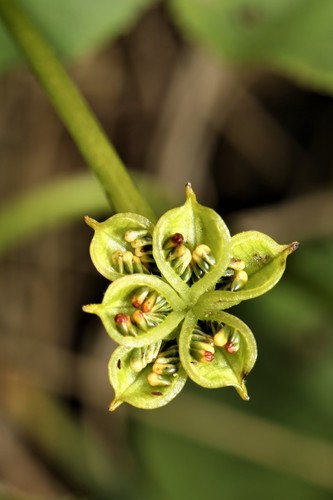
Caltha palustris is a clump-forming herbaceous perennial of the buttercup family, growing 8-16 inches (20-40 cm) tall in wet ground and shallow water. It forms mounds of glossy, dark green, kidney- to heart-shaped leaves 2-6 inches (5-15 cm) across, with rounded teeth along the margins. In early to mid spring it carries flowers 1-2 inches (2.5-5 cm) wide, each with five to nine petal-like sepals in waxy golden yellow surrounding numerous yellow stamens, on branched hollow stems above the foliage. Pollinated flowers form clusters of beaked seed-pods that split to release seeds dispersed by water. The plant grows from a short rhizome with fibrous roots and spreads slowly into colonies along stream edges, marshes, wet meadows, and pond margins. Foliage can die back during summer drought and regrows when moisture returns. All parts contain protoanemonin, an irritant that can blister skin and cause digestive upset if eaten. It grows in consistently wet, mucky soils and declines where the ground dries out.
Native Range
Native across the cool temperate and subarctic Northern Hemisphere, including much of North America, Europe, and Asia. In North America it ranges from Alaska and Canada south through the northern and montane United States. It grows naturally in marshes, wet woodlands, and along slow streams.Suggested Uses
Used at pond and stream margins, in bog gardens, rain gardens, and the wet edges of naturalistic plantings. It fills the saturated zone where many perennials fail. Often combined with other moisture-loving plants such as Iris and Primula species.How to Identify
Appearance
Size & Dimensions
Height8" - 1'4"
Width/Spread1' - 1'6"
Bloom Information
Blooms in early to mid spring, typically April through May, often while surrounding vegetation is still low. Flowering lasts about three to five weeks, with scattered later blooms in cool wet summers. Early pollinators including hoverflies and small bees visit the open flowers.
Detailed Descriptions
Foliage Description
dark greenGrowing Conditions
Sun Requirements
Requires 4-10 hours of direct sunlight daily
• Full Sun: 6+ hours of direct sunlight
• Partial Shade: 3-6 hours of direct sunlight
• Full Shade: Less than 3 hours of direct sunlight
Care & Maintenance
Care Guide
Grows in full sun to part shade in soils that stay wet to saturated, including the shallow margins of ponds where the crown sits in 1-3 inches (2.5-8 cm) of water. Rich, mucky, humus-laden ground supports vigorous growth. It does not tolerate drying out, and foliage browns and goes dormant if the soil dries in summer. No fertilizing is needed in fertile wet soil. Division in late summer or early autumn is the usual method of propagation. Slugs and powdery mildew are occasional problems in crowded plantings.Pruning
Spent flower stems can be removed after bloom to limit self-seeding. Tattered or browned foliage can be cut away as the plant goes summer-dormant. No routine pruning is otherwise needed.Pruning Schedule
Prune: June
summer
Container Growing
Suitable for container growing
Minimum container size: 2 gallons