Calliandra, Genus, spp., Multiple species,
- Genus
- Multiple species
stickpeas
Tropical and subtropical Americas, mainly
Overview
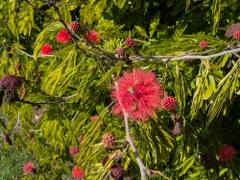
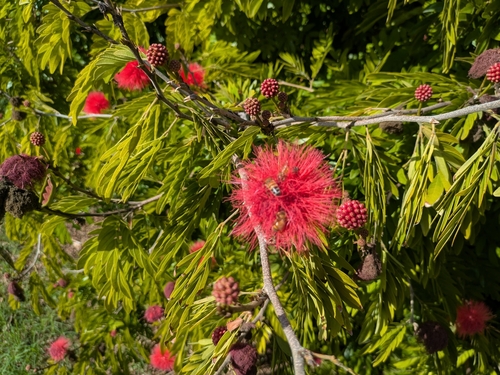
Calliandra is a genus of about 140 species of evergreen shrubs and small trees in the pea family (Fabaceae), native mainly to the tropical and subtropical Americas, with a few species in Asia, Africa, and Madagascar. The common names powderpuff and fairy duster refer to the flower clusters, which are rounded heads of many long, slender stamens in red, pink, or white that open like a soft puff. The leaves are bipinnate and fern-like, divided into many small leaflets that fold together at night and in dry heat. Plants range from low desert shrubs around 3 feet (1 m), such as the fairy duster (C. eriophylla), to spreading shrubs and small trees 10-20 feet (3-6 m) tall, such as the red powderpuff (C. haematocephala). Flowering comes mainly in the cooler months from autumn through spring in frost-free climates, and the stamen clusters draw hummingbirds, butterflies, and bees. As legumes, the plants fix nitrogen and tolerate poor soil. The genus is frost-tender and grows outdoors only in USDA zones 9-11; cold below the mid-20s F damages or kills the top growth.
Native Range
The genus is native chiefly to the tropical and subtropical Americas, from the southwestern United States and Mexico through Central America to Brazil and Bolivia, with a smaller number of species in tropical Asia, Africa, and Madagascar. Species grow in dry scrub, thorn forest, savanna, and the margins of tropical woodland.Suggested Uses
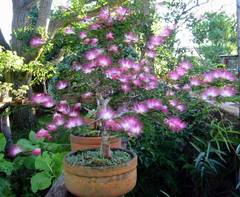
Powderpuffs are planted as flowering shrubs, informal hedges, and screens in frost-free gardens, spaced 4-8 feet (1.2-2.4 m) apart, and the small-tree species are grown as patio and specimen plants. Desert species such as fairy duster are used in low-water and native plantings in the southwestern United States. Compact forms are grown in large containers and trained as standards or espaliers.How to Identify
Appearance
Size & Dimensions
Height3' - 20'
Width/Spread4' - 15'
Bloom Information
Flowering occurs mainly in the cooler, drier months from autumn into spring in frost-free climates, and can repeat at intervals through the year. Each powderpuff head lasts a day or two, but plants open new heads in succession over many weeks. The red-flowered species flower most heavily in winter.
Detailed Descriptions
Flower Description
red, pink, or whiteFoliage Description
greenGrowing Conditions
Sun Requirements
Requires 6-10 hours of direct sunlight daily
• Full Sun: 6+ hours of direct sunlight
• Partial Shade: 3-6 hours of direct sunlight
• Full Shade: Less than 3 hours of direct sunlight
Care & Maintenance
Care Guide
Calliandra species grow in full sun in well-drained soil across a pH of 6.0-7.5 and tolerate sand, rocky ground, and drought once established, fixing their own nitrogen in poor soil. They are frost-tender, growing as evergreen shrubs only in USDA zones 9-11 and resprouting from the base after light frost in marginal areas. Regular water through the warm season supports growth and bloom, but soggy soil causes root rot. Desert species need sharp drainage and little water, while tropical species take more moisture. Few serious pests trouble them, though scale, mites, and caterpillars occur. Plants in containers are moved under cover where winters are cold.Pruning
Plants are pruned after the main flowering flush to shape them and keep growth dense, since they flower on new wood. Leggy or frost-damaged stems are cut back hard in spring to renew the framework. Light tip-pruning through the season holds the size of shrubs grown in containers or against walls.Pruning Schedule
Prune: April
spring
Container Growing
Suitable for container growing
Minimum container size: 10 gallons