Calliandra, Genus, haematocephala, Species,
- Genus & species
pink powder puff
Bolivia and western Brazil (tropical forest margins and clearings)
Overview
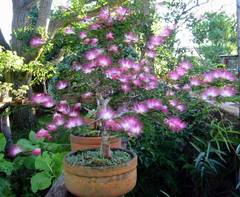
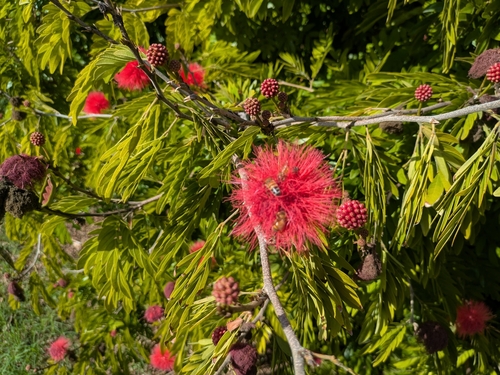
Calliandra haematocephala is a tropical evergreen shrub or small tree reaching 10–15 feet (3–4.5 m) tall with an equal spread, growing in a spreading open-canopy form with arching branches. The species is a member of the legume family (Fabaceae) and carries bipinnate compound leaves—each leaf divided into 2 pairs of pinnae bearing 5–10 pairs of narrow leaflets 1–2 inches (2.5–5 cm) long, producing a soft fern-like foliage texture that separates Calliandra from most other tropical flowering shrubs. New foliage emerges bronze-red and darkens to dark green as leaves mature. The species takes its common name from the flower structure: inflorescences are dense globular heads 2–3 inches (5–8 cm) across composed of 20–40 individual flowers, each flower's ornamental value coming from the long pink to red stamens (not petals—the actual petals are small and greenish), which project outward in all directions to build the characteristic powder-puff shape. Flowers open sequentially through the head over 2–3 days and the shrub carries open heads almost continuously from October through April in frost-free climates. Hummingbirds and large butterflies work the flowers through the full bloom season. Hardy to zone 9 (20°F / −7°C); frost damages the foliage and hard freeze kills the plant to the ground.
Native Range
Calliandra haematocephala is native to Bolivia and western Brazil, growing in tropical forest margins, roadside scrub, and clearings at low to middle elevations. The species has been in horticultural cultivation since the 19th century and is widely planted in zone-9-and-warmer tropical and subtropical gardens across the Americas, Asia, and Africa.Suggested Uses
Planted as a specimen, informal hedge, or mixed-border shrub at 10–12 foot (3–3.6 m) spacing in zone-9-and-warmer gardens. The long October-through-April bloom window and the hummingbird-attracting flowers suit the shrub for patios, pool surrounds, and other positions where winter garden activity brings the plant into regular view. The bipinnate fern-like foliage carries year-round textural interest beyond the flower display. Container culture in pots of at least 10 gallons (38 L) extends the species' range into colder zones where the pot can be moved to a frost-free structure for the winter. Deep shade (reduced bloom), wet heavy soils, and cold-winter climates without frost protection are poor fits for the shrub.How to Identify
Appearance
Size & Dimensions
Height10' - 15'
Width/Spread10' - 15'
Bloom Information
Globular inflorescences 2–3 inches (5–8 cm) across, composed of 20–40 small flowers whose pink to red stamens project outward to build the powder-puff shape, open on the shrub almost continuously from October through April in frost-free climates. Individual flower heads remain open 2–3 days; new heads open in succession so the overall bloom display runs unbroken across the 6–7 month window. The flowers supply a major nectar source for hummingbirds and butterflies during the winter and early-spring months when few other tropical flowers are open.
Detailed Descriptions
Flower Description
Pink to red powder-puff stamen clusters 2-3 inches acrossFoliage Description
Dark green bipinnate compound; bronze-red new growthGrowing Conditions
Sun Requirements
Requires 5-10 hours of direct sunlight daily
• Full Sun: 6+ hours of direct sunlight
• Partial Shade: 3-6 hours of direct sunlight
• Full Shade: Less than 3 hours of direct sunlight
Care & Maintenance
Care Guide
Full sun to partial shade in well-drained loam or sandy soil matches the species' cultivation needs. Hardy to zone 9 (20°F / −7°C); light frost damages foliage and hard freeze kills the plant to the ground, so zone 9 positions are sited in protected microclimates (south walls, urban heat islands) for reliable survival. Drought tolerance is strong once the root system establishes through the first 2–3 years, and the legume-family nitrogen-fixing root nodules allow the shrub to handle lean soils that would starve other flowering shrubs. Container cultivation in pots of at least 10 gallons (38 L) works in colder zones with overwintering indoors or in a greenhouse. Pest and disease problems are minimal in well-drained positions; wet heavy soils cause root rot.Pruning
Pruning is done in late spring (May) after the main bloom flush has ended, and before the shrub sets buds for the next winter's bloom cycle. Overgrown or leggy plants tolerate hard rejuvenation pruning back to 2–3 feet (60–90 cm) and regrow with denser form within 1–2 seasons. Light shaping through the summer removes crossing branches and maintains the open spreading habit. Winter pruning removes the coming season's flower buds and is avoided.Pruning Schedule
Prune: May
late spring
Container Growing
Suitable for container growing
Minimum container size: 10 gallons