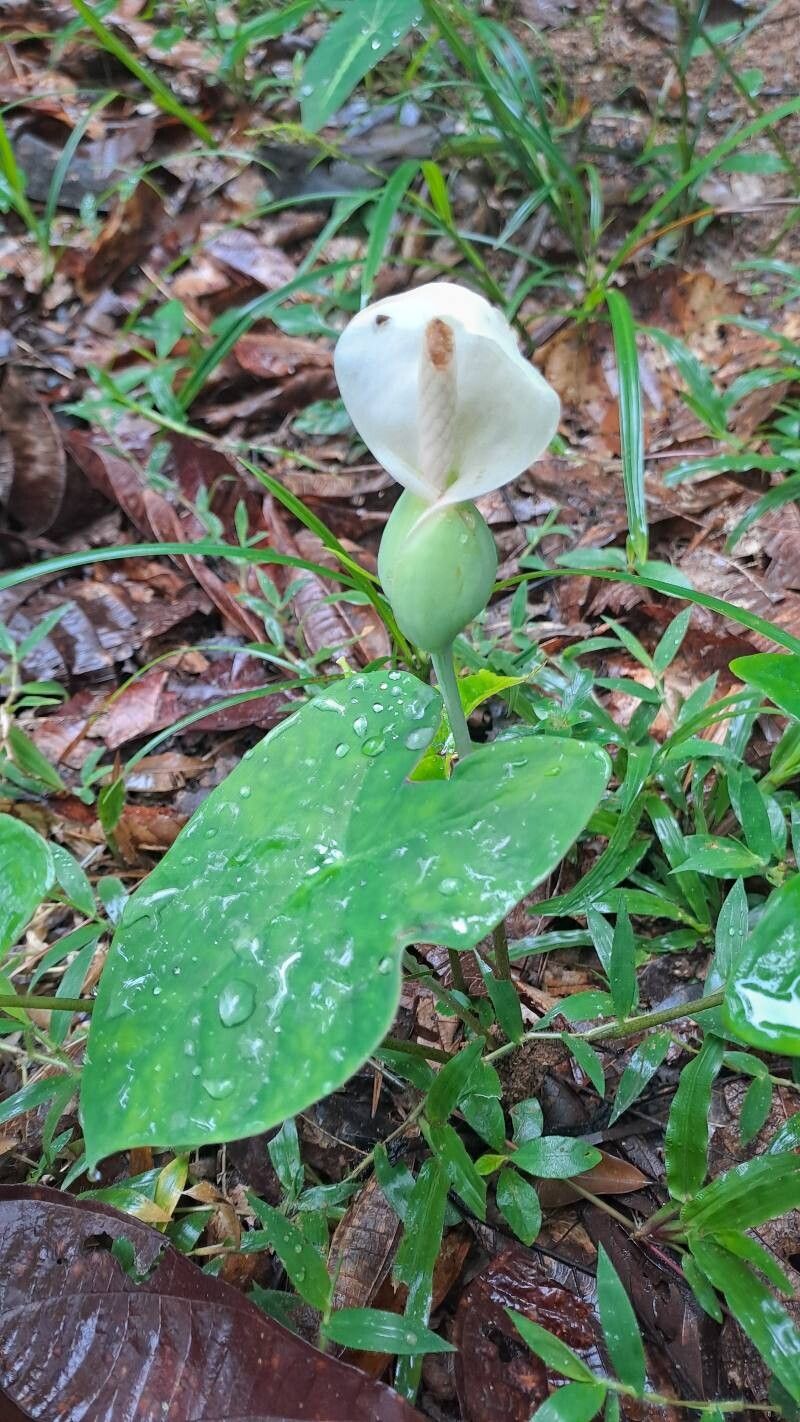
Caladium, Genus, spp., Multiple species,
- Genus
- Multiple species
caladium
Overview
Caladium is a genus of tuberous, frost-tender perennials in the arum family grown for large, often multicolored leaves. Plants rise 12-30 inches (30-76 cm) tall and 12-24 inches (30-60 cm) wide from a flattened underground tuber. Leaves are heart- to arrow-shaped (sagittate), 6-18 inches (15-45 cm) long, held on slender petioles, and patterned in combinations of green, white, pink, and red with contrasting veins and margins; fancy-leaved forms are broad while strap-leaved forms are narrow and lance-shaped. Foliage emerges in late spring and dies back to the tuber with the first cool weather, giving a dormant period of several months. Flowers are typical of the family: a narrow pale green to white spathe wrapping a slender spadix, 3-6 inches (8-15 cm) long, mostly hidden among the leaves and produced sparingly in cultivation. All parts contain calcium oxalate crystals that cause burning and swelling of the mouth and throat if chewed. Tubers are damaged below about 60°F (15°C) and rot in cold, wet soil. Across the genus, roughly a dozen species occur in tropical America, with most cultivated forms derived from C. bicolor. Leaf color fades and scorches in strong direct sun and is fullest in bright shade.
Native Range
The genus Caladium is native to tropical Central and South America, with greatest diversity in the Amazon basin of Brazil and neighboring countries. Plants grow along forest margins, riverbanks, and clearings in humid, warm lowlands, going dormant during the tropical dry season. C. bicolor has naturalized in parts of the tropics beyond its native range.Suggested Uses
Grown as a shade bedding plant, in containers, and as a foliage houseplant in bright indirect light, spaced 8-14 inches (20-35 cm) apart in beds. Used for summer color in shaded borders and under tree canopies in zones 9-11, and lifted as a tender tuber elsewhere. Leaf color suits massed plantings where direct sun is limited.How to Identify
Appearance
Size & Dimensions
Height1' - 2'6"
Width/Spread1' - 2'
Bloom Information
Flowers from late spring through summer in warm conditions, though bloom is sparse and often removed during foliage production. Each inflorescence consists of a pale green to white spathe and spadix lasting several days. Flowering draws energy from the tuber and is uncommon in container culture. The genus is grown for foliage rather than its flowers.
Detailed Descriptions
Flower Description
pale green to white spatheFoliage Description
green, white, pink, and red with contrasting veinsGrowing Conditions
Sun Requirements
Requires 2-5 hours of direct sunlight daily
• Full Sun: 6+ hours of direct sunlight
• Partial Shade: 3-6 hours of direct sunlight
• Full Shade: Less than 3 hours of direct sunlight
Care & Maintenance
Care Guide
Tubers are started in spring in warm soil above 70°F (21°C); growth is slow or stalls below that. Plants need consistently moist, humid conditions and bright shade to filtered sun, with leaf color washing out and margins scorching in midday sun. Feeding every 2-4 weeks during active growth supports continued leaf production. As days shorten and temperatures fall, foliage yellows and dies back; tubers are lifted in zones colder than 9 and stored dry at 50-60°F (10-16°C) over winter. Spider mites and aphids occur in dry indoor air, and tubers rot in cold, waterlogged soil. Container plants resume growth when tubers are replanted in fresh medium in spring.Pruning
Yellowing or torn leaves can be removed at the petiole base through the growing season without harming the tuber. No structural pruning is needed. At dormancy, withered foliage is cut away once dry and the tuber is stored.Container Growing
Suitable for container growing
Minimum container size: 1 gallons
