Caesalpinia, Genus, pulcherrima, Species,
- Genus & species
peacock flower
Overview
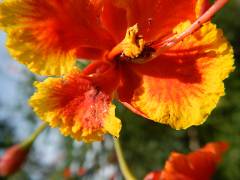
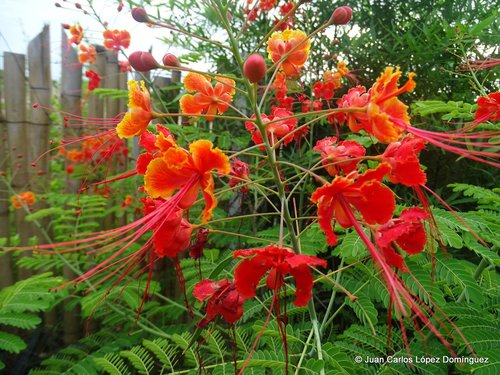
Caesalpinia pulcherrima is a fast-growing, semi-evergreen to deciduous shrub or small tree in the legume family, reaching 8-15 feet (2.4-4.5 m) tall with an open, vase-shaped, often thorny framework. The bipinnate leaves are fern-like, 8-16 inches (20-40 cm) long, divided into many small oval leaflets that fold at night. From late spring through autumn, and year-round in frost-free climates, upright racemes carry cup-shaped flowers about 1.5-2.5 inches (4-6 cm) across, with crinkled petals in orange, red, and yellow and long red stamens that reach well beyond the petals. Flat, dark seed pods 3-4 inches (8-10 cm) long follow and split open when ripe. The plant grows quickly, tolerates heat and drought, and flowers within its first year. It is hardy only in warm climates, dying back or failing below about 25 F (-4 C), though it can resprout from the base after light frost. The seeds and pods contain compounds that cause stomach upset if eaten. It is grown across the tropics and subtropics and has naturalised in some regions.
Native Range
Native range is uncertain through long cultivation, but the species is thought to originate in the tropical Americas, likely the West Indies or Mexico. It is now grown and naturalised throughout tropical and subtropical regions worldwide.Suggested Uses
Grown as a flowering specimen, informal hedge, or screen in tropical and subtropical gardens, and as a container plant in colder climates. It suits hot, dry sites and pollinator gardens, drawing butterflies, bees, and hummingbirds to the flowers. The bright blooms extend through the warm season where frost is absent.How to Identify
Appearance
Size & Dimensions
Height8' - 15'
Width/Spread6' - 12'
Bloom Information
Cup-shaped flowers in orange, red, and yellow open from late spring through autumn in temperate areas and year-round in frost-free climates. Each raceme opens from the base upward over several weeks. Seed pods form after flowering and ripen to brown before splitting.
Detailed Descriptions
Flower Description
orange, red, and yellowFoliage Description
greenGrowing Conditions
Sun Requirements
Requires 6-12 hours of direct sunlight daily
• Full Sun: 6+ hours of direct sunlight
• Partial Shade: 3-6 hours of direct sunlight
• Full Shade: Less than 3 hours of direct sunlight
Care & Maintenance
Care Guide
Performs in full sun on free-draining soil at a pH from 6.0 to 7.5, tolerating sandy, rocky, and alkaline ground. Once established it withstands heat and drought and needs little water, while wet or shaded sites reduce flowering. It is hardy only in zones 9 to 11; frost kills top growth, though plants often resprout from the roots after a light freeze. In cooler regions it is grown in containers and overwintered indoors or treated as an annual. Light feeding in spring supports bloom, and overly rich soil produces leaves at the expense of flowers. The seeds and pods are toxic if eaten.Pruning
Prune in late winter or early spring to shape the plant and remove frost-damaged or crossing stems. Hard pruning near the base encourages vigorous new shoots and a fuller form. Spent flower stalks and developing pods can be removed to prolong blooming.Container Growing
Suitable for container growing
Minimum container size: 10 gallons