Caesalpinia, Genus, spp., Multiple species,
- Genus
- Multiple species
caesalpinia
Pantropical across the Americas, Africa, and Asia
Overview
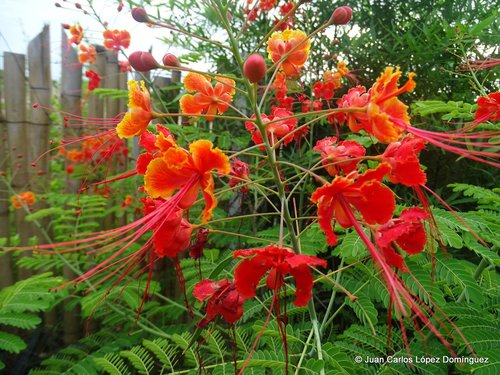
Caesalpinia is a genus of tropical and subtropical shrubs, small trees, and woody climbers in the legume family, Fabaceae, traditionally holding well over 100 species, many of which recent taxonomy has moved to related genera such as Erythrostemon and Libidibia. As commonly understood in horticulture, the group includes pride of Barbados (C. pulcherrima), bird-of-paradise bush (C. gilliesii), and the dye plant brazilwood (C. echinata). Plants typically grow 6-30 ft (2-9 m) tall, with bipinnate, fern-like foliage and stems that are often armed with small prickles. The flowers are carried in upright clusters and have five clawed petals with long, projecting stamens, in red, orange, and yellow. Flat or curved legume pods follow and split open to release hard seeds. Most species grow in warm, frost-free climates in full sun and tolerate heat, poor soil, and drought once established. Seeds and pods of several species contain irritant compounds and cause stomach upset if eaten. In cooler areas plants are damaged or killed by hard frost.
Native Range
The genus is pantropical, native across the Americas, Africa, and Asia, with many species in Mexico, Central and South America, and the Caribbean. C. pulcherrima is widespread in tropical America, and C. gilliesii originates in Argentina and Uruguay.Suggested Uses
Grown as flowering shrubs, informal hedging, and small specimen trees in warm-climate gardens, and used in butterfly and hummingbird plantings for the long-stamened flowers. Container specimens are overwintered under cover in cold regions, while in-ground plants are spaced 5-8 ft (1.5-2.4 m) apart.How to Identify
Appearance
Size & Dimensions
Height6' - 30'
Width/Spread6' - 15'
Bloom Information
In warm climates Caesalpinia flowers through much of the summer and into autumn, with the heaviest bloom in the hot months. Where winters are mild the flowering season is long, while frost ends it. The clustered flowers open over several weeks and give way to legume pods.
Detailed Descriptions
Flower Description
red, orange, and yellowFoliage Description
green, bipinnate and fern-likeGrowing Conditions
Sun Requirements
Requires 6-10 hours of direct sunlight daily
• Full Sun: 6+ hours of direct sunlight
• Partial Shade: 3-6 hours of direct sunlight
• Full Shade: Less than 3 hours of direct sunlight
Care & Maintenance
Care Guide
Across the genus, Caesalpinia grows in full sun in well-drained soil of average fertility, tolerating a pH from about 6.0 to 7.5. Established plants withstand heat and drought and grow poorly in wet, heavy, or shaded sites. Most species are frost-tender and suited to USDA zones 9-11, though a few, such as C. gilliesii, tolerate brief cold into zone 8 and resprout from the base after frost. Growth is fast in warm weather. In containers plants need a free-draining mix and a sunny position. Pruning keeps the often-lanky stems compact.Pruning
Plants tolerate hard pruning in late winter or early spring, which controls size and renews the often-leggy framework. Removing spent pods limits self-seeding and tidies the plant. The prickly stems are handled with gloves during pruning.Container Growing
Suitable for container growing
Minimum container size: 7 gallons
