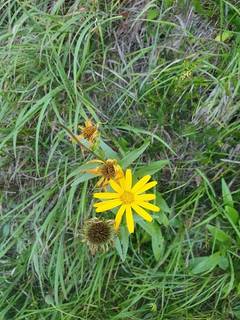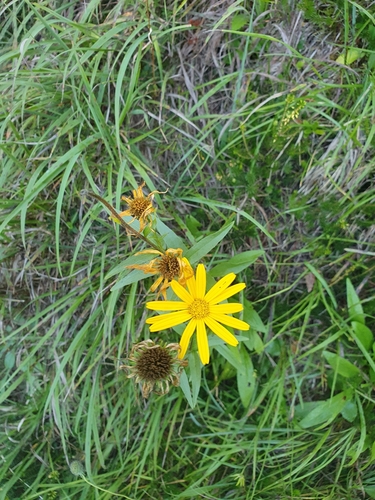
Buphthalmum, Genus, spp., Multiple species,
- Genus
- Multiple species
Overview
Buphthalmum is a small genus of clump-forming herbaceous perennials in the daisy family (Asteraceae), native to central and southern Europe. Plants form leafy clumps 12-24 in (30-60 cm) tall and 12-18 in (30-45 cm) wide, with narrow to lance-shaped alternate leaves on upright, branching stems. From early summer into autumn they carry solitary yellow daisy flower-heads 1.5-2.5 in (4-6 cm) across, each with broad ray florets around a raised central disc, held singly on long stalks. The genus grows in open grassland, rocky slopes, and woodland edges on well-drained, often limestone soils. In cultivation the plants take full sun to light shade and tolerate poor, dry, and alkaline ground once established, though rich soils can make growth lax and floppy. They spread slowly at the root and self-seed in open ground, which can let them naturalise beyond the intended spot. The long flowering season is the genus's main garden trait, strongest on lean soils that keep the stems firm.
Native Range
Buphthalmum is native to central and southern Europe, from the Alps and surrounding ranges into the Balkans. The genus grows in open grassland, rocky slopes, scrub, and woodland margins, often on limestone-derived, well-drained soils.Suggested Uses
Used in sunny borders, gravel and rock gardens, wildflower meadows, and cottage-style plantings across the genus. The long-stemmed yellow daisies are cut for the vase. Spaced 12-18 in (30-45 cm) apart in groups.How to Identify
Appearance
Size & Dimensions
Height1' - 2'
Width/Spread1' - 1'6"
Bloom Information
Across the genus, yellow daisy heads open over a long season from early summer into autumn, roughly June to September. Each flower is borne singly on a long stem, and removing faded heads extends the display. Seed follows in small dry, single-seeded fruits typical of the family.
Detailed Descriptions
Foliage Description
greenGrowing Conditions
Sun Requirements
Requires 5-9 hours of direct sunlight daily
• Full Sun: 6+ hours of direct sunlight
• Partial Shade: 3-6 hours of direct sunlight
• Full Shade: Less than 3 hours of direct sunlight
Care & Maintenance
Care Guide
Most species grow in full sun to light shade on well-drained soil and tolerate dry, stony, and alkaline ground once established. Lean soils keep the stems upright, while rich or moist ground produces soft, floppy growth that may need support. Water through the first season, then rely on rainfall, as established plants withstand drought. Cut plants back after flowering to limit self-seeding and tidy the clump. Divide congested clumps every few years in spring to maintain vigour. Feeding is rarely needed and can reduce flower quality.Pruning
Remove spent flower stems through the season to prolong bloom and reduce self-sowing. Cut the whole clump back to the base in late autumn or late winter once growth dies down. Divide overgrown clumps in spring.Pruning Schedule
Prune: March & November
fallwinter
Container Growing
Suitable for container growing
Minimum container size: 3 gallons