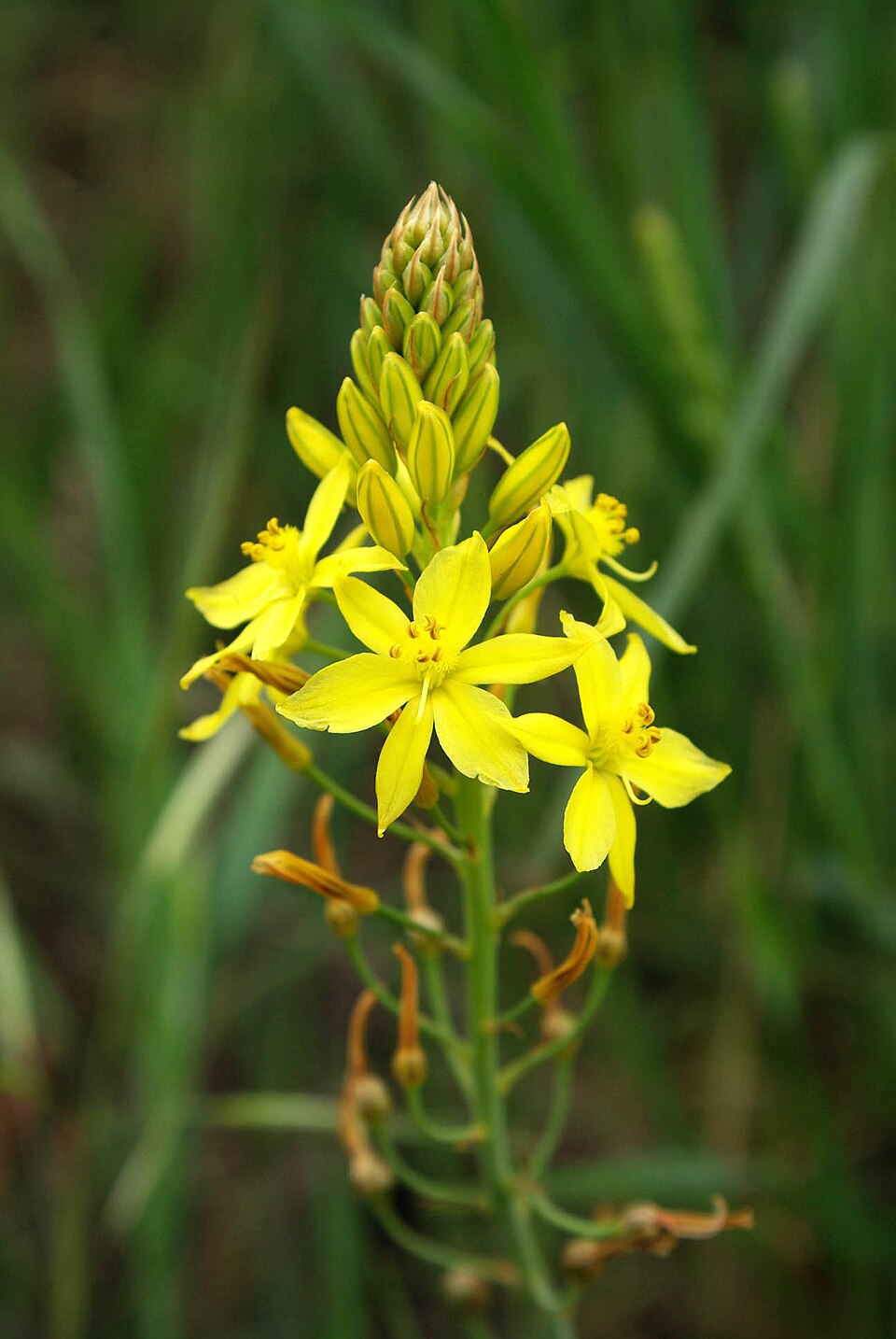
Bulbine, Genus, spp., Multiple species,
- Genus
- Multiple species
Kopievas
Overview
Bulbine is a genus of about 80 succulent perennials, biennials, and annuals in the asphodel family, native chiefly to southern Africa with several species in Australia. Most grown species are evergreen, clump-forming succulents 6-24 inches (15-60 cm) tall, with fleshy, narrow, grass-like or cylindrical leaves rising from a basal cluster or short stem. Slender flower stalks carry tapering spikes of small, star-shaped, six-petalled flowers, usually yellow or orange, each with a tuft of bearded, fluffy stamens, opening from the bottom of the spike upward over several weeks. B. frutescens forms spreading mounds of soft, cylindrical leaves and blooms over much of the year in mild climates; its leaf sap is used on the skin much like Aloe. Plants store water in their leaves and roots, tolerating drought and poor soil, but rot in cold, wet ground. They spread by offsets or short rhizomes to form colonies. Across the genus, species grow on rocky slopes, grassland, and seasonally dry flats. Foliage is pale to bright green, sometimes flushed at the base. Most species are frost-tender, though some tolerate light frost once established.
Native Range
The genus Bulbine is native chiefly to southern Africa, with the greatest diversity in South Africa, and a number of species in Australia. Plants grow on rocky outcrops, grassland, scrub, and seasonally dry flats, from coastal lowland to inland plateau. B. frutescens is widespread in South Africa and is now planted in warm, dry gardens worldwide.Suggested Uses
Grown in rock gardens, gravel gardens, dry banks, coastal plantings, and containers, spaced 10-18 inches (25-45 cm) apart, and used as low, long-flowering ground cover in warm, dry climates. B. frutescens is planted in mass for erosion control on dry slopes and is also kept as a household plant for its skin-soothing leaf sap. Compact forms suit pots and windowsills.How to Identify
Appearance
Size & Dimensions
Height6" - 2'
Width/Spread1' - 2'
Bloom Information
Blooms over a long season in mild climates, with B. frutescens flowering nearly year-round and peaking in spring and summer. Each tapering spike opens its star-shaped flowers from the bottom upward over two to four weeks. In colder areas bloom is concentrated in the frost-free months. Flowering is heaviest in full sun.
Detailed Descriptions
Flower Description
yellow to orangeFoliage Description
pale to bright greenGrowing Conditions
Sun Requirements
Requires 6-10 hours of direct sunlight daily
• Full Sun: 6+ hours of direct sunlight
• Partial Shade: 3-6 hours of direct sunlight
• Full Shade: Less than 3 hours of direct sunlight
Care & Maintenance
Care Guide
Grows in full sun to light shade in sandy, sharply drained soil, tolerating heat, drought, and poor ground once established; wet or heavy soil causes root and crown rot. Plants are watered sparingly, with more during active growth and very little in cool, dormant periods. Most species are frost-tender and are grown in containers or lifted where winters are cold, though B. frutescens tolerates light frost. Spent flower spikes are removed to prolong bloom and limit seeding. Few pests trouble the genus, apart from mealybugs and aphids on stressed plants. Clumps are easily divided in spring to increase stock.Pruning
Cut spent flower spikes at the base through the season to keep plants blooming and reduce self-seeding. Remove old or frost-damaged leaves to tidy the clump. No other pruning is needed. Overgrown colonies are lifted and divided in spring.Container Growing
Suitable for container growing
Minimum container size: 1 gallons
