Image 1 of 13
1 / 13
Plant Reference
Buddleja, Genus, davidii, Species,
- Genus & species
butterfly bush
Central and western China; Sichuan, Hubei, and adjacent provinces; rocky slopes and disturbed areas
Overview
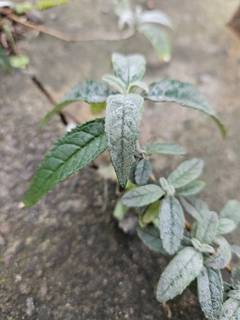
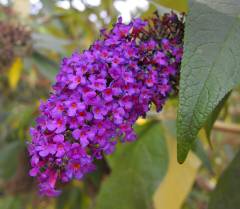
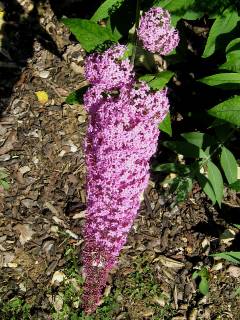
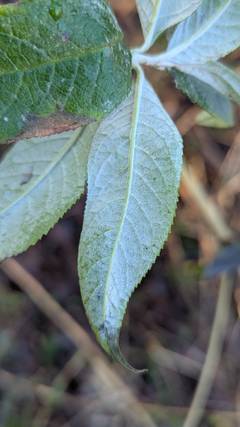
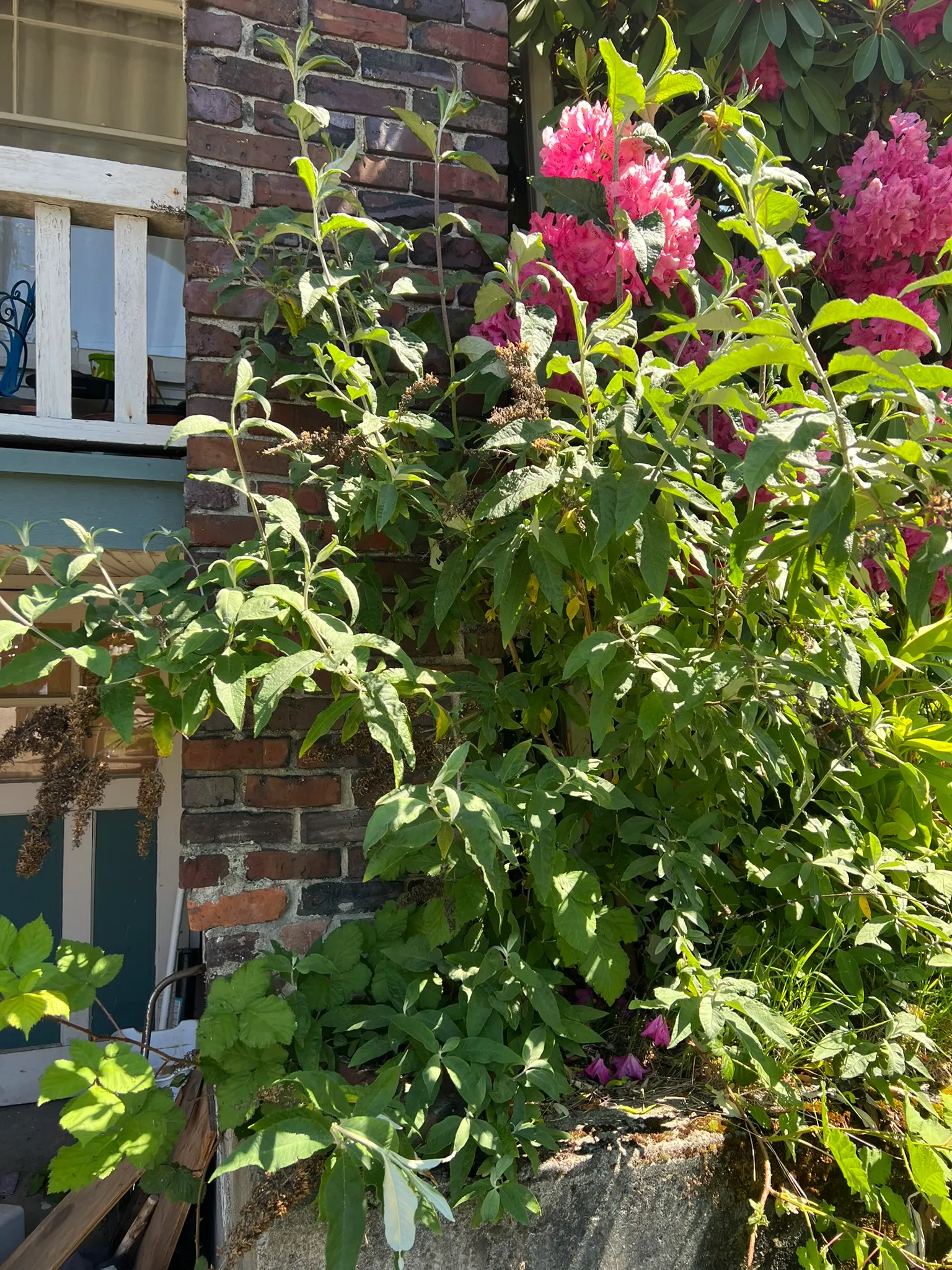
Buddleja davidii is a deciduous shrub reaching 5–10 feet (1.5–3 m) tall and 5–10 feet (1.5–3 m) wide with arching stems. Leaves are opposite, lanceolate, 4–10 inches (10–25 cm) long, dark green above and white-felted (tomentose) beneath, with serrated margins. Flowers are carried in dense terminal conical panicles 4–12 inches (10–30 cm) long from July through October; corolla color varies by cultivar across purple, lavender, pink, white, and magenta, with an orange throat at the center of each tubular flower. The strong sweet honey-like scent of the panicles draws butterflies, bees, and moths in large numbers throughout the bloom period. Bloom occurs on new (current-season) wood, and a single plant produces an estimated several hundred thousand to over one million tiny wind-dispersed seeds per season from the spent panicles. In USDA zones 5–6, stems die back to the ground in winter and regrow to full height of 5–10 feet (1.5–3 m) in a single growing season; in zones 7–9 the plant retains a woody framework. B. davidii is listed as a Class B noxious weed in Washington and Oregon and as invasive in numerous other U.S. states, the United Kingdom, New Zealand, and Australia, where wind-dispersed seeds colonize disturbed ground, roadsides, and stream banks. Sale and propagation of fertile B. davidii are prohibited in Oregon and restricted in Washington; sterile or low-fertility cultivars including the Lo & Behold and Flutterby series are sold under those state regulations as a reduced-seed alternative. Limitation: the seed production of fertile cultivars is the primary spread mechanism, and even sterile cultivars produce a small percentage of viable seeds, so siting near native plant communities, riparian corridors, and forest edges contributes to invasive spread.
Native Range
Native to central and western China, including Sichuan, Hubei, and adjacent provinces, growing on rocky slopes and disturbed areas. B. davidii is listed as invasive in the Pacific Northwest, parts of the eastern U.S., the United Kingdom, New Zealand, and Australia.Suggested Uses
Used in the back of mixed borders, butterfly gardens, and pollinator plantings at 5–10 foot (1.5–3 m) spacing. The strongly fragrant panicles draw butterflies, bees, and moths through a 12–14 week bloom period from midsummer into fall. B. davidii is restricted or prohibited under state invasive-species law in Oregon, Washington, and several other U.S. states; sterile or low-fertility cultivars supply a reduced-seed alternative under those regulations. Sites near native plant communities, riparian corridors, and forest edges are unsuitable because of seed escape.How to Identify
Appearance
Size & Dimensions
Height5' - 10'
Width/Spread5' - 10'
Bloom Information
Dense terminal panicles 4–12 inches (10–30 cm) long open from July through October on current-season wood, with tubular corollas in purple, lavender, pink, white, or magenta surrounding an orange throat. Bloom continues for 12–14 weeks with regular removal of spent panicles. Each spent panicle holds several thousand tiny seeds; a single plant produces an estimated 100,000 to over one million seeds per season from fertile cultivars.
Detailed Descriptions
Flower Description
purple, lavender, pink, white, or magenta with an orange throat (varies by cultivar); in dense terminal panicles 4-12 inches (10-30 cm) longFoliage Description
dark green above, white-felted (tomentose) beneath; lanceolate, 4-10 inches (10-25 cm) long with serrated marginsGrowing Conditions
Sun Requirements
Requires 6-10 hours of direct sunlight daily
• Full Sun: 6+ hours of direct sunlight
• Partial Shade: 3-6 hours of direct sunlight
• Full Shade: Less than 3 hours of direct sunlight
Care & Maintenance
Care Guide
Site in full sun with 6–10 hours of direct sun per day in well-drained soil with a pH of 6.0–7.5. The species tolerates clay, sand, chalk, and loam soils and is drought-tolerant once established. Wet or poorly drained soils cause root rot and stem dieback. B. davidii is restricted or prohibited under invasive-species regulations in Oregon, Washington, and several other U.S. states; sterile or low-fertility cultivars are sold as reduced-seed alternatives in those jurisdictions. Hardy in USDA zones 5–9. Routine fertilization is not required.Pruning
Cut stems back to 12–18 inches (30–45 cm) above ground in early spring (March and April) before new growth emerges; the plant blooms on current-season wood and tolerates this hard renovation. In USDA zones 5–6 stems die back naturally to the ground in winter and require only the removal of dead material. Spent panicles can be removed through the bloom period to extend flowering and reduce seed production from fertile cultivars.Pruning Schedule
Prune: March–April
early spring