Bryonia, Genus, cretica, Species,
- Genus & species
white bryony
Overview
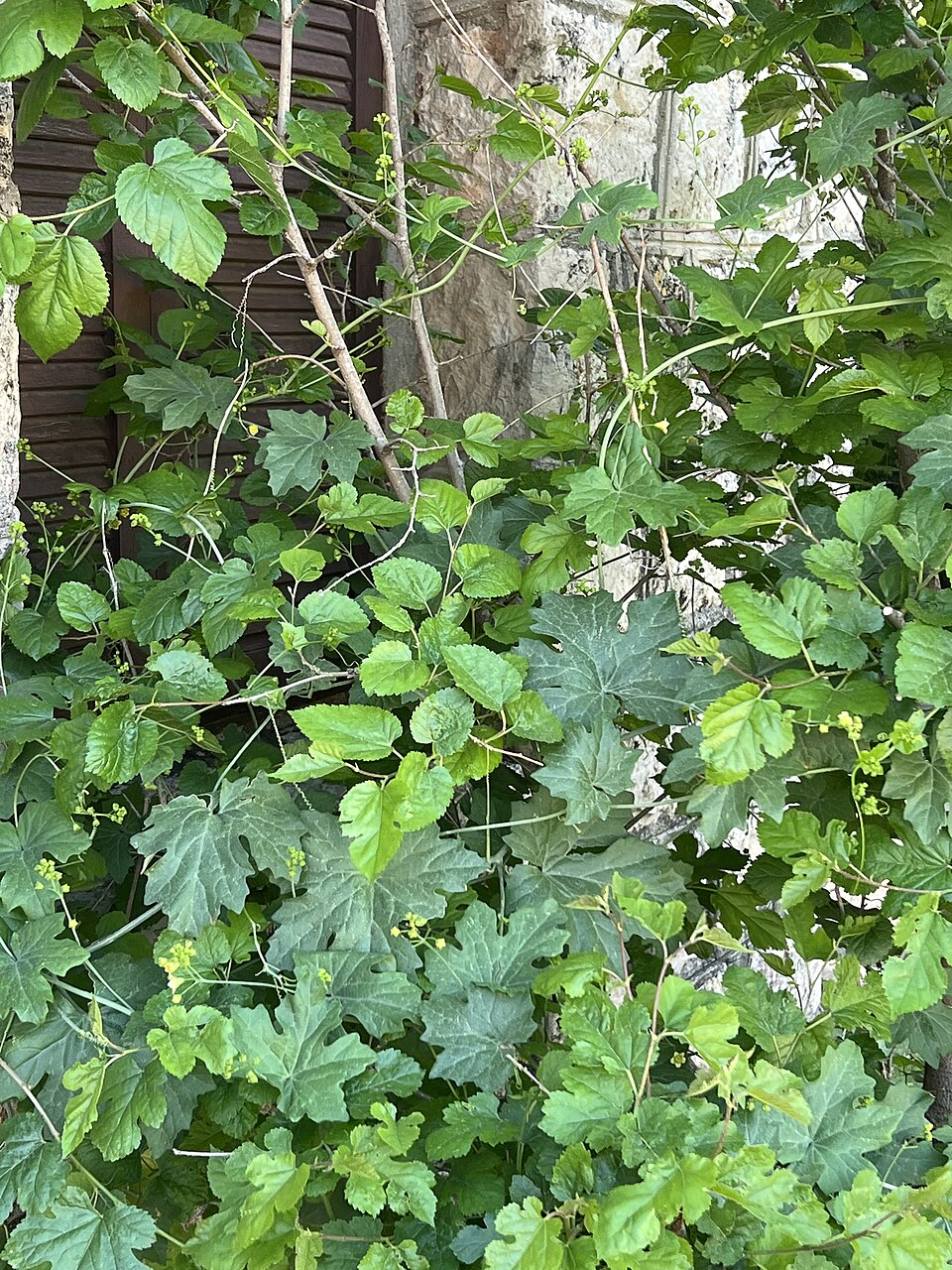
Bryonia cretica, white bryony, is a herbaceous climbing perennial in the gourd family (Cucurbitaceae) that scrambles over hedges and scrub from a large, turnip-like tuberous root. Each year it sends up annual stems that climb 6-13 feet (2-4 m) using spirally coiling tendrils, dying back to the root in autumn. The rough, hairy leaves are palmately five-lobed and ivy-like, alternating along the angular stems. Plants are either male or female, both bearing small greenish-white flowers from late spring into summer; the female flowers ripen into clusters of round berries that turn red in autumn. Every part is strongly poisonous, the root and berries especially, containing bitter cucurbitacins that cause severe digestive upset if eaten. It is the only member of the gourd family native to Britain and grows in hedgerows, wood margins, and scrub on well-drained calcareous or sandy soils. The deep tuber stores energy for rapid spring regrowth and resprouts readily, so established plants are persistent and hard to clear. Dense shade and waterlogged ground limit it, and seedlings take two to three years to reach flowering size.
Native Range
Native to Europe, North Africa, and western Asia, where it grows in hedgerows, scrub, wood edges, and rough ground, often on chalky or sandy soils. Its range extends from the British Isles and the Mediterranean eastward into western Asia.Suggested Uses
Grown only in wild and conservation hedgerows and naturalistic plantings, where its autumn berries feed birds and its flowers support insects. Used to clothe rustic supports in large informal gardens away from paths and play areas. Its poisonous root and berries make it unsuited to gardens used by children or pets.How to Identify
Appearance
Size & Dimensions
Height6' - 13'
Width/Spread3' - 6'
Bloom Information
Greenish-white flowers open from May into August, the males in stalked clusters and the smaller females close to the stem, on separate plants. Bees and small flies carry pollen between male and female vines. Pollinated females form green berries that ripen to red through late summer and autumn.
Detailed Descriptions
Foliage Description
greenGrowing Conditions
Sun Requirements
Requires 4-8 hours of direct sunlight daily
• Full Sun: 6+ hours of direct sunlight
• Partial Shade: 3-6 hours of direct sunlight
• Full Shade: Less than 3 hours of direct sunlight