Bryoandersonia, Genus, spp., Multiple species,
- Genus
- Multiple species
spoon-leaved moss
SunPart Shade – Full Shade
WaterHigh
Overview
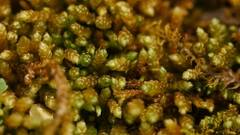
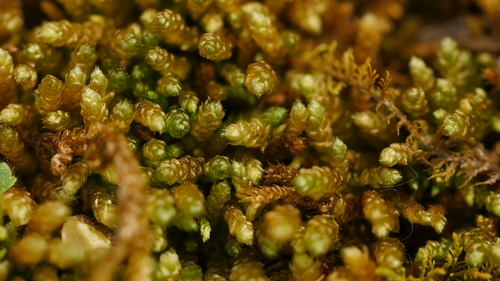
Bryoandersonia is a moss genus in the family Brachytheciaceae represented by a single species, B. illecebra, the spoon-leaved or worm moss, native to eastern North America. It forms glossy, yellow-green to golden mats on soil, leaf litter, rotting logs, and shaded rock in deciduous woodland and along stream banks. The stems are smoothly cylindrical and worm-like (julaceous), 1 to 4 inches (2.5 to 10 cm) long, because the small concave leaves press closely and overlap around the stem rather than spreading. When dry the shoots curve and twist, and when moist they swell and glisten. As a moss, Bryoandersonia has no roots, flowers, or water-conducting tissue; it anchors by hair-like rhizoids and takes up moisture over its whole surface. It reproduces by spores from curved, stalked capsules that ripen mainly in autumn and winter. The genus depends on shade and steady moisture, tolerating short dry spells by curling and reviving when rewetted.
Native Range
Bryoandersonia is native to eastern North America, ranging widely through the eastern and central United States and into adjacent Canada. It grows in shaded, humid woodland on soil, rock, and decaying wood.Suggested Uses
Grown in shaded moss gardens, on logs and rocks in woodland settings, and in terrariums where humidity stays high. It forms a glossy, low carpet over damp ground and decaying wood. Its need for constant shade and moisture limits it to humid, sheltered spots.How to Identify
Appearance
Size & Dimensions
Height1" - 4"
Width/Spread2" - 2'
Bloom Information
As a moss, Bryoandersonia produces no flowers. It reproduces by spores released from curved, stalked capsules that mature mainly in autumn and winter. Wind carries the spores to new ground.
Detailed Descriptions
Foliage Description
glossy yellow-green to goldenGrowing Conditions
Sun Requirements
Tolerates up to 4 hours of direct sunlight daily
• Full Sun: 6+ hours of direct sunlight
• Partial Shade: 3-6 hours of direct sunlight
• Full Shade: Less than 3 hours of direct sunlight
Water & Climate
Water Needs